
Introduction
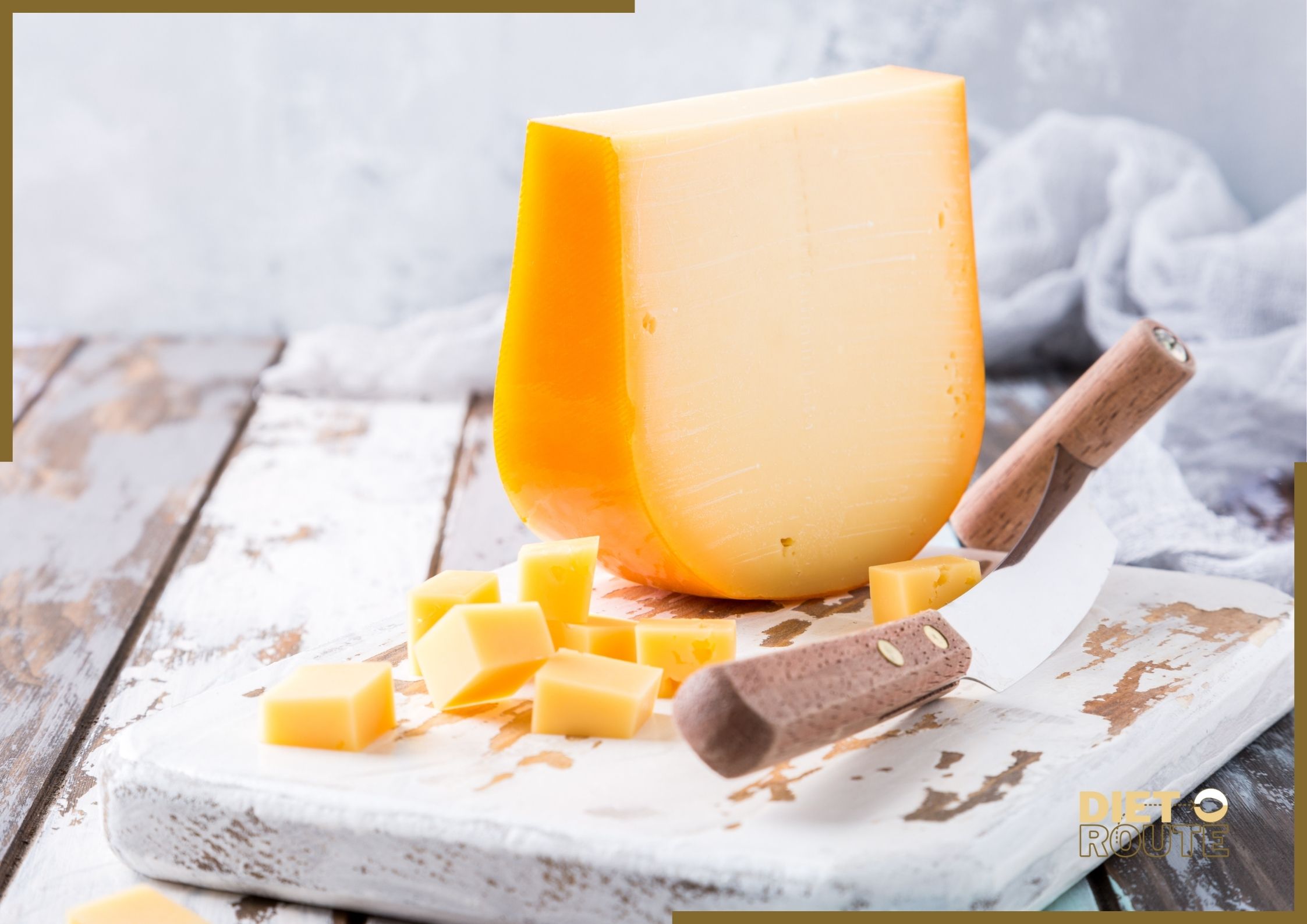
Gouda cheese is a popular Dutch cheese that is known for its creamy texture and unique flavor. It is named after the Dutch city of Gouda, where it was first made. In this article, we’ll look at the nutritional makeup of Gouda cheese, talk about its pros and cons, respond to some common questions, and end with some thoughts on its role in a healthy diet.
Nutritional Value Approximately 100g
The values provided are approximate can vary depending on the size and quality.
| Nutrient | Amount | Percentage Daily Value |
| Calories | 356 kcal | 18% |
| Total Fat | 27 g | 42% |
| Saturated Fat | 17 g | 85% |
| Cholesterol | 94 mg | 31% |
| Sodium | 819 mg | 34% |
| Carbohydrates | 2 g | 1% |
| Sugars | 2 g | – |
| Protein | 24 g | 48% |
| Calcium | 736 mg | 74% |
| Vitamin A | 690 IU | 14% |
Pros
1. Good source of protein:
Gouda cheese is a good source of protein because it is rich in protein, which is essential for building and repairing tissues as well as for many enzyme functions in the body.
2. High in calcium:
It has a lot of calcium, which helps keep bones and teeth healthy.
3. Vitamins and Minerals:
It has essential vitamins and minerals, like vitamin A and calcium, which add to the total nutritional intake.
4. Versatile:
It is versatile in the kitchen and can be enjoyed on its own, melted in sandwiches, grated on pasta, or added to a variety of recipes.
Cons
1. High in saturated fat:
It is high in saturated fat, which, when consumed in excess, may lead to health problems like high cholesterol levels. The key is moderation.
2. Sodium Content:
Individuals on a low sodium diet or those with high blood pressure should monitor their intake because gouda cheese includes sodium.
3. Lactose intolerance:
It is made from cow’s milk, so it may contain lactose. People who have lactose intolerance should be careful and think about other choices.
In a Nut Shell
The taste and nutritional advantages of gouda cheese are both excellent. Calcium and protein, both of which are essential for good health, are abundant in it. It has a high saturated fat content, so it’s important to consume it in moderation. It can be enjoyed as part of a balanced diet by taking into account individual dietary needs and health issues. Use it in creative ways in your meals to enjoy its creamy texture and rich flavor while keeping the nutritional balance of your meals as a whole.


Join the conversation