
“Strong does not have to mean loud.” – Wellness Kraft
Introduction
If you have opened Instagram, walked past a boutique studio, or heard a friend say, “It’s Pilates, but on a machine,” you have met the Reformer Pilates boom.
It is popular with beginners, athletes, and people who feel done with high-impact workouts. It is also popular with people who are tired of starting fitness plans that feel like punishment. Reformer Pilates often feels like skill-building instead of suffering. You show up, you learn how to move, you get stronger, and you leave feeling tall, not crushed.
At the same time, the hype has created confusion.
Some people think it is only for women. Some think it is only stretching. Some believe it replaces strength training. Some treat it like a magic posture fix. Others try one class, get humbled by trembling legs, and suddenly respect it as a secret gym boss level.
This post will provide the whole picture. What Reformer Pilates is, why it is trending so hard, what it does well, what it does not do, and how to start without wasting money or injuring yourself.
What Reformer Pilates Actually Is
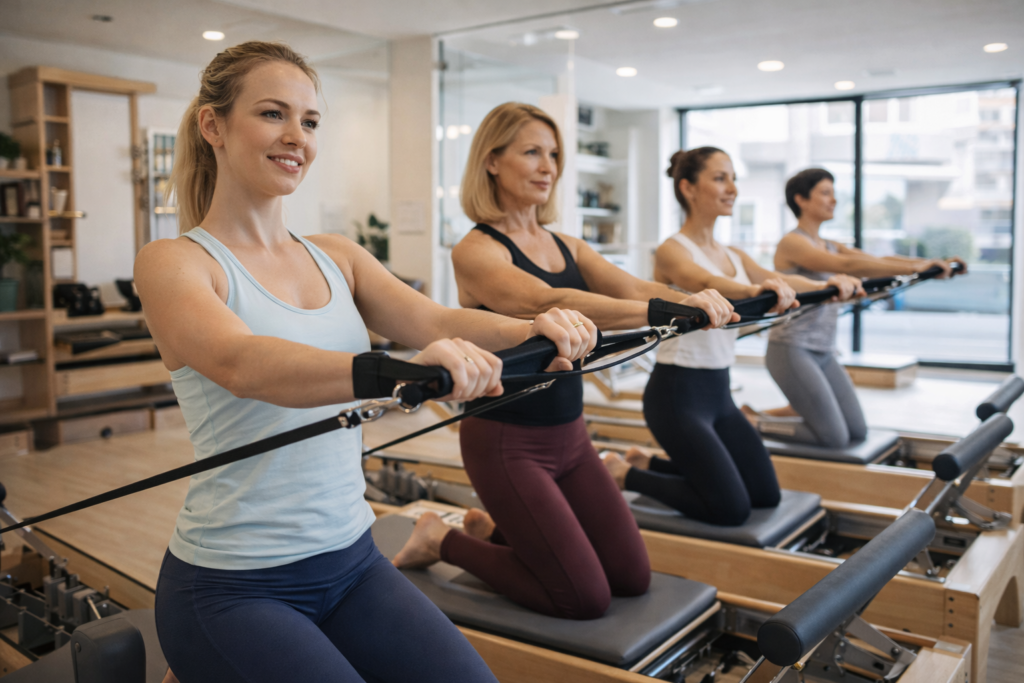
A reformer is a sliding carriage with springs, straps, and a footbar. The springs create resistance, support, or both. That is the beauty of it. The same machine can make a movement easier for a beginner and more complicated for an athlete by changing spring tension and angles.
Reformer Pilates focuses on controlled movement, alignment, breathing, core stability, and strength through a range of motion. The goal is not random sweating. The goal is precision.
It also trains something most workouts ignore: how you move between positions. That is where real-life strength lives—getting off the floor and carrying groceries without twisting your back, sitting without collapsing into your hips, and standing tall without your shoulders hunched near your ears.
Why Reformer Pilates Is Exploding Right Now
People want low-impact, high-result workouts
Many adults have experienced joint pain. Knees, lower back, ankles, and shoulders. They still want intensity, but they want smarter intensity. Reformer Pilates gives a strength challenge without constant pounding.
It feels beginner-friendly without being boring.
Many fitness trends fail because beginners feel lost. Reformer Pilates has structure. The machine guides you. The instructor cues you. The progression feels obvious. That makes people stick.
It is “quite hard,” which fits modern stress levels
Many people are mentally exhausted. They do not want a workout that feels like getting yelled at. They want something that makes them stronger while calming their nervous system. Reformer Pilates often feels focused rather than chaotic.
It fits the “longevity” mindset.
More people are training for mobility, posture, balance, and long-term function. Reformer Pilates aligns with that. It is not only about looking fit. It is about moving well.
Social media made it look premium and aspirational
Let’s be honest. Reformer Pilates looks aesthetic. The studios look clean and calm. The movements look controlled and advanced. People like feeling like they are doing something “high quality.” The marketing is powerful because it matches the experience.
It became a social routine.
Boutique classes thrive because they create community. People book with friends. They return because they feel part of something, not because they are chasing willpower.
What Reformer Pilates Does Really Well
It builds deep core strength.
Not “abs” in the mirror sense, but core function. The kind that stabilizes your spine, improves balance, and reduces compensations. You feel it in daily life: you stand taller, move more smoothly, and feel less fragile.
It improves posture and body awareness.
Posture is not only about “sit straight.” It is about strength, mobility, and where your body learns to place itself. Pilates trains that awareness. Many people realize they have been living with forward shoulders and a weak upper back for years. Reformer work can help correct those patterns by strengthening supportive muscles and improving control.
It develops controlled strength, not just raw effort
Reformer Pilates strengthens you in the mid- and end ranges. That matters for injury prevention. A lot of gym strength is strongest in the comfort zone. Pilates teaches you to stay stable when you are extended, rotated, or balancing.
It is suitable for people returning from injury.
Many physiotherapists and rehab-focused coaches like Pilates principles because they can help rebuild stability and movement quality. That does not mean it replaces medical care, but it can be a smart bridge back into training.
It can improve flexibility without “stretching for nothing.”
Many people stretch but do not get more mobile because they lack strength in the new range. Reformer work often builds strength while you lengthen, which is why people feel more open and less stiff.
What Reformer Pilates Does Not Do By Itself
This is where hype can mislead.
It does not automatically build maximum muscle or maximal strength
It can build strength and muscle endurance, yes. But if your goal is significant hypertrophy or heavy strength numbers, you will likely need progressive resistance training outside Pilates as well.
It does not replace cardio completely.
Some classes can be sweaty and cause an elevated heart rate, but they are not the same as steady cardio conditioning. If cardiovascular fitness is a priority, add walking, cycling, Zone 2 training, or interval training based on your goals.
It does not “fix posture” if your daily habits stay the same
Pilates can help, but if you sit for 10 hours a day with a forward head posture and never stand, you are fighting your environment. Pilates is a tool, not a miracle.
Who Reformer Pilates Is Great For
Reformer Pilates tends to be a strong fit if you are:
- A beginner who wants a guided strength path without intimidating gym culture.
- Someone with joint sensitivity who still wants intensity.
- Someone who wants better posture, mobility, and core control.
- A runner or lifter who wants better stability and fewer overuse aches.
- Someone returning after injury and rebuilding movement quality.
- Someone who struggles with consistency and needs a class structure.
It is also great for men. The machine does not discriminate based on gender. Plenty of men try it, thinking it will be easy, then leave with shaking legs and a new level of respect.
Who Should Be More Careful
Reformer Pilates is generally safe when coached well, but be cautious if:
- You have acute back pain, disc flare-ups, or nerve symptoms.
- You have uncontrolled blood pressure or serious cardiac issues and are new to exercise.
- You have significant shoulder issues, and the class includes extensive strap work.
- You are pregnant and not in a pregnancy-trained class environment.
In these situations, speak to a clinician or choose an instructor with rehab experience and apparent modifications.
Common Mistakes That Make People Quit
Treating it like stretching
If you come in expecting a relaxing stretch session, you will either feel confused or bored. Reformer Pilates is strength training with control. You have to show up mentally.
Going too hard, too fast
Because it looks “easy,” people jump into advanced classes and overload their joints before they are ready. Start with fundamentals. Your ego will survive.
Choosing a studio based only on aesthetics
Some studios are great. Some are just trendy. A good studio cues alignment, offers modifications, and respects form. A bad one rushes, ignores compensation, and sells intensity without technique.
Ignoring pain signals
Pilates should challenge you, not stab you. Wrist pain, shoulder pinching, or sharp back discomfort should be addressed immediately.
How to Start Without Wasting Money
Step 1: Do three beginner sessions before judging it
The first class is often confusing. The second is better. The third is when you begin to feel the method. Give it three sessions before deciding.
Step 2: Ask a straightforward question before booking
“Is this class appropriate for true beginners?”
If they hesitate or try to upsell without answering, choose another place.
Step 3: Prioritize coaching quality
Look for instructors who cue breathing, alignment, and controlled tempo. If the room feels rushed and people are flinging springs around, it is not a flex. It is a risk.
Step 4: Start with 2 days per week
Two sessions weekly are enough to see changes in core control and posture within weeks. Add a third day later if you love it.
Step 5: Combine it intelligently
If your goal is a balanced fitness plan, this combo works well for many people:
- Reformer Pilates: 2 to 3 times per week
- Walking or Zone 2 cardio: 2 to 4 times per week
- Strength training: 1 to 3 times per week (optional but powerful)
You do not need to do everything at once. The best plan is the one you repeat.
What Results People Notice First
Most people notice these early changes:
- Better posture without forcing it
- Less back tightness after sitting
- Stronger core engagement in daily movement
- Better balance and body control
- More awareness of how they move
- A “longer” feeling through the spine and hips
- Muscle soreness in the glutes, inner thighs, and deep core areas
Over time, many people notice improved strength endurance, better mobility, and fewer aches caused by poor movement patterns.
Key Takeaways
- Reformer Pilates focuses on strength, control, and mobility training using a spring-based machine.
- It is booming because it is low-impact, structured, and fits the longevity mindset.
- It builds deep core strength, posture awareness, and controlled movement quality.
- It does not replace heavy strength training or dedicated cardio for everyone.
- Start with beginner sessions, focus on coaching quality, and scale gradually.
Research Insight
US class booking data and recent local reporting highlight Pilates as a top, rapidly growing workout format, with Reformer-style studio classes driving much of the buzz and expansion across multiple US cities. Axios+2Axios+2
The American College of Sports Medicine also tracks broader participation shifts, noting growth in Pilates and mobility-focused classes in recent years, alongside a strong industry trend toward wearables and longevity-focused training. ACSM+2ACSM+2
Peer-reviewed research continues to examine Reformer Pilates outcomes, including improvements in body composition, strength/endurance measures, and mental well-being in specific groups, supporting the conclusion that it is not “just stretching.” Nature+1
https://www.axios.com/local/atlanta/2025/12/16/pilates-atlanta-fitness-routine
https://www.axios.com/local/miami/2025/12/16/miami-pilates-hottest-workout
https://www.womenshealthmag.com/fitness/a65783465/pilates-fastest-growing-fitness-class/
https://acsm.org/education-resources/trending-topics-resources/acsm-fitness-trends/
https://www.nature.com/articles/s41598-025-09683-8
FAQs
1) Is Reformer Pilates good for weight loss?
It can support weight loss by building muscle endurance, improving movement quality, and increasing overall activity consistency. But weight loss depends more on your overall weekly activity, nutrition, sleep, and stress. Many people lose weight with Pilates because they finally find a routine they can stick to. Consistency beats “perfect calorie burn.”
2) Can men do Reformer Pilates, and will it actually challenge them?
Yes, and yes. Reformer Pilates challenges stability, control, and deep strength. Many strong lifters are surprised when Pilates exposes weak links, especially in hip, core, and shoulder stability. The machine scales resistance to match the instructor’s programming, making it as straightforward or as challenging as the instructor sets.
3) How many days per week should a beginner do it?
Two days per week is a strong start. You will improve quickly without overloading your joints. If you love it and recover well, move to a three-day schedule. More is not automatically better if form starts slipping.
4) Is Reformer Pilates safe for back pain?
It depends on the type of back pain. For many people, better core control and movement mechanics help, but if you have nerve symptoms, acute flare-ups, or a diagnosed spinal condition, you should seek individualized guidance. Choose a studio that offers modifications and instructors who understand alignment and load management.
5) What should I look for in a good Reformer Pilates studio?
Look for instructors who cue form clearly, offer modifications, and maintain controlled movement. A good studio makes beginners feel supported, not rushed. Clean aesthetics are nice, but coaching quality matters more than lighting.
Concluding Thoughts
The Reformer Pilates boom is not only a trend. It is a response to what people need right now: strength without punishment, structure without intimidation, and a way to move that improves the body rather than breaking it down.
If you have been stuck between “I should work out” and “I hate working out,” Reformer Pilates can be a smart bridge. Start simple, choose a studio that teaches well, and give your body a few weeks to learn the method. The results are often quiet, but they show up everywhere.




Join the conversation