
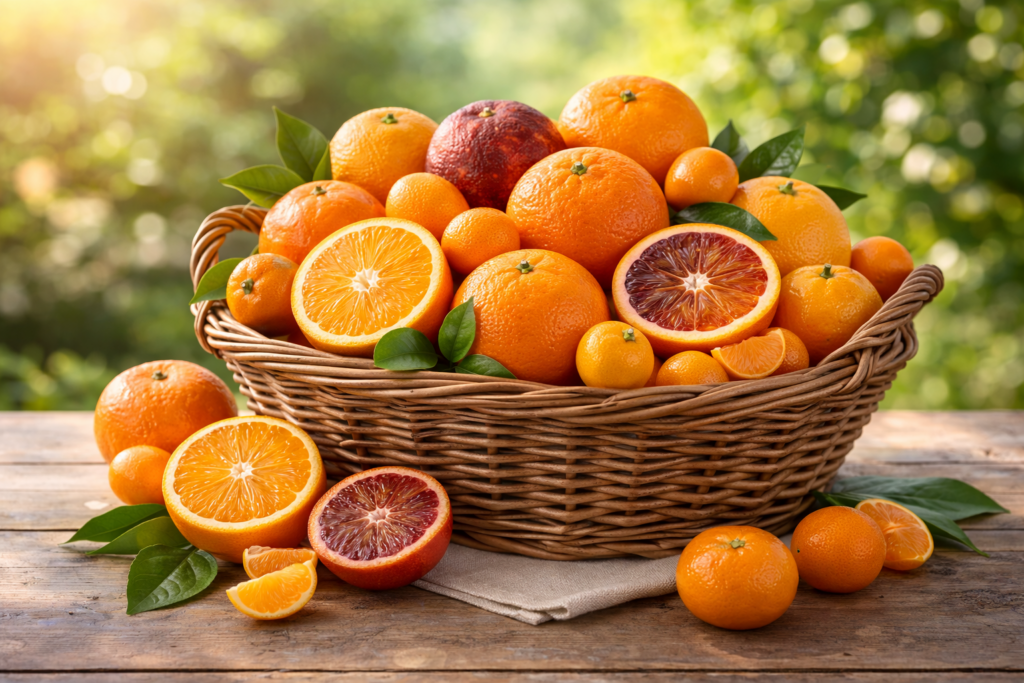
Oranges are a high-refresh fruit that fits almost any routine. They are light, hydrating, and naturally rich in vitamin C, which is why many people keep them as a daily “clean snack” option.
The values provided are approximate can vary depending on the size and ripeness.
1) Sweet Orange
Nutritional facts per 100g
| Nutrient | Amount Per 100g | % Daily Value* |
|---|---|---|
| Calories | 47 kcal | 2% |
| Carbohydrates | 11.8 g | 4% |
| Fiber | 2.4 g | 9% |
| Sugars | 9.4 g | – |
| Protein | 0.9 g | 2% |
| Fat | 0.1 g | 0% |
| Vitamin A | 225 IU | 5% |
| Vitamin C | 53.2 mg | 59% |
| Potassium | 181 mg | 4% |
| Calcium | 40 mg | 3% |
Pros
- Very refreshing and light, easy to keep daily
- Strong vitamin C support for routine nutrition
- Good option when you want sweet but not heavy
Cons
- Acidity can bother sensitive stomach or teeth for some people
- Juice is easy to overconsume compared to whole fruit
- Eating too many can trigger bloating in some people
Right time to eat
- Mid morning snack for a light energy lift
- Afternoon when you want freshness and hydration
- After meals if you want a clean sweet finish
Health benefits
- Supports immunity routine due to vitamin C
- Supports hydration and freshness due to high water content
- Supports digestion comfort for many people when eaten whole
Best way to eat
- Eat whole segments instead of juice
- Pair with nuts to increase fullness
- Add to salads for flavor without extra sauces
2) Blood Orange
Nutritional facts per 100g
| Nutrient | Amount Per 100g | % Daily Value* |
|---|---|---|
| Calories | 47 kcal | 2% |
| Carbohydrates | 12.0 g | 4% |
| Fiber | 2.2 g | 8% |
| Sugars | 9.6 g | – |
| Protein | 0.9 g | 2% |
| Fat | 0.1 g | 0% |
| Vitamin A | 240 IU | 5% |
| Vitamin C | 50.0 mg | 56% |
| Potassium | 185 mg | 4% |
| Calcium | 41 mg | 3% |
Pros
- Refreshing like orange but with a richer taste
- Feels premium, good for variety in diet
- Works well in fruit bowls and salads
Cons
- Seasonal and often expensive
- Acidity can still bother sensitive stomach or teeth
- Juicing removes the chewing fullness advantage
Right time to eat
- Mid morning or afternoon for freshness
- With meals as a fruit side
- When you want a sweet snack without packaged sugar
Health benefits
- Supports vitamin C intake for routine nutrition
- Supports hydration and appetite freshness
- Supports overall fruit intake consistency due to taste
Best way to eat
- Eat as whole segments
- Add to salad with cucumber and greens
- Use with curd for a balanced bowl
3) Mandarin Orange
Nutritional facts per 100g
| Nutrient | Amount Per 100g | % Daily Value* |
|---|---|---|
| Calories | 53 kcal | 3% |
| Carbohydrates | 13.3 g | 5% |
| Fiber | 1.8 g | 6% |
| Sugars | 10.6 g | – |
| Protein | 0.8 g | 2% |
| Fat | 0.3 g | 0% |
| Vitamin A | 681 IU | 14% |
| Vitamin C | 26.7 mg | 30% |
| Potassium | 166 mg | 4% |
| Calcium | 37 mg | 3% |
Pros
- Easy to peel and snack, very convenient
- Great for kids and travel
- Good option when you want smaller portion fruit
Cons
- Because it is easy to eat, people often eat many at once
- Can be sweeter than regular orange depending on variety
- Some people feel acidity if eaten on an empty stomach
Right time to eat
- Mid morning or evening as a clean snack
- With breakfast bowls for taste and freshness
- As a light dessert after meals
Health benefits
- Supports vitamin C intake and daily fruit routine
- Supports appetite control when used instead of sweets
- Supports hydration and freshness
Best way to eat
- Eat whole segments, avoid juice
- Pair with nuts for better fullness
- Add to fruit bowl with curd for balance
4) Bitter Orange
Nutritional facts per 100g
| Nutrient | Amount Per 100g | % Daily Value* |
|---|---|---|
| Calories | 45 kcal | 2% |
| Carbohydrates | 11.0 g | 4% |
| Fiber | 2.6 g | 9% |
| Sugars | 8.3 g | – |
| Protein | 0.9 g | 2% |
| Fat | 0.1 g | 0% |
| Vitamin A | 230 IU | 5% |
| Vitamin C | 50.0 mg | 56% |
| Potassium | 180 mg | 4% |
| Calcium | 40 mg | 3% |
Pros
- Less sweet, often used for cooking and flavoring
- Good option for people who dislike sweet fruits
- Can feel more “digestive” because of the bitter taste
Cons
- Not enjoyable raw for most people
- Acidity can still bother sensitive stomach or teeth
- Usually needs preparation, not a quick snack fruit
Right time to eat
- With meals when used as a culinary ingredient
- When you want citrus flavor without sweetness
- In small amounts as part of food, not as a large fruit serving
Health benefits
- Supports vitamin C intake through citrus usage
- Supports appetite freshness because of strong flavor
- Supports variety in diet through cooking use
Best way to eat
- Use in small amounts in cooking or salads
- Avoid drinking as sweetened juice
- Use with meals rather than on an empty stomach if acidity bothers you
In a nutshell
Oranges are best eaten as whole segments instead of juice. Sweet orange is the easiest daily option, mandarin is the easiest to snack on, and blood orange is a premium seasonal variety. If acidity bothers you, eat oranges with meals and avoid empty stomach.
*Percent Daily Values are based on a 2,000 calorie diet.


Join the conversation