
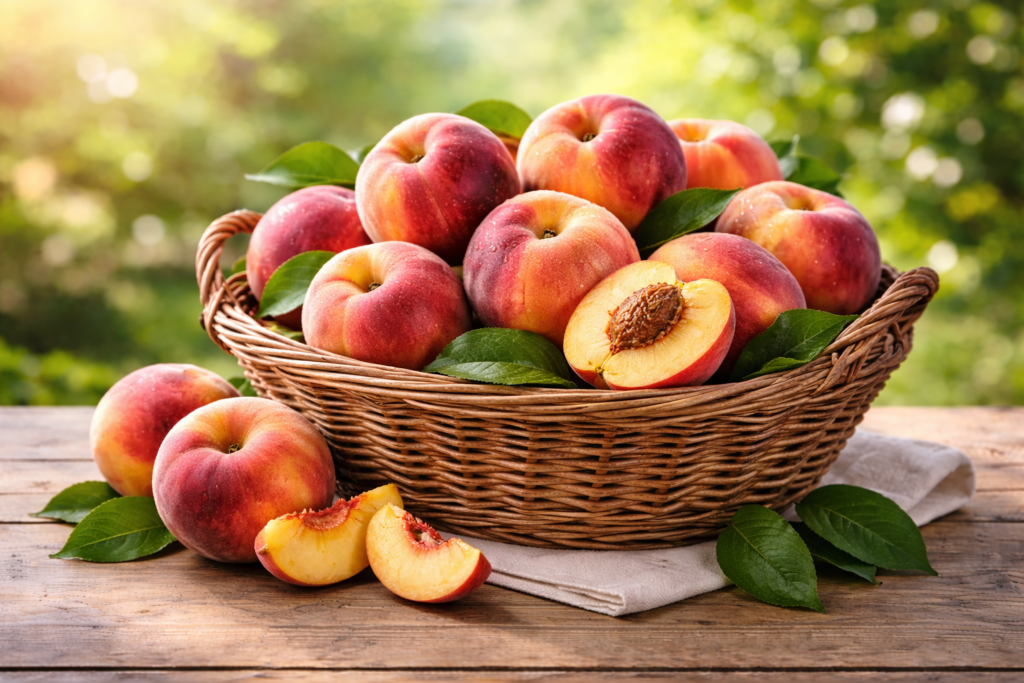
Peaches are a light, juicy fruit that feels refreshing without being heavy. They work best when you want a clean snack, hydration, and something sweet that does not feel like dessert.
The values provided are approximate can vary depending on the size and ripeness.
1) Yellow Peach (Fresh)
Nutritional facts per 100g
| Nutrient | Amount Per 100g | % Daily Value* |
|---|---|---|
| Calories | 39 kcal | 2% |
| Carbohydrates | 9.5 g | 3% |
| Fiber | 1.5 g | 5% |
| Sugars | 8.4 g | – |
| Protein | 0.9 g | 2% |
| Fat | 0.3 g | 0% |
| Vitamin A | 326 IU | 7% |
| Vitamin C | 6.6 mg | 7% |
| Potassium | 190 mg | 4% |
| Calcium | 6 mg | 0% |
Pros
- Light and hydrating, good for hot weather snacking
- Lower calorie fruit, helps when you want sweet without heaviness
- Easy to add to breakfast bowls and salads
Cons
- Not very filling alone, pairing helps
- Overripe peaches can be too soft and easy to overeat
- Sensitive digestion may feel bloated if eaten in large quantity
Right time to eat
- Mid morning or afternoon for a light refresh snack
- After meals when you want a clean sweet finish
- Before a walk for quick fruit energy without heaviness
Health benefits
- Supports hydration routine due to high water content
- Supports digestion routine with fiber when eaten whole
- Supports overall fruit intake consistency because it is easy to eat
Best way to eat
- Eat fresh slices, wash well, keep the peel if you tolerate it
- Pair with curd or nuts for better fullness
- Add to oats or fruit bowl instead of sugary desserts
2) White Peach (Fresh)
Nutritional facts per 100g
| Nutrient | Amount Per 100g | % Daily Value* |
|---|---|---|
| Calories | 40 kcal | 2% |
| Carbohydrates | 10.0 g | 4% |
| Fiber | 1.3 g | 5% |
| Sugars | 8.6 g | – |
| Protein | 0.9 g | 2% |
| Fat | 0.3 g | 0% |
| Vitamin A | 280 IU | 6% |
| Vitamin C | 6.0 mg | 7% |
| Potassium | 185 mg | 4% |
| Calcium | 5 mg | 0% |
Pros
- Often tastes sweeter and softer, easy to eat
- Good option when you want a gentle fruit snack
- Works well in breakfast bowls and smoothies
Cons
- Softer texture can reduce satisfaction compared to crunchy fruits
- Easier to overeat because it tastes sweet
- May not suit very sensitive digestion if eaten too fast
Right time to eat
- Mid morning snack when you want light sweetness
- Evening snack to reduce dessert cravings
- With breakfast if you want a gentle fruit
Health benefits
- Supports hydration and freshness
- Supports digestion routine when eaten whole
- Supports healthy snacking habits instead of packaged sweets
Best way to eat
- Eat sliced and slow, do not rush
- Pair with nuts or curd to increase fullness
- Use in fruit bowls instead of juice
3) Canned Peach
Nutritional facts per 100g
| Nutrient | Amount Per 100g | % Daily Value* |
|---|---|---|
| Calories | 67 kcal | 3% |
| Carbohydrates | 16.0 g | 6% |
| Fiber | 1.0 g | 4% |
| Sugars | 15.0 g | – |
| Protein | 0.4 g | 1% |
| Fat | 0.1 g | 0% |
| Vitamin A | 250 IU | 5% |
| Vitamin C | 3.0 mg | 3% |
| Potassium | 120 mg | 3% |
| Calcium | 6 mg | 0% |
Pros
- Very convenient, available off-season
- Easy to add to desserts or quick bowls
- Soft texture works for people who avoid hard fruits
Cons
- Often higher sugar than fresh peaches, especially in syrup
- Lower freshness feel compared to whole fruit
- Easy to eat large quantity without feeling full
Right time to eat
- Occasionally as a convenience fruit option
- When fresh peaches are not available
- As part of a balanced bowl, not as unlimited snacking
Health benefits
- Supports fruit intake consistency when fresh fruit is not available
- Can support cravings control if portion is managed
- Works as a lighter dessert swap if unsweetened
Best way to eat
- Prefer peaches packed in water or juice, not heavy syrup
- Rinse quickly before eating to reduce extra syrup sweetness
- Pair with curd or nuts to slow down overeating
4) Dried Peach
Nutritional facts per 100g
| Nutrient | Amount Per 100g | % Daily Value* |
|---|---|---|
| Calories | 239 kcal | 12% |
| Carbohydrates | 62.0 g | 23% |
| Fiber | 8.0 g | 29% |
| Sugars | 55.0 g | – |
| Protein | 3.6 g | 7% |
| Fat | 0.8 g | 1% |
| Vitamin A | 3600 IU | 72% |
| Vitamin C | 0.0 mg | 0% |
| Potassium | 996 mg | 21% |
| Calcium | 20 mg | 2% |
Pros
- Very convenient, long shelf life
- High energy, useful when you need calorie-dense snack
- Higher fiber and potassium concentration per 100g
Cons
- Very calorie dense, easy to overeat
- Often contains preservatives or added sugar depending on brand
- Not ideal for mindless snacking if your goal is fat loss
Right time to eat
- During travel when fresh fruit is not available
- On high-activity days when you need quick calories
- As a small portion snack, not a large bowl
Health benefits
- Supports energy needs when taken in controlled portion
- Supports potassium intake due to concentration
- Can support digestion routine because of fiber, if portion is right
Best way to eat
- Keep portion small and pair with nuts
- Choose unsweetened versions if possible
- Drink water with it to avoid overeating
In a nutshell
Fresh peach is best for a light, hydrating snack. Canned peach is fine occasionally, but watch syrup and portion. Dried peach is calorie-dense, so treat it like a concentrated snack and keep the portion small.
*Percent Daily Values are based on a 2,000 calorie diet.


Join the conversation