
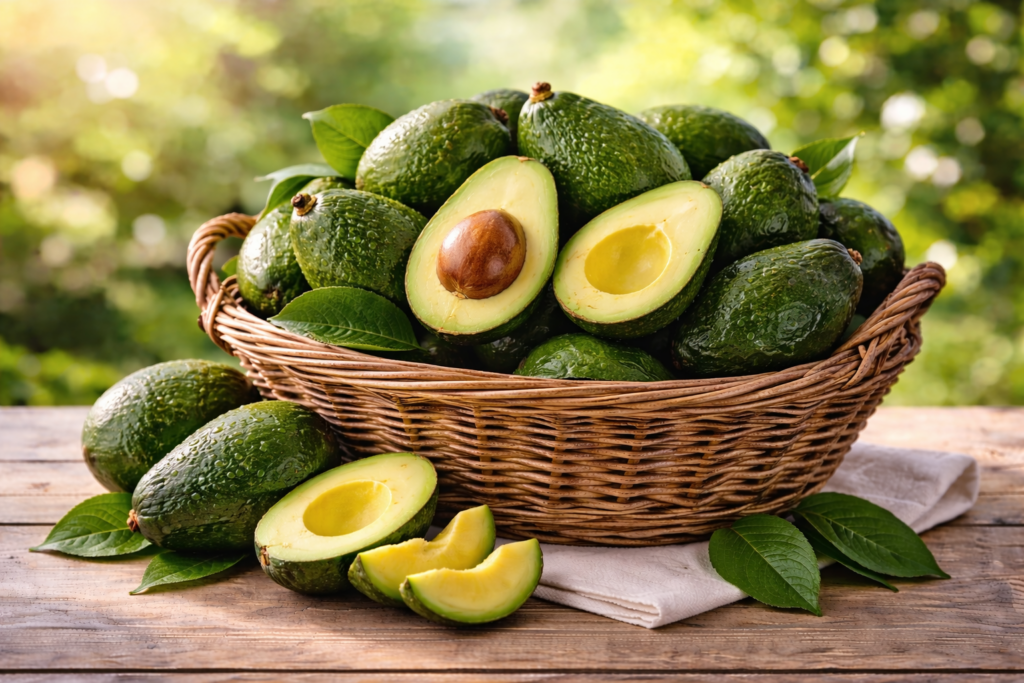
Avocado is not a “sweet fruit”. It behaves more like a healthy-fat food. That is why it feels filling and steady, but it can also become calorie-heavy if eaten without portion control.
Below are the nutritional facts of avocado per 100g, along with pros and cons, the right time to eat, health benefits, and the best way to eat.
The values provided are approximate can vary depending on the size and ripeness.
1) Hass Avocado
Nutritional facts per 100g
| Nutrient | Amount Per 100g | % Daily Value* |
|---|---|---|
| Calories | 160 kcal | 8% |
| Carbohydrates | 8.5 g | 3% |
| Fiber | 6.7 g | 24% |
| Sugars | 0.7 g | – |
| Protein | 2.0 g | 4% |
| Fat | 14.7 g | 19% |
| Vitamin A | 146 IU | 3% |
| Vitamin C | 10.0 mg | 11% |
| Potassium | 485 mg | 10% |
| Calcium | 12 mg | 1% |
Pros
- Very filling due to healthy fats and fiber
- Good for steady energy compared to sugary snacks
- Useful for people who struggle to feel full from fruit
Cons
- Calorie dense, portion control matters
- Easy to overeat because texture is creamy and satisfying
- Not ideal as “unlimited fruit” when fat loss is the goal
Right time to eat
- Breakfast for longer fullness
- Lunch salad or bowl for steady energy
- Evening snack when you want to avoid junk cravings
Health benefits
- Supports fullness and appetite control
- Supports nutrition balance with potassium and fiber
- Supports better snacking habits when used instead of fried snacks
Best way to eat
- Half avocado with salt, lemon, and a simple bowl meal
- Add to salads instead of creamy dressings
- Pair with protein food for a balanced meal
2) Large Green Avocado
Nutritional facts per 100g
| Nutrient | Amount Per 100g | % Daily Value* |
|---|---|---|
| Calories | 120 kcal | 6% |
| Carbohydrates | 7.8 g | 3% |
| Fiber | 5.0 g | 18% |
| Sugars | 1.2 g | – |
| Protein | 2.0 g | 4% |
| Fat | 10.0 g | 13% |
| Vitamin A | 120 IU | 2% |
| Vitamin C | 9.0 mg | 10% |
| Potassium | 450 mg | 10% |
| Calcium | 12 mg | 1% |
Pros
- Still filling, often a bit lighter than Hass per 100g
- Good for bowls and salads
- Great option for people who want less sweetness in fruit
Cons
- Still calorie dense compared to most fruits
- Texture can be watery in some batches, depends on ripeness
- Overeating still adds up quickly
Right time to eat
- With meals for fullness
- When you want a “fruit” that behaves like a meal component
- Late afternoon when cravings are high
Health benefits
- Supports appetite control and steady energy
- Supports digestion routine through fiber
- Supports overall nutrition balance with potassium
Best way to eat
- Use in salads, sandwich fillings, or simple bowl meals
- Keep portion measured instead of eating the whole fruit daily
- Use lemon, pepper, and salt instead of sugary sauces
In a nutshell
Avocado is a healthy-fat fruit that keeps you full. It is great for steady energy, but it is calorie dense, so portion control matters more than with most fruits.
*Percent Daily Values are based on a 2,000 calorie diet.


Join the conversation