
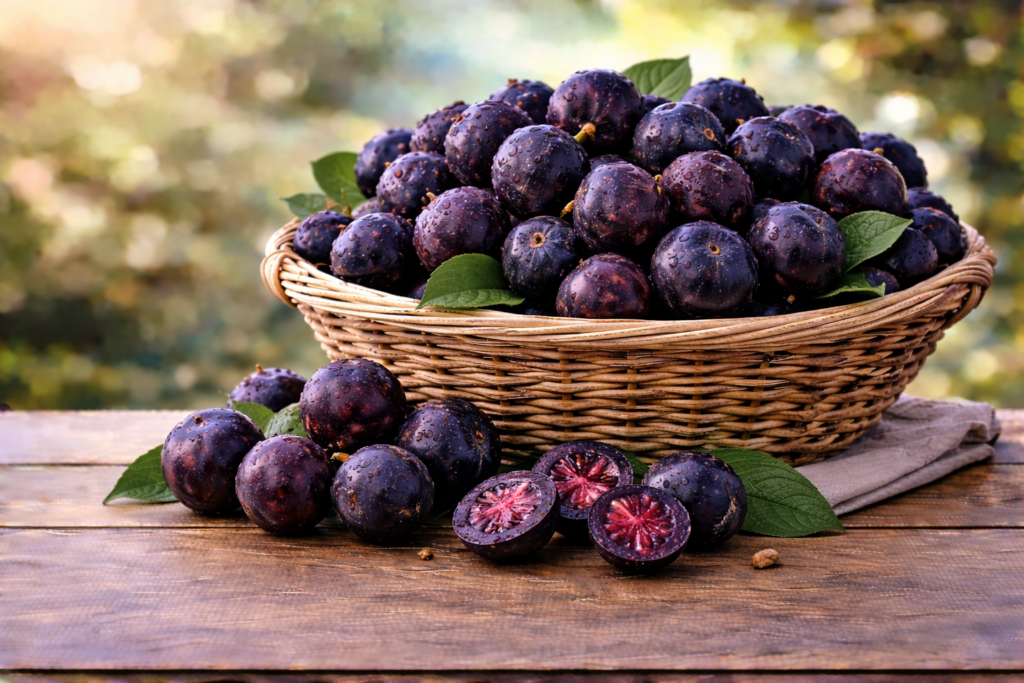
Sohiong is a tart, cherry-like fruit from North East India that often becomes juice or squash. The simplest version is best: fresh or lightly mixed with water.
In a nutshell: The values provided are approximate and can vary depending on the size and ripeness.
1) Sohiong
Nutritional facts per 100g
| Nutrient | Amount Per 100g | % Daily Value* |
|---|---|---|
| Calories | 55 kcal | 3% |
| Carbohydrates | 13 g | 5% |
| Fiber | 2 g | 8% |
| Sugars | 9 g | – |
| Protein | 0.9 g | 2% |
| Fat | 0.3 g | 0% |
| Vitamin A | 50 IU | 1% |
| Vitamin C | 15 mg | 25% |
| Potassium | 220 mg | 5% |
| Calcium | 18 mg | 2% |
Pros
- Bold tart flavor that feels refreshing.
- Great seasonal variety if available.
- Works well in lightly diluted drinks.
Cons
- Squash and syrups can be sugar-heavy.
- Sour taste may trigger acidity for some people.
- Availability can be limited outside NE markets.
Right time to eat
- Afternoon snack or post-lunch.
- With meals if sour foods bother your stomach.
Health benefits
- Helps hydration routines in warm weather.
- Vitamin C supports immunity routines.
- Fiber supports digestion.
Best way to eat
- Eat fresh if you get it ripe and clean.
- Make a light drink with water and minimal sweetener.
- Avoid heavy syrups for regular use.
*Percent Daily Values are based on a 2,000 calorie diet.


Join the conversation