
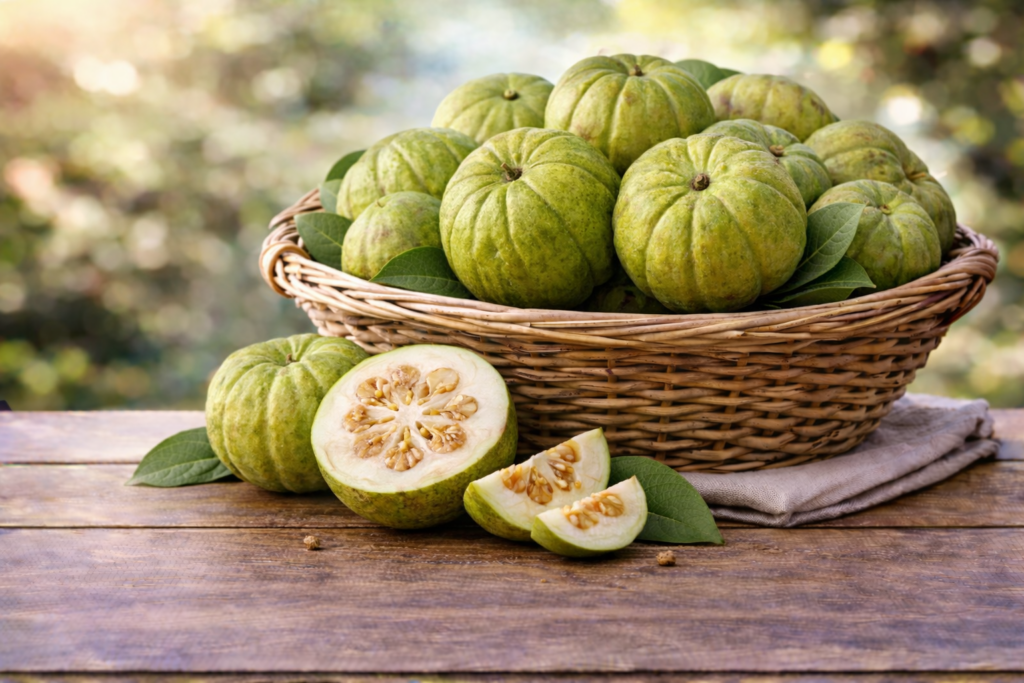
Chalta is known for its strong sour bite and is often cooked into chutneys or dals. It is not a “sweet snack fruit” and that is exactly its charm.
In a nutshell: The values provided are approximate and can vary depending on the size and ripeness.
1) Chalta
Nutritional facts per 100g
| Nutrient | Amount Per 100g | % Daily Value* |
|---|---|---|
| Calories | 74 kcal | 4% |
| Carbohydrates | 18 g | 7% |
| Fiber | 3.5 g | 14% |
| Sugars | 11 g | – |
| Protein | 1 g | 2% |
| Fat | 0.6 g | 1% |
| Vitamin A | 100 IU | 2% |
| Vitamin C | 20 mg | 33% |
| Potassium | 250 mg | 5% |
| Calcium | 40 mg | 4% |
Pros
- Strong sour flavor can reduce sugar cravings.
- Fiber-friendly fruit when eaten in cooked forms.
- Adds unique variety to regional diets.
Cons
- Too sour for sensitive teeth or acidity.
- Chutneys often add lots of sugar.
- Not commonly available everywhere.
Right time to eat
- With meals as chutney or cooked fruit.
- Avoid late-night sour servings if acidity bothers you.
Health benefits
- Supports digestion routines due to fiber.
- Vitamin C supports immunity routines.
- Adds sour variety to meals.
Best way to eat
- Cook into chutney with minimal sugar.
- Use in dal or curry for natural tang.
- Keep portions moderate because it is very tart.
*Percent Daily Values are based on a 2,000 calorie diet.


Join the conversation