
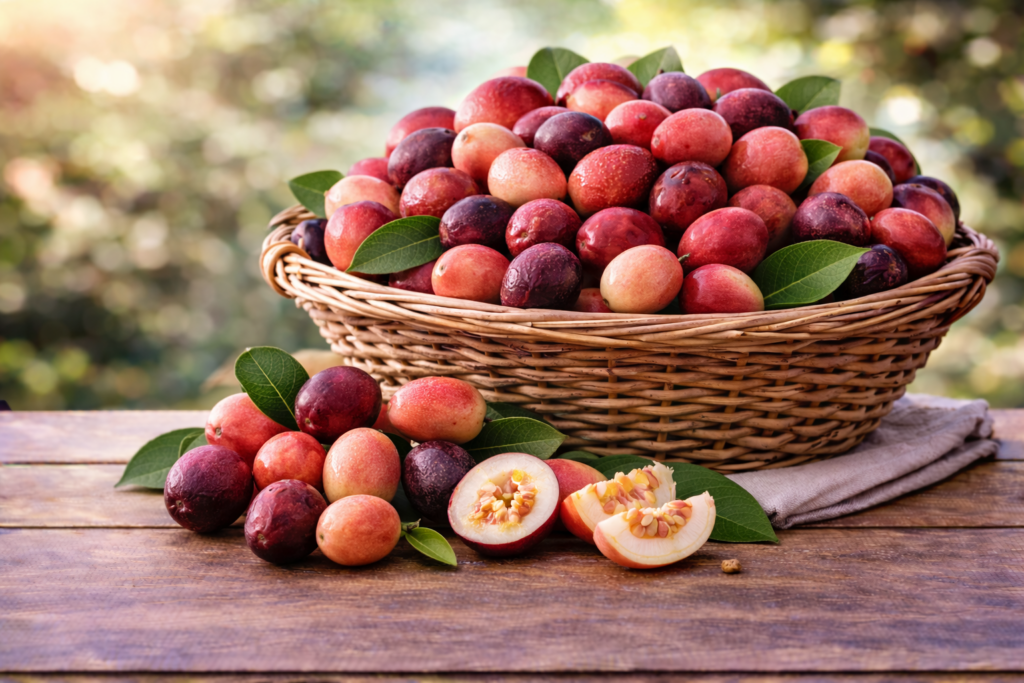
Karonda is a small, tangy fruit that often ends up in pickles and chutneys. When eaten ripe, it has a sharp, refreshing punch.
In a nutshell: The values provided are approximate and can vary depending on the size and ripeness.
1) Karonda
Nutritional facts per 100g
| Nutrient | Amount Per 100g | % Daily Value* |
|---|---|---|
| Calories | 62 kcal | 3% |
| Carbohydrates | 14.7 g | 5% |
| Fiber | 2.9 g | 12% |
| Sugars | 8.5 g | – |
| Protein | 1.1 g | 2% |
| Fat | 0.4 g | 1% |
| Vitamin A | 120 IU | 2% |
| Vitamin C | 25 mg | 42% |
| Potassium | 400 mg | 9% |
| Calcium | 25 mg | 2% |
Pros
- Tangy fruit that can reduce sweet cravings.
- Good seasonal variety when available locally.
- Fiber helps many people feel satisfied.
Cons
- Very sour for sensitive teeth or acidity-prone stomachs.
- Pickles can be high in salt and oil.
- Chutneys can become sugar-heavy.
Right time to eat
- After meals in small portions.
- Mid-morning if your stomach tolerates sour foods.
Health benefits
- Vitamin C supports immunity routines.
- Fiber supports digestion.
- Adds tart variety to your fruit rotation.
Best way to eat
- Eat ripe karonda fresh after washing well.
- Make a low-sugar chutney.
- If pickled, keep portion small due to salt.
*Percent Daily Values are based on a 2,000 calorie diet.


Join the conversation