
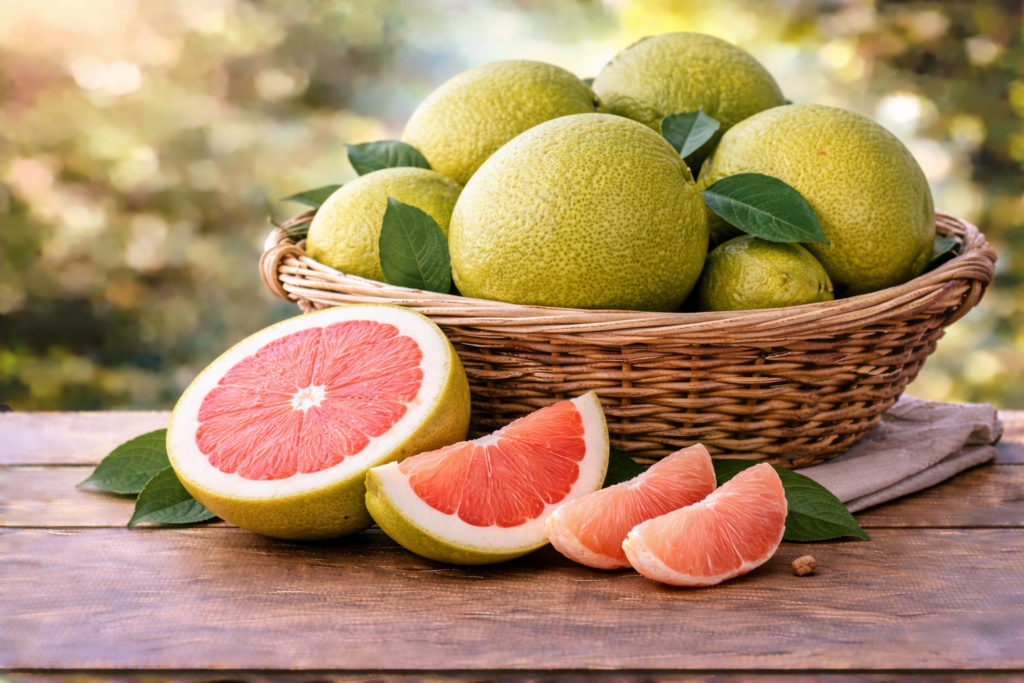
Pomelo is the giant cousin of citrus fruits. It feels clean and mild, with thick segments and a fresh, slightly floral taste.
In a nutshell: The values provided are approximate and can vary depending on the size and ripeness.
1) Pomelo – White
Nutritional facts per 100g
| Nutrient | Amount Per 100g | % Daily Value* |
|---|---|---|
| Calories | 38 kcal | 2% |
| Carbohydrates | 9.6 g | 3% |
| Fiber | 1 g | 4% |
| Sugars | 7 g | – |
| Protein | 0.8 g | 2% |
| Fat | 0 g | 0% |
| Vitamin A | 0 IU | 0% |
| Vitamin C | 61 mg | 102% |
| Potassium | 216 mg | 5% |
| Calcium | 4 mg | 0% |
Pros
- Feels lighter than many sweet fruits.
- Big portions can be satisfying without many calories.
- Great fruit for hot afternoons.
Cons
- Too much at once can feel heavy because of the bulk.
- Some pomelos are bitter if not ripe.
- Can trigger acidity in sensitive stomachs.
Right time to eat
- Mid-morning or afternoon snack.
- After meals if you want something light and citrusy.
Health benefits
- Hydration-friendly fruit with a clean taste.
- Fiber supports digestion when you eat whole segments.
- Vitamin C supports immunity routines.
Best way to eat
- Remove thick membranes for a smoother bite.
- Eat fresh, or add to salads with cucumber and mint.
- Avoid sugar toppings. Use a pinch of salt if needed.
2) Pomelo – Pink
Nutritional facts per 100g
| Nutrient | Amount Per 100g | % Daily Value* |
|---|---|---|
| Calories | 39 kcal | 2% |
| Carbohydrates | 9.8 g | 4% |
| Fiber | 1.2 g | 5% |
| Sugars | 7.4 g | – |
| Protein | 0.8 g | 2% |
| Fat | 0 g | 0% |
| Vitamin A | 80 IU | 2% |
| Vitamin C | 62 mg | 103% |
| Potassium | 220 mg | 5% |
| Calcium | 5 mg | 0% |
*Percent Daily Values are based on a 2,000 calorie diet.


Join the conversation