
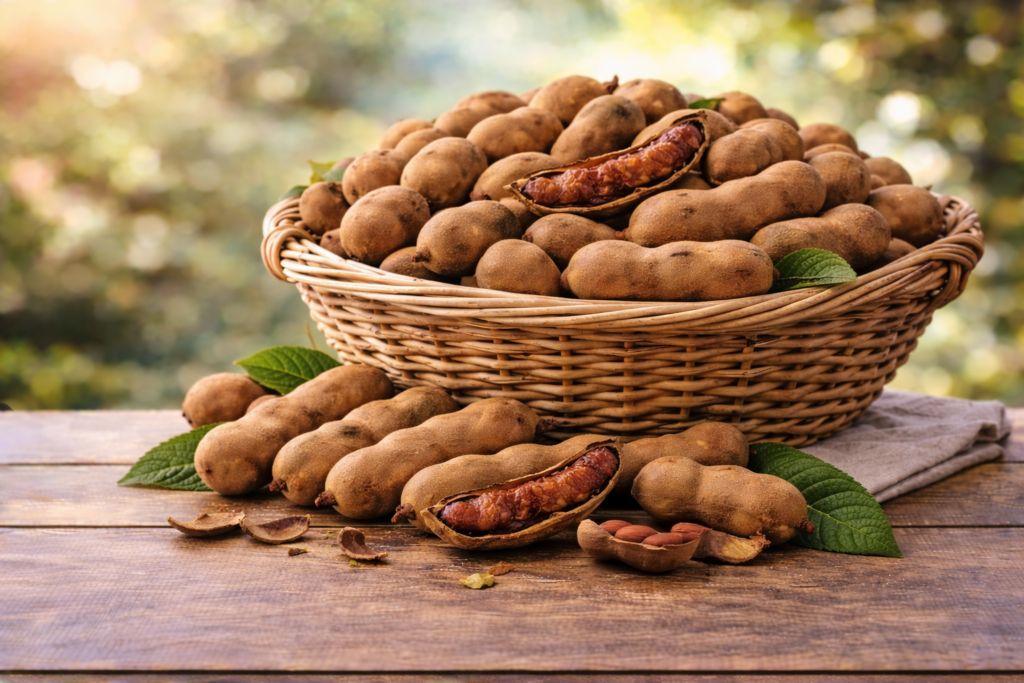
Tamarind is a fruit pod, but most people use it like an ingredient, not a snack. Because it’s concentrated and tangy, even small amounts add a lot of flavor.
The values provided are approximate can vary depending on the pulp concentration.
1) Tamarind Pulp
Nutritional facts per 100g
| Nutrient | Amount Per 100g | % Daily Value* |
|---|---|---|
| Calories | 239 kcal | 12% |
| Carbohydrates | 62.5 g | 23% |
| Fiber | 5.1 g | 18% |
| Sugars | 57.4 g | – |
| Protein | 2.8 g | 6% |
| Fat | 0.6 g | 1% |
| Vitamin A | 30 IU | 1% |
| Vitamin C | 3.5 mg | 6% |
| Potassium | 628 mg | 13% |
| Calcium | 74 mg | 6% |
Pros
- Adds strong flavor in small quantity
- Useful ingredient for meals
Cons
- Concentrated, not meant for large consumption
- Can trigger acidity for some people
Right time to eat
- As part of cooked meals
Health benefits
- Supports meal flavor, which can reduce cravings for heavy sauces
Best way to eat
- Use small amount in dal/sambar/chutney
- Avoid adding extra sugar in tamarind drinks
In a nutshell
Tamarind is a fruit used as an ingredient. Strong flavor in small amounts, but not a snack fruit.
*Percent Daily Values are based on a 2,000 calorie diet.


Join the conversation