
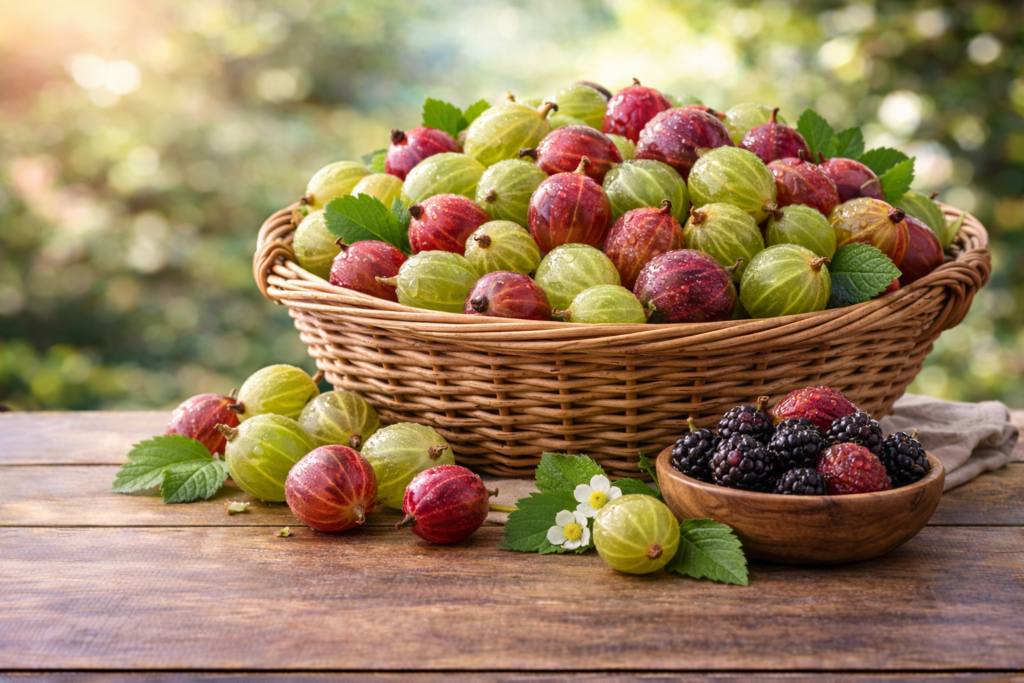
Amla is a strong-taste fruit. People usually don’t eat it like an apple. It’s more of a “small but powerful” add-on in chutney, juice shots, or small bites with salt.
The values provided are approximate can vary depending on the sourness and freshness.
1) Amla Fresh
Nutritional facts per 100g
| Nutrient | Amount Per 100g | % Daily Value* |
|---|---|---|
| Calories | 44 kcal | 2% |
| Carbohydrates | 10.2 g | 4% |
| Fiber | 4.3 g | 15% |
| Sugars | 1.0 g | – |
| Protein | 0.9 g | 2% |
| Fat | 0.6 g | 1% |
| Vitamin A | 290 IU | 6% |
| Vitamin C | 250 mg | 278% |
| Potassium | 198 mg | 4% |
| Calcium | 25 mg | 2% |
Pros
- Very high vitamin C for a fruit
- Small quantity is enough for routine use
- Good fiber for such a small fruit
Cons
- Very sour, can irritate acidity-sensitive stomach
- Packaged amla juices often have added sugar
Right time to eat
- With meals or after meals
- If acidity is an issue, avoid empty stomach
Health benefits
- Supports vitamin intake consistency
- Supports cleaner daily add-on habits when used in small quantity
Best way to eat
- Small bites with salt
- Chutney form with controlled salt
- If using juice, keep it unsweetened and small portion
In a nutshell
Amla is best used in small daily portions. Powerful nutrition, but keep it gentle if you have acidity sensitivity.
*Percent Daily Values are based on a 2,000 calorie diet.


Join the conversation