
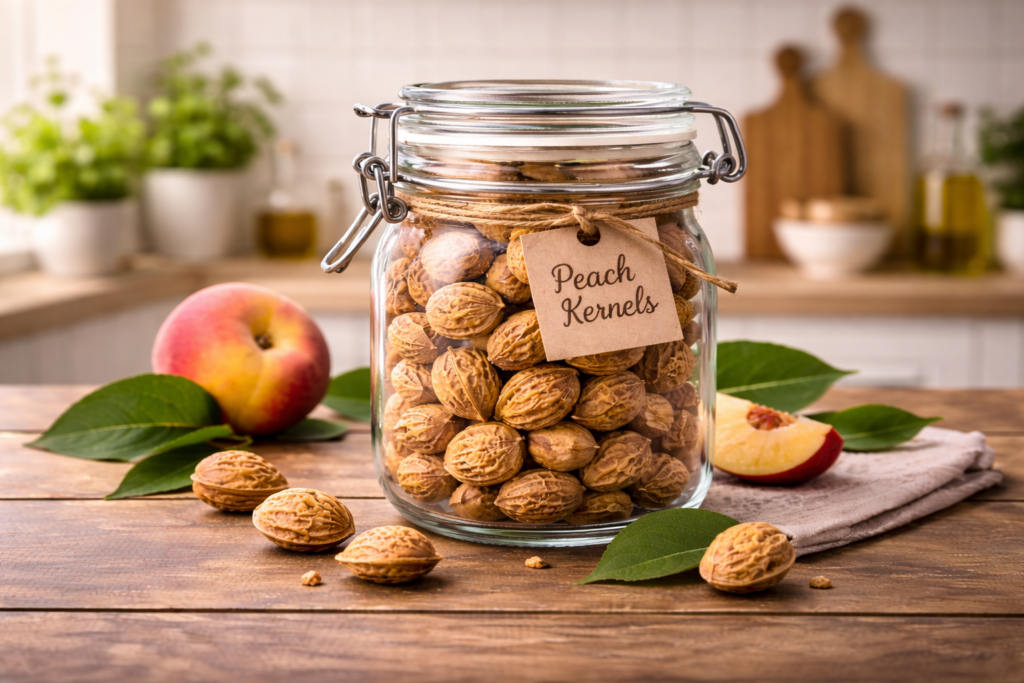
Peach kernels are also a high-caution topic similar to apricot kernels. They may contain compounds that can be unsafe if eaten. This entry is included for awareness and safety.
In a nutshell: Peach kernels are not recommended for routine eating. Avoid “health remedy” uses.
1) Peach kernels (high caution)
Nutritional facts per 100g (kernel composition can vary widely)
| Nutrient | Amount Per 100g | % Daily Value* |
|---|---|---|
| Calories | 560 kcal | 28% |
| Carbohydrates | 14 g | 5% |
| Fiber | 5 g | 18% |
| Sugars | 3 g | – |
| Protein | 22 g | 44% |
| Fat | 47 g | 60% |
| Vitamin A | 0 IU | 0% |
| Vitamin C | 0 mg | 0% |
| Potassium | 380 mg | 8% |
| Calcium | 60 mg | 5% |
Pros
- Important to include because people search it often.
- Dense in fat and protein (composition varies by source).
- Safety-first content can prevent harmful experimentation.
Cons
- Potential toxicity risk.
- Not a regular edible seed like sunflower or sesame.
- Often marketed with unsafe claims online.
Right time to eat
- Not recommended as a routine edible item.
- Do not give to children.
Health benefits
- For nutrition, choose peach fruit and safe nuts/seeds instead.
- Better alternatives: almonds, walnuts, pumpkin seeds, flaxseed.
- Main benefit of this entry is awareness and harm reduction.
Best way to eat
- Avoid eating peach kernels.
- Choose the fruit and safe edible seeds instead.
- Never use kernels as a “home remedy”.
*Percent Daily Values are based on a 2,000 calorie diet.


Join the conversation