
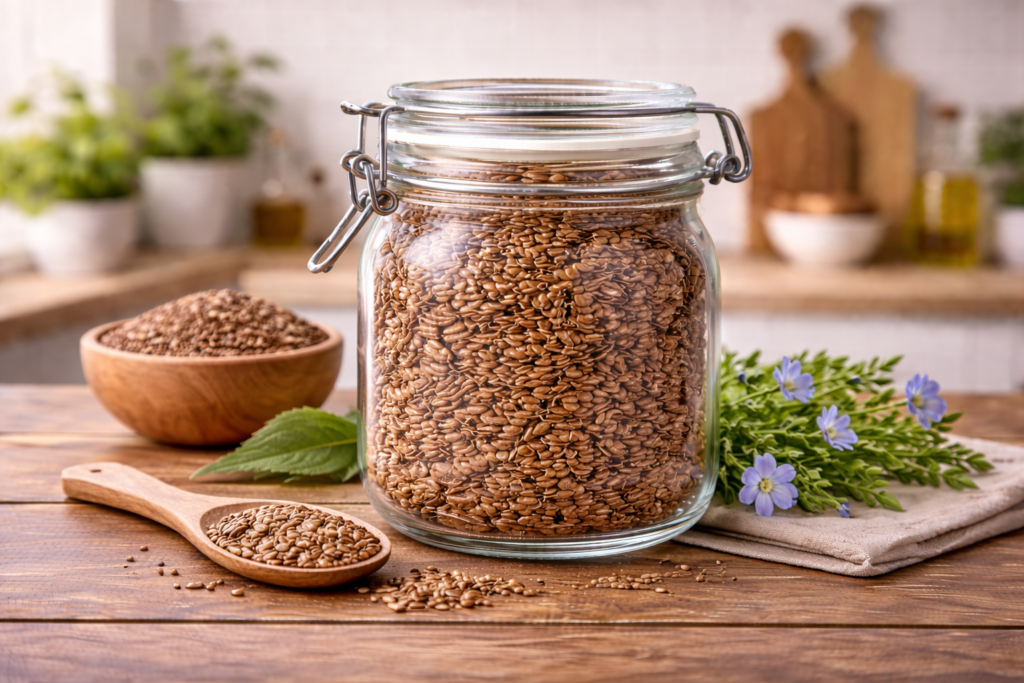
Linseed (flaxseed) is a “daily habit” seed, not a binge snack. A small amount, used consistently, works better than random big spoonfuls.
In a nutshell: The values provided are approximate and can vary depending on variety and processing.
1) Linseed / Flaxseed
Nutritional facts per 100g
| Nutrient | Amount Per 100g | % Daily Value* |
|---|---|---|
| Calories | 534 kcal | 27% |
| Carbohydrates | 28.9 g | 11% |
| Fiber | 27.3 g | 98% |
| Sugars | 1.6 g | – |
| Protein | 18.3 g | 37% |
| Fat | 42.2 g | 54% |
| Vitamin A | 0 IU | 0% |
| Vitamin C | 0.6 mg | 1% |
| Potassium | 813 mg | 17% |
| Calcium | 255 mg | 20% |
Pros
- Very high fiber, supports fullness and digestion routines.
- Easy to add to curd, smoothies, and oats.
- Small daily habit can help reduce random snacking.
Cons
- Too much fiber suddenly can cause bloating.
- Whole seeds may pass through without being used well.
- Calories add up if you add large spoonfuls daily.
Right time to eat
- Morning with breakfast bowls.
- With lunch as part of curd or salad.
Health benefits
- Fiber supports digestion routines when increased gradually.
- Supports satiety and portion control.
- Useful for building better snack habits.
Best way to eat
- Use ground flax for better use.
- Start small and increase slowly.
- Drink enough water because fiber is high.
*Percent Daily Values are based on a 2,000 calorie diet.


Join the conversation