
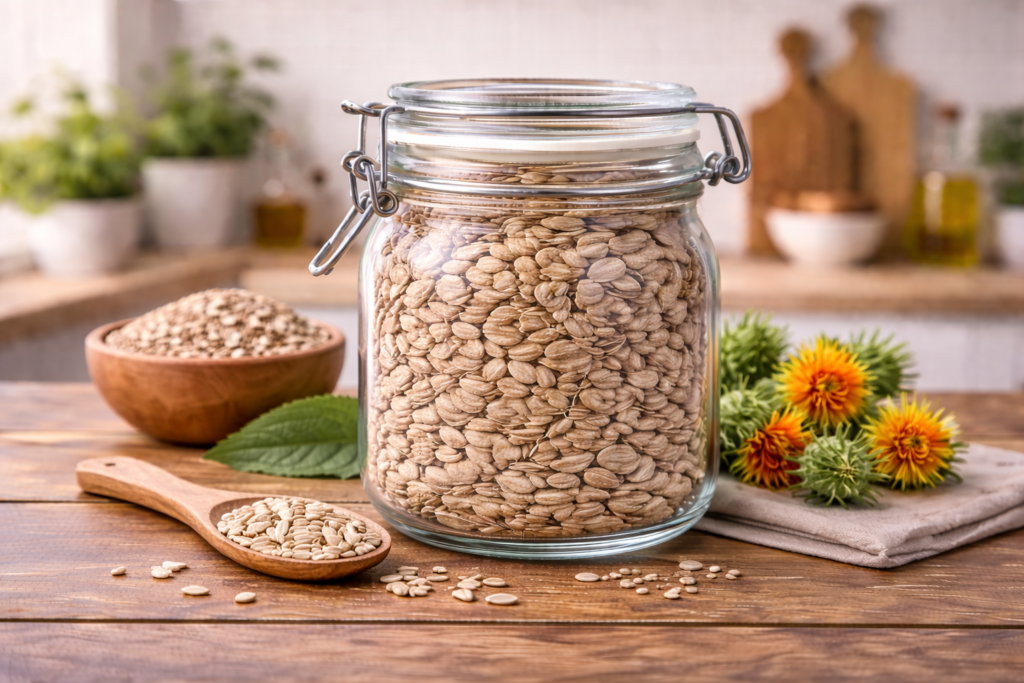
Safflower is mainly known for its oil. The seeds can be eaten in some places, but most people meet safflower through cooking oil rather than snacking.
In a nutshell: The values provided are approximate and can vary depending on the variety and processing.
1) Safflower
Nutritional facts per 100g
| Nutrient | Amount Per 100g | % Daily Value* |
|---|---|---|
| Calories | 517 kcal | 26% |
| Carbohydrates | 34.3 g | 12% |
| Fiber | 6.9 g | 25% |
| Sugars | 0.8 g | – |
| Protein | 16.2 g | 32% |
| Fat | 38.5 g | 49% |
| Vitamin A | 0 IU | 0% |
| Vitamin C | 0 mg | 0% |
| Potassium | 687 mg | 15% |
| Calcium | 78 mg | 6% |
Pros
- Can be used as a roasted seed snack in small portions.
- Useful for adding crunch to mixes and toppings.
- Oil form is commonly used for cooking.
Cons
- Not commonly eaten as a seed snack everywhere, quality varies.
- Calorie-dense, portions matter.
- Salted roasted packs can add extra sodium.
Right time to eat
- As a small snack earlier in the day.
- With meals as topping for portion control.
Health benefits
- Supports satiety when portioned.
- Helps reduce reliance on fried crunchy snacks.
- Useful as a “meal topper” for better fullness.
Best way to eat
- Prefer food-grade, roasted seeds (not bird feed).
- Keep seasoning light and portion measured.
- Store airtight to maintain freshness.
*Percent Daily Values are based on a 2,000 calorie diet.


Join the conversation