
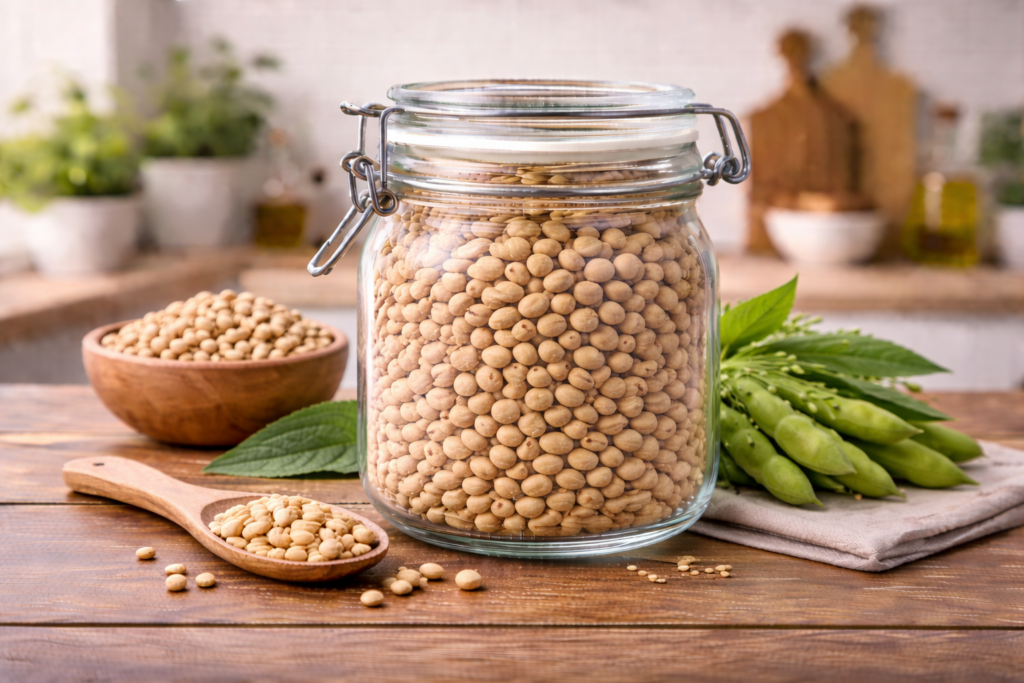
Soybean is a protein heavyweight. It’s not a casual “munch seed” for most people, but it becomes extremely useful once you eat it cooked (or as tofu/soymilk).
In a nutshell: The values provided are approximate and can vary depending on the variety and processing.
1) Soybean
Nutritional facts per 100g
| Nutrient | Amount Per 100g | % Daily Value* |
|---|---|---|
| Calories | 446 kcal | 22% |
| Carbohydrates | 30.2 g | 11% |
| Fiber | 9.3 g | 33% |
| Sugars | 7.3 g | – |
| Protein | 36.5 g | 73% |
| Fat | 19.9 g | 26% |
| Vitamin A | 22 IU | 0% |
| Vitamin C | 6.0 mg | 10% |
| Potassium | 1797 mg | 38% |
| Calcium | 277 mg | 21% |
Pros
- Very high protein, supports fullness and meal balance.
- Versatile: edamame, tofu, soymilk, soy chunks, tempeh.
- Good option for people reducing meat intake.
Cons
- Can cause gas/bloating for some people if intake increases suddenly.
- Flavoured/processed soy snacks can add excess salt and oil.
- Not meant to be eaten raw; cook properly.
Right time to eat
- Lunch or dinner as part of a proper meal.
- Post-workout meal when you want a higher-protein plate.
Health benefits
- Protein supports satiety and steady energy.
- Fiber supports digestion routines when intake is gradual.
- Useful for building high-protein vegetarian meals.
Best way to eat
- Boil/steam (edamame) or use tofu/tempeh/soy chunks.
- Pair with vegetables and grains for a balanced meal.
- Start small if you are new to soy.
*Percent Daily Values are based on a 2,000 calorie diet.


Join the conversation