
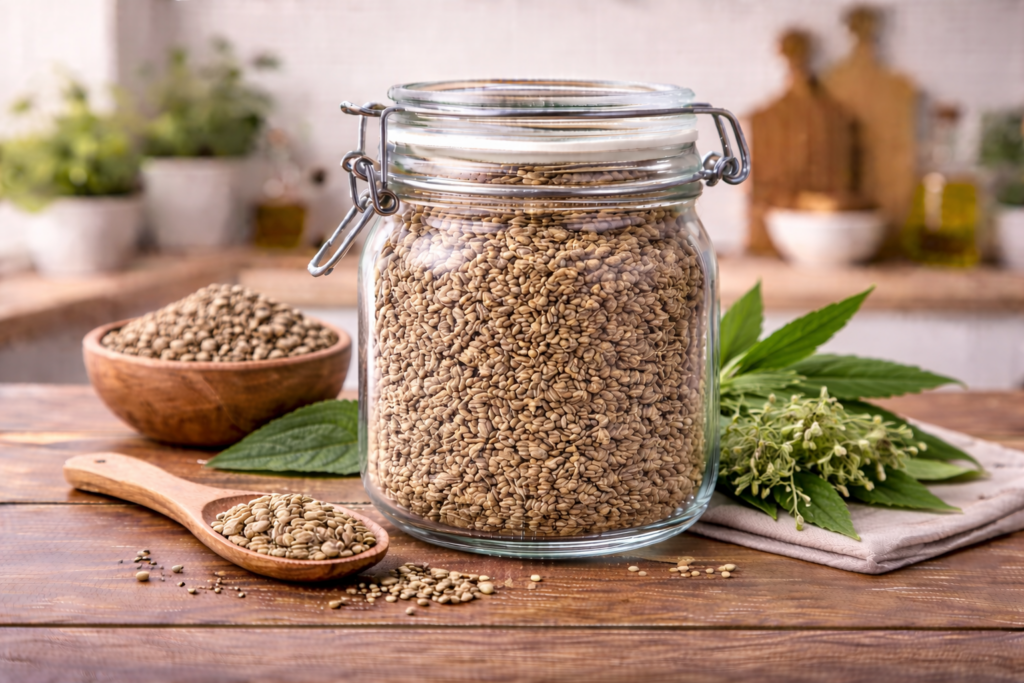
Hemp seeds are soft, nutty, and feel like a shortcut to making a meal more filling. They are easy to sprinkle, and they blend smoothly into bowls and smoothies.
In a nutshell: The values provided are approximate and can vary depending on whether the seeds are hulled and how they are processed.
1) Hemp seeds
Nutritional facts per 100g
| Nutrient | Amount Per 100g | % Daily Value* |
|---|---|---|
| Calories | 553 kcal | 28% |
| Carbohydrates | 8.7 g | 3% |
| Fiber | 4.0 g | 14% |
| Sugars | 1.5 g | – |
| Protein | 31.6 g | 63% |
| Fat | 48.8 g | 63% |
| Vitamin A | 0 IU | 0% |
| Vitamin C | 0 mg | 0% |
| Potassium | 1200 mg | 26% |
| Calcium | 70 mg | 5% |
Pros
- High protein, helps meals feel more satisfying.
- Soft texture, easy to eat and mix into foods.
- Good topping option without needing heavy seasoning.
Cons
- Calorie-dense, large spoonfuls can overshoot intake.
- Some people may feel heaviness if they eat too much at once.
- Seed allergy sensitivity is possible for a few people.
Right time to eat
- Morning with breakfast bowls or smoothies.
- With lunch as topping to reduce post-meal cravings.
Health benefits
- Supports satiety and controlled eating.
- Helps reduce reliance on processed snacks.
- Useful as a protein add-on in vegetarian meals.
Best way to eat
- Use as topping, blend into smoothies, or mix into curd.
- Keep portions measured, especially if you snack often.
- Store airtight in a cool place.
*Percent Daily Values are based on a 2,000 calorie diet.


Join the conversation