
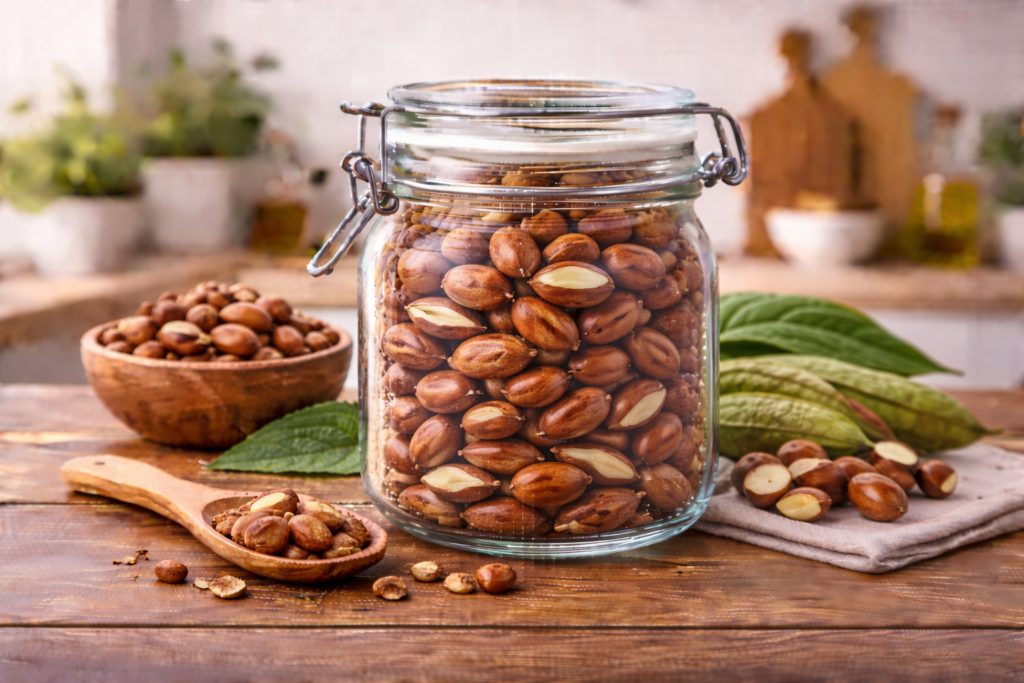
Saba nut is a rich seed that eats like a nut when roasted. It is energy-dense and works best as a small serving snack, not a big handful habit.
In a nutshell: The values provided are approximate and can vary depending on the size and ripeness.
1) Saba nut
Nutritional facts per 100g
| Nutrient | Amount Per 100g | % Daily Value* |
|---|---|---|
| Calories | 626 kcal | 31% |
| Carbohydrates | 8.0 g | 3% |
| Fiber | — | — |
| Sugars | — | – |
| Protein | 19.0 g | 38% |
| Fat | 63.0 g | 81% |
| Vitamin A | — | — |
| Vitamin C | — | — |
| Potassium | — | — |
| Calcium | 80 mg | 8% |
Pros
- High fat and protein, very filling in small servings.
- Good snack swap for fried foods.
- Works well roasted, without sugar.
Cons
- Very calorie-dense, portion control is important.
- Quality and nutrition can vary by source.
- Not as commonly available as regular edible nuts.
Right time to eat
- Mid-morning snack in a small portion.
- Evening snack to reduce junk cravings.
Health benefits
- Supports satiety and steadier energy.
- Can help reduce processed snack dependence.
- Pairs well with fruit for balance.
Best way to eat
- Prefer roasted/cooked, plain.
- Keep serving small due to high fat.
- Store airtight to keep flavour fresh.
*Percent Daily Values are based on a 2,000 calorie diet.


Join the conversation