
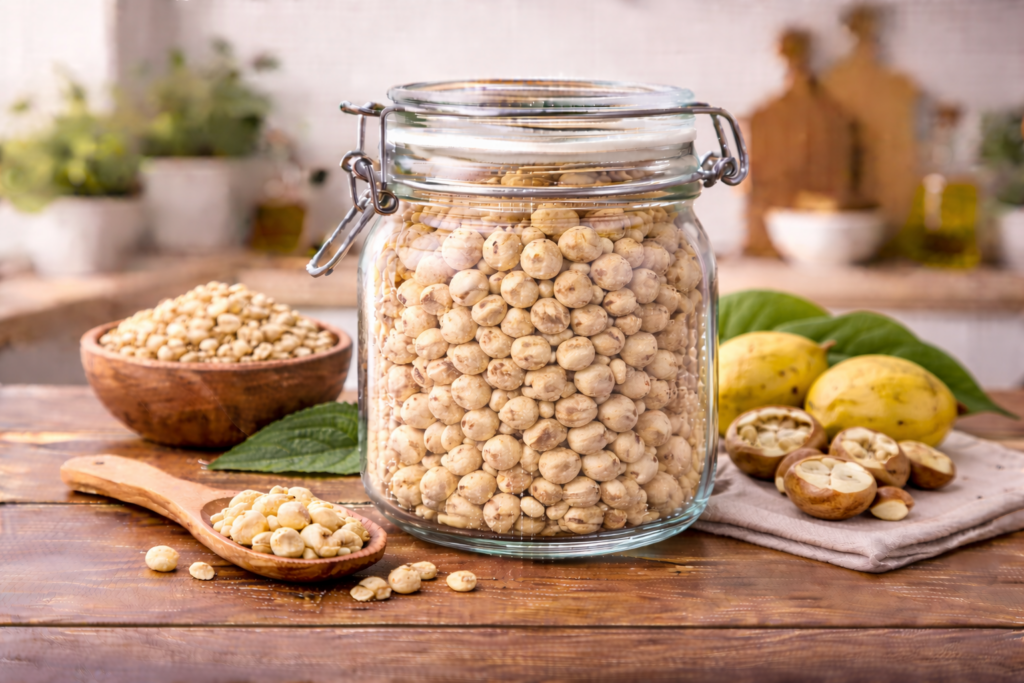
Marula kernels are rich, creamy, and deeply nutty. They are more like an “energy nut” than a light snack, so a small serving goes a long way.
In a nutshell: The values provided are approximate and can vary depending on the size and ripeness.
1) Marula kernels
Nutritional facts per 100g
| Nutrient | Amount Per 100g | % Daily Value* |
|---|---|---|
| Calories | 646 kcal | 32% |
| Carbohydrates | 3.7 g | 1% |
| Fiber | 2.9 g | 12% |
| Sugars | — | – |
| Protein | 28.3 g | 57% |
| Fat | 57.3 g | 73% |
| Vitamin A | 0 IU | 0% |
| Vitamin C | 0 mg | 0% |
| Potassium | 601 mg | 13% |
| Calcium | 118 mg | 12% |
Pros
- High protein and healthy fats, very satisfying.
- Low carb for a nut option.
- Good for replacing processed snacks.
Cons
- Very calorie-dense, portion size matters.
- Availability can be limited, quality varies.
- Nut allergy risk for sensitive people.
Right time to eat
- Mid-morning snack with fruit.
- Evening snack in a small portion to reduce cravings.
Health benefits
- Supports satiety and steadier energy.
- Useful for people trying to reduce frequent snacking.
- Protein helps make snacks more “complete.”
Best way to eat
- Eat plain/roasted, measured portion.
- Use as topping on oats or curd instead of overeating as a bowl snack.
- Store airtight to avoid rancidity.
*Percent Daily Values are based on a 2,000 calorie diet.


Join the conversation