
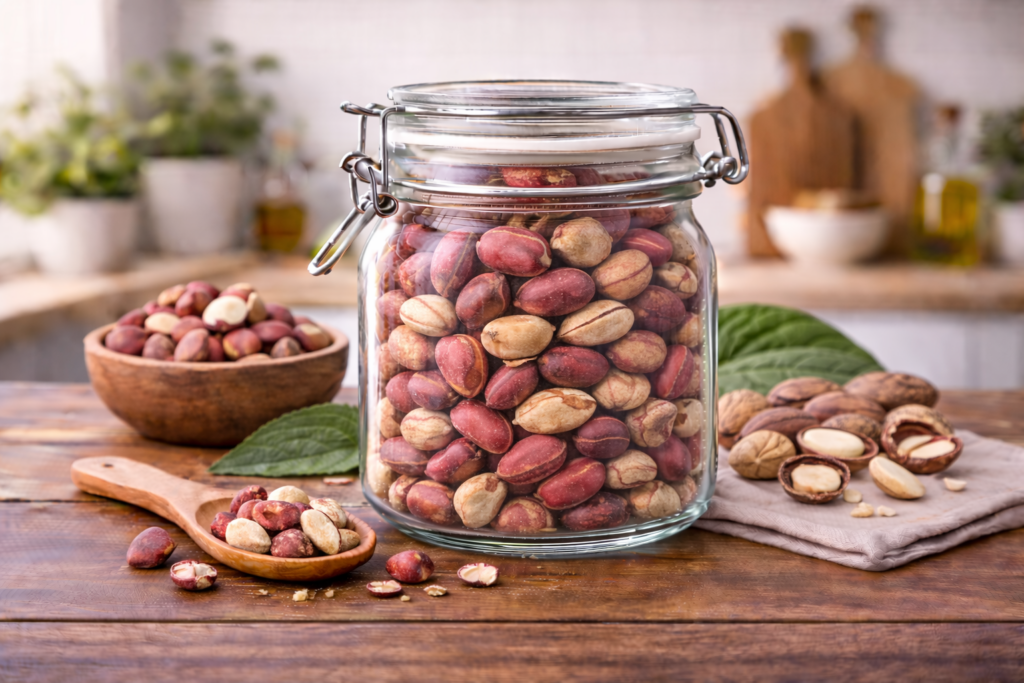
Kola nut is traditionally chewed for its bitter taste and natural stimulant kick. Think of it as “plant caffeine” more than a snack nut.
In a nutshell: The values provided are approximate and can vary depending on the size and ripeness.
1) Kola nut
Nutritional facts per 100g
| Nutrient | Amount Per 100g | % Daily Value* |
|---|---|---|
| Calories | 164 kcal | 8% |
| Carbohydrates | 32.5 g | 12% |
| Fiber | 10.5 g | 42% |
| Sugars | — | – |
| Protein | 3.2 g | 6% |
| Fat | 0.2 g | 0% |
| Vitamin A | — | — |
| Vitamin C | — | — |
| Potassium | — | — |
| Calcium | 44 mg | 4% |
Pros
- Commonly used for an alertness boost.
- High fiber for a plant food.
- Low fat.
Cons
- Contains natural stimulants, may trigger anxiety or sleep issues for some.
- Bitter, not enjoyable for everyone.
- Not meant for large “snack bowls.”
Right time to eat
- Earlier in the day, not late evening.
- Before demanding work blocks, only in small amount.
Health benefits
- May support alertness routines when used occasionally.
- Fiber supports digestion when tolerated well.
- Can reduce reliance on sugary energy snacks.
Best way to eat
- Use small portion only, chew slowly.
- Avoid mixing with multiple caffeine sources the same day.
- Skip if you have sleep sensitivity.
*Percent Daily Values are based on a 2,000 calorie diet.


Join the conversation