
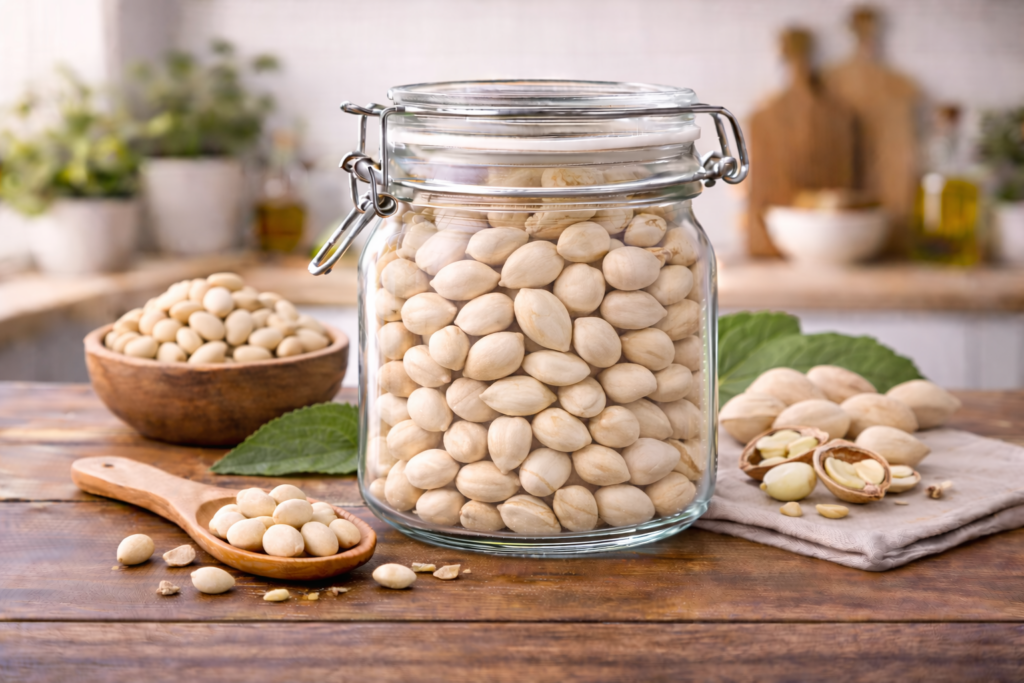
Ginkgo nuts are mildly sweet and starchy, more like a soft chestnut than an oily nut. They are usually eaten cooked in small amounts.
In a nutshell: The values provided are approximate and can vary depending on the size and ripeness.
1) Ginkgo nut
Nutritional facts per 100g
| Nutrient | Amount Per 100g | % Daily Value* |
|---|---|---|
| Calories | 182 kcal | 9% |
| Carbohydrates | 37.6 g | 14% |
| Fiber | — | — |
| Sugars | — | – |
| Protein | 4.3 g | 9% |
| Fat | 1.7 g | 2% |
| Vitamin A | 0 IU | 0% |
| Vitamin C | 15 mg | 25% |
| Potassium | 510 mg | 11% |
| Calcium | 2 mg | 0% |
Pros
- Lower fat compared to most nuts.
- Starchy and comforting, can replace refined snacks.
- Vitamin C content supports immunity routines.
Cons
- Should be eaten cooked, not as a raw snack.
- Overeating can cause stomach upset for some people.
- Not ideal for people who need very low-carb snacks.
Right time to eat
- Mid-morning snack in small serving.
- With meals as a cooked side.
Health benefits
- Comforting, lighter alternative to fried snacks when cooked.
- Helps add variety in plant foods.
- Can support satisfaction when paired with protein foods.
Best way to eat
- Roast or boil, then remove any tough outer parts.
- Add to soups or light stir-fries in small amounts.
- Keep portions modest.
*Percent Daily Values are based on a 2,000 calorie diet.


Join the conversation