
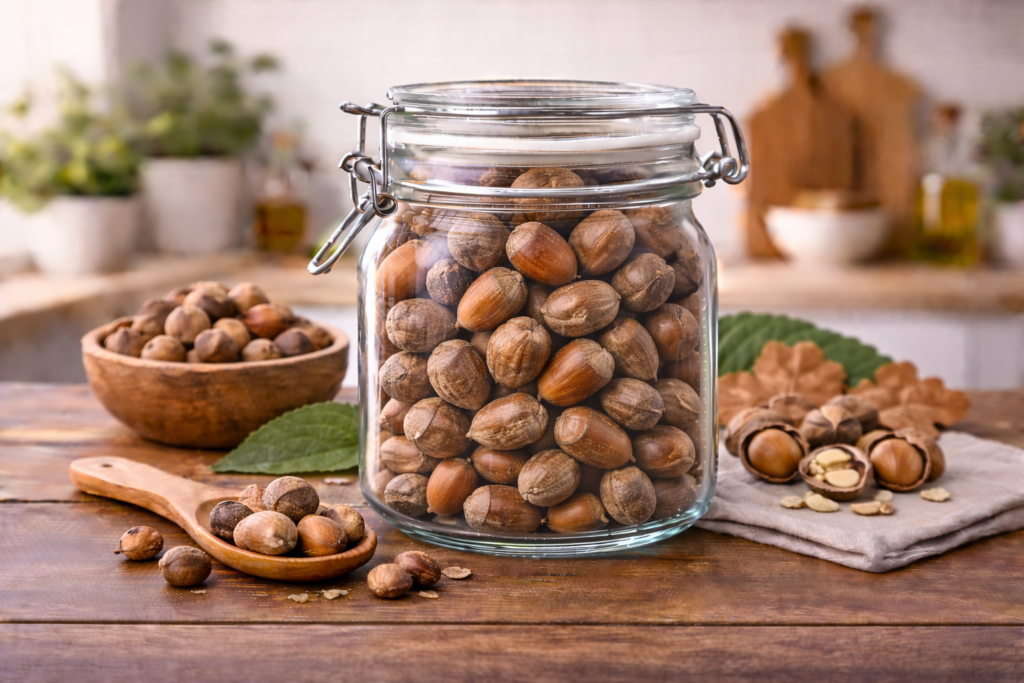
Acorns are a traditional food in many cultures, but they are not a “snack straight from the tree” nut. They need proper processing before eating.
In a nutshell: The values provided are approximate and can vary depending on the species and how the acorns are processed.
1) Acorn
Nutritional facts per 100g
| Nutrient | Amount Per 100g | % Daily Value* |
|---|---|---|
| Calories | 387 kcal | 19% |
| Carbohydrates | 40.8 g | 15% |
| Fiber | 4.4 g | 16% |
| Sugars | 0.1 g | – |
| Protein | 6.2 g | 12% |
| Fat | 23.9 g | 31% |
| Vitamin A | 0 IU | 0% |
| Vitamin C | 0 mg | 0% |
| Potassium | 709 mg | 15% |
| Calcium | 41 mg | 3% |
Pros
- Can be used as flour for traditional cooking after proper processing.
- Provides a mix of carbs and fats, so it feels filling.
- Interesting option for people exploring heritage foods.
Cons
- Must be properly processed before eating; raw acorns are not suitable.
- Portion matters because the calories can add up.
- Availability and quality vary widely.
Right time to eat
- With meals (as flour or cooked dishes), not as raw snacks.
- Best earlier in the day if you find starchy foods heavy at night.
Health benefits
- Supports meal fullness when used as a cooked ingredient.
- Fiber supports digestion routines.
- Adds variety to carbohydrate sources when used as flour.
Best way to eat
- Use only properly processed acorn flour or prepared acorns.
- Cook into porridge, breads, or pancakes as per traditional methods.
- Keep portions moderate, like any flour-based food.
*Percent Daily Values are based on a 2,000 calorie diet.


Join the conversation