
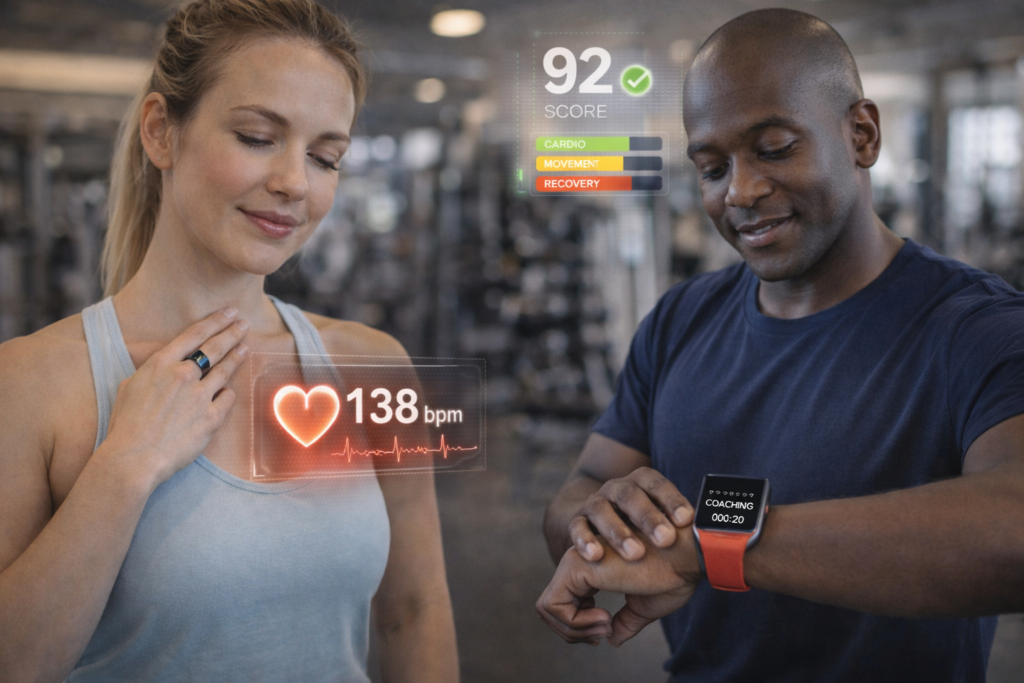
“Data is useful. Obsession is expensive.” – Wellness Kraft
Introduction
A funny thing happens when you start wearing a tracker 24/7.
At first, it feels empowering. You learn your sleep is not as good as you thought. You notice late-night scrolling shows up the next day as a worse “readiness” score. You realize a stressful week changes your heart rate patterns. You start making small fixes.
Then, for some people, it flips.
They start living for the score. They feel guilty when the ring says “poor recovery.” They feel anxious when sleep is “not optimal.” They start asking the device for permission to work out, to rest, to even feel okay.
So let’s set the frame properly.
AI wearables and smart rings can be excellent tools, especially for consistency, recovery awareness, and habit-building. But they are not mind-readers, and they are not medical devices. They estimate patterns. They do not know your full life, your emotions, or your context unless you give them that context and still, they are guessing.
This post will show you what these “AI coach” features are actually doing, how they help, where they can mislead you, and how to use them like a grown-up.
What “AI Coach” Really Means in Wearables
Most AI coaching in wearables is not magic. It is a combination of three things:
First, sensors.
Heart rate, heart rate variability, movement, skin temperature trends, and sometimes blood oxygen. Rings are popular because fingers can be a strong spot for certain measurements during sleep.
Second, pattern recognition.
The app looks for trends: “You sleep worse on nights you drink.” “You recover better when you walk after dinner.” “Your stress markers rise on meeting-heavy days.”
Third, recommendations.
This is the “coach” layer: sleep reminders, recovery scores, strain targets, training load guidance, breathing exercises, and suggested intensity levels.
Some platforms add conversational AI, meaning you can ask questions like, “Why is my recovery low?” and it answers using your recent data and typical patterns.
That is the big shift: from tracking to interpreting.
Why Smart Rings Became a Big Deal
A watch is great for workouts, but a ring is often easier to wear all day and all night. Many people hate sleeping with a bulky watch. Rings feel subtle, and because they are worn continuously, they can build a fuller picture of sleep and recovery habits.
Rings also fit a modern reality: people want health feedback without feeling like they are “working out.” A ring does not scream fitness. It whispers it.
The Best Ways AI Wearables Help
They turn invisible habits into visible consequences
You can tell yourself you “sleep fine.” A wearable might show you that you wake up more than you think, or that your sleep schedule swings too much.
You can tell yourself stress is “normal.” Your body might be showing elevated stress markers for hours a day. Seeing it helps you stop normalizing it.
They help you stop overtraining and under-recovering
A lot of people do not have a training problem. They have a recovery problem. They push hard, sleep poorly, repeat. Wearables can help you notice that cycle and adjust.
If you are someone who always trains “a little more,” a recovery score can be a useful speed breaker.
They improve consistency for busy people
If your biggest issue is “I forget myself during the day,” nudges can help. Hydration reminders, move reminders, wind-down reminders. Not because the device is wise, but because repetition builds behavior.
They can make strength and cardio programming smarter
Some platforms estimate training load and show whether your weekly effort is rising too fast or too slowly. That can reduce injury risk for people who jump between extremes.
Where AI Coaching Can Mislead You
It can create score addiction
This is the most common trap.
You wake up and check your readiness score before you even check in with yourself. If the score is low, you feel defeated. If the score is high, you feel confident even if you feel off.
A healthy relationship with wearables is the opposite: you use the score as information, not identity.
“Bad sleep” can become a self-fulfilling prophecy
If the device says you slept badly, you may spend the whole day feeling fragile, even when your body could have performed fine.
The solution is simple: use the wearable as a trend tool, not a daily verdict.
Not all metrics are equally accurate
Sleep staging, stress estimation, and recovery scoring are improving, but they are still estimates. Even when a device is good, it can be wrong on a given night.
That is why you should never treat it like a diagnosis machine.
AI does not understand your context
If you had a late wedding, a flight, a sick child, or a tough work week, the device can detect your body’s strain, but it cannot understand your life. Its recommendation might be technically correct and emotionally useless.
You need to be the boss of the plan, not the ring.
A Day With a Ring That Talks Back
Jason wears a ring because he hates sleeping with a watch. He is not trying to become a fitness influencer. He just wants more energy and less stiffness.
At first, the ring helps. He notices a pattern: when he eats late and scrolls in bed, his sleep quality drops and he wakes up groggy. When he walks after dinner and keeps the phone away, his mornings improve.
Then the ring starts “coaching” more aggressively.
One morning, it says his recovery is low and recommends a light day. Jason feels fine, but he panics. He cancels his workout. He spends the day moving less than usual. He becomes weirdly cautious, like he is made of glass.
That night, he sleeps worse, partly because he felt off all day.
The next week, he changes one thing: he stops letting the ring decide. He uses it to notice trends only.
He makes a rule: if the ring says “low recovery” but he feels okay, he still trains, just with lower intensity. If he feels tired and the ring agrees, he rests without guilt. If they disagree, he listens to his body first and uses the ring as a second opinion.
Now the ring is useful again. It became a tool, not a judge.
That is the correct relationship.
How to Use Wearable Coaching the Right Way
1) Choose one primary goal
If you try to “optimize everything,” you will hate your life.
Pick one:
Better sleep consistency.
More daily movement.
Smarter training load.
Lower stress spikes.
When you pick one, the device becomes a guide instead of noise.
2) Watch weekly patterns, not daily drama
A single bad night does not mean you are broken. A consistent pattern over two to four weeks is meaningful.
Weekly thinking protects your mental health and improves decision-making.
3) Use the “two-signal rule.”
Make decisions using two signals, not one.
Signal one: your body.
How is your energy, mood, soreness, motivation, and focus?
Signal two: your wearable trend.
Is recovery trending down? Is sleep debt building? Is stress consistently high?
When both say “rest,” rest.
When both say “go,” go.
When they disagree, adjust the intensity rather than cancel everything.
4) Do not chase perfect numbers
The goal is a better life, not a perfect dashboard.
A wearable is successful if it helps you:
Sleep 30 minutes earlier.
Walk more often.
Train more consistently.
Recover better.
Notice stress before it explodes.
That is it.
5) Treat alerts as prompts, not commands
A “high stress” alert should make you pause and ask, “What is happening?”
Not, “What is wrong with me?”
Key Takeaways
- AI wearables and rings are shifting from tracking to coaching by interpreting patterns and offering recommendations.
- The most significant benefit is habit awareness: sleep consistency, stress trends, recovery balance, and guidance on training load.
- The most significant risk is becoming obsessed with scores and letting the device control your confidence and choices.
- Use trends over weeks, not one-day verdicts.
- Use the “two-signal rule”: body feedback first, wearable data second.
- Wearables are not medical devices. They estimate, they do not diagnose.
Research Insight
Several wearable platforms now market AI-driven coaching that interprets your sleep, strain, stress, and recovery patterns and provides personalized guidance, including conversational “coach” features. WHOOP+2support.whoop.com+2
Major smartwatch ecosystems are also adding training-load features to help users understand how recent workouts compare with longer baselines, reinforcing the coaching guidance provided by wearables. Apple+1
Regarding accuracy, peer-reviewed studies have evaluated smart ring performance for sleep and related signals, generally finding rings can be useful for trend detection while still having limitations, especially for detailed sleep stage classification. ScienceDirect+2PMC+2
Smart rings are also expanding their “health feature” claims to include sleep and respiratory-related insights, often emphasizing that they are not diagnostic tools. T3+1
https://www.whoop.com/thelocker/everything-whoop-launched-in-2025
https://support.apple.com/guide/watch/track-your-training-load-apde4c07a6cf/watchos
https://www.sciencedirect.com/science/article/pii/S1389945724000200
https://pmc.ncbi.nlm.nih.gov/articles/PMC11511193/
FAQs
1) Are smart rings accurate enough to trust?
They are often helpful in identifying patterns and trends, especially in sleep timing, resting heart rate, and overall recovery direction. They can still be incorrect on a given night, and sleep-stage details are not perfect. Treat the data as helpful estimates, not absolute truth.
2) Can an AI wearable replace a coach or doctor?
No. It can support sound decisions, but it cannot fully understand your life context, injuries, medical conditions, or training history as a human professional can. Use it for consistency and awareness, not diagnosis or complex programming.
3) Why does my wearable say I slept badly when I feel fine?
Because it is estimating based on movement and heart metrics, it can misread certain situations. Also, you can feel okay after an imperfect night’s sleep. Use weekly patterns to decide, not one score.
4) Should I skip workouts when my recovery score is low?
Not automatically. Use the two-signal rule. If you feel tired and the score is low, rest or go light. If you feel fine but the score is low, reduce intensity rather than skipping altogether. Consistency matters more than perfect readiness.
5) What is the healthiest way to use these devices?
Pick one goal, track trends weekly, and use nudges to prompt action. If the device makes you anxious, set fewer notifications, stop checking scores first thing in the morning, and remember: you own the plan.
Concluding Thoughts
AI wearables are at their best when they make your habits visible and your decisions calmer. They are at their worst when they turn your body into a daily report card.
Use the ring like a dashboard, not like a boss. Build habits that work even without it. If the device helps you sleep earlier, move more, and train smarter, it is worth it. If it makes you anxious, simplify your settings and return to the basics.
Your health is not a number. It is a pattern you live.




Join the conversation