
“Scalp care is not a stunt. It’s a system.” – Wellness Kraft
Introduction
If you’ve spent even ten minutes in hair-loss content online, you’ve seen microneedling sold like a cheat code: roll your scalp, apply something magical, watch hair pop up.
Reality is more grounded and more useful.
Microneedling does not “create new follicles.” What it can do is change the scalp environment around existing follicles. It creates tiny controlled micro-injuries, which triggers a wound-healing response. That response involves growth factors, changes in local inflammation, and remodeling that may support follicles that are struggling, especially in pattern hair loss (androgenetic alopecia). It can also increase absorption of topical treatments, which is why it’s often discussed alongside minoxidil.
But here’s the crucial part: the scalp is skin with blood supply, bacteria, follicles, nerves, and a lot of ways to react. You can help it, or you can irritate it badly. The difference is technique, hygiene, depth, frequency, and whether you’re even a good candidate.
So let’s strip this down to what you actually need to know.
What Microneedling Is (and What It Isn’t)
Microneedling uses many tiny needles (a roller or pen device) to create microscopic punctures in the skin. On the scalp, the goal is not to “puncture hard.” The goal is controlled stimulation.
It is not:
A replacement for diagnosing why you’re losing hair.
A cure for every type of hair loss.
A safe DIY routine for everyone just because a video makes it look easy.
It is:
A procedure that can complement proven treatments for certain hair loss patterns.
A method that needs discipline, not excitement.
Who Microneedling Helps the Most
Microneedling has been studied mostly in the context of pattern hair loss. That is the thinning that follows typical patterns: crown and temples in men, widening part and crown thinning in women. In this group, microneedling is often discussed as an “add-on” that can improve results, especially when combined with topical minoxidil.
If your hair loss is primarily telogen effluvium (stress/illness shedding), traction alopecia (tight hairstyles), scarring alopecias (inflammatory conditions), or scalp disease, microneedling may be useless or risky unless a dermatologist has evaluated your scalp and guided the plan.
So if you’re not sure what kind of hair loss you have, the smartest first move is clarity, not needles.
What the Evidence Actually Says (without the hype voice)
The overall research story is pretty consistent:
Microneedling alone may offer limited improvement for some people.
Microneedling combined with established treatments like minoxidil tends to show better results than minoxidil alone in several studies.
The evidence is promising, but not perfect. Many studies are small, protocols differ, and results vary depending on depth, frequency, and the baseline severity of hair loss.
In practical terms, microneedling is best viewed as a “booster,” not a standalone miracle.
If someone is selling microneedling as a one-step cure, that’s marketing, not medicine.
The Best Protocol Mindset: Gentle, Consistent, and Boring
Most disasters come from people treating microneedling like they’re sanding a wall.
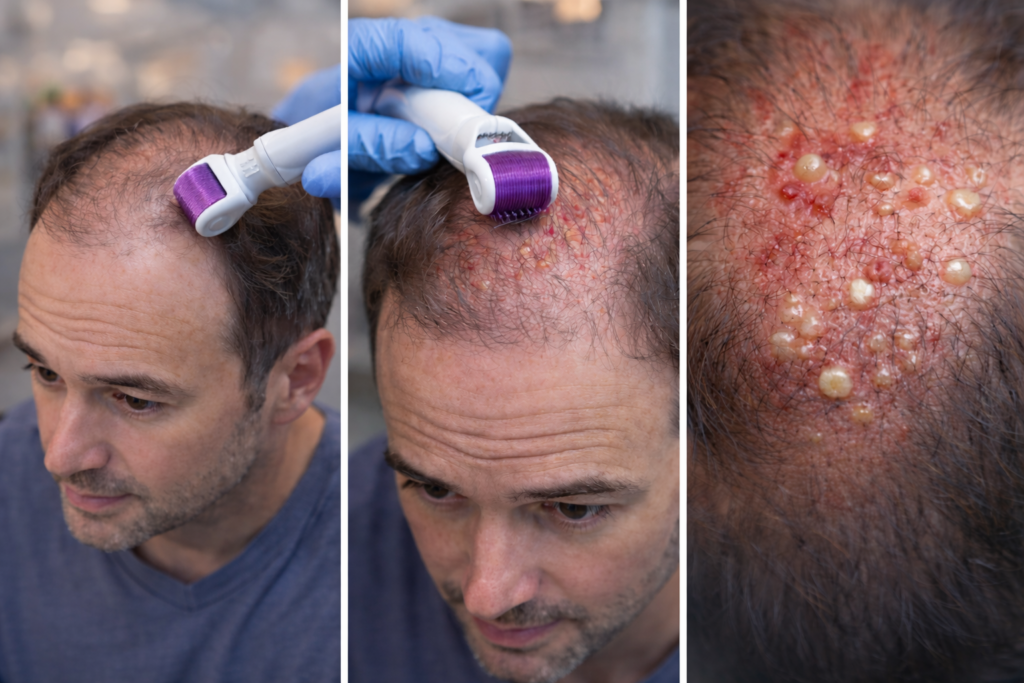
Your scalp does not need punishment. It needs controlled stimulation with enough recovery time. Overdoing it can increase irritation, inflammation, shedding, and in some cases infection or scarring.
A sensible protocol is built around four decisions:
- Device choice
- Depth
- Frequency
- Hygiene and aftercare
Let’s walk through each.
Device Choice: Roller vs Pen
Derma rollers
Rollers are cheaper and common for home use, but they have drawbacks. The needles enter at slightly different angles as the roller moves, and pressure is easy to overdo. Rollers also wear down and can become unsafe if reused too long.
Derma pens
Pens move vertically and allow more controlled depth and technique. In clinical settings, pens are often preferred because they’re more precise. For home users, pens can still be risky if you chase deeper settings without proper understanding and sterility.
If you’re doing this medically (best case), it’s done in a clinic with proper sterility and training.
Depth: The Most Misunderstood Part
Depth is where DIY microneedling becomes a problem. People assume deeper equals better. Deeper often equals more irritation and more risk.
Many discussions around scalp microneedling mention depths ranging roughly from under 1 mm to about 1.5 mm depending on the device and setting, but the “best” depth is not universal. It depends on scalp thickness, sensitivity, and how your scalp reacts.
A reasonable guiding principle:
If you can’t keep the process controlled, clean, and calm, you shouldn’t be going deep.
For a lot of people, moderate depths and patience beat aggressive needling.
Frequency: More Is Not Better
A scalp that is constantly injured never settles into a healthy growth environment. It stays irritated.
In research and clinical practice discussions, microneedling is often done weekly or every couple of weeks, typically across a set period like a few months, then reassessed. The point is to stimulate, then allow recovery.
If you’re doing it more often because you feel impatient, you’re moving in the wrong direction.
Hygiene and Aftercare: Where Most “At Home” Goes Wrong
Microneedling creates micro-wounds. That means you are literally creating entry points.
If your device is not truly clean, you can introduce bacteria.
If your hands aren’t clean, you can introduce bacteria.
If you microneedle over active scalp acne, sores, or infection, you can spread it.
If you share a device, you’re playing with fire.
Aftercare is not complicated, but it must be respected. Your scalp should calm down. Redness and mild sensitivity can happen. What you don’t want is increasing pain, warmth, swelling, pus, fever, or spreading redness.
Also, be careful about what you apply immediately afterward. Some people try to “needle in” strong actives. That can cause irritation, contact dermatitis, and unnecessary inflammation.
What Microneedling Feels Like When It’s Done Properly
This is important because people use pain as a scoreboard.
Proper microneedling should feel like controlled discomfort, not a battle. You might feel a prickly sting. You might see redness. Some pinpoint bleeding can happen depending on depth and technique, but it should not look like your scalp was attacked.
If you’re dragging it until you’re bleeding heavily, you’re not being “serious.” You’re being unsafe.
Safety Red Flags: Do Not Microneedle If Any of These Apply
This part saves scalps.
Avoid microneedling (or only do it under medical supervision) if you have:
Active scalp infection, boils, open sores, or inflamed scalp acne
A history of keloids or abnormal scarring
Active eczema, psoriasis flare, or dermatitis on the scalp
Herpes outbreaks (yes, viruses can spread through disrupted skin)
Bleeding disorders or you’re on blood thinners (needs medical guidance)
Very sensitive skin that reacts intensely to minor irritation
A tendency to pick at your scalp or overdo routines when anxious
And if your hair loss is scarring/inflammatory alopecia, you should not DIY this. You need a dermatologist first.
“I Did Microneedling and Now I’m Shedding More”
This happens, and it can create panic.
Any scalp irritation can increase shedding temporarily. Also, some treatments shift follicles into a new cycle, and that shift can look like shedding before improvement.
The key is how the shedding behaves and what your scalp looks and feels like.
If shedding is mild and your scalp is calm, it may settle.
If shedding is heavy and your scalp is inflamed, painful, or irritated, the priority is calming the scalp, not continuing the procedure.
This is where people ruin progress by pushing through inflammation.
What Results Timeline Should You Expect
Microneedling is not an overnight switch. Hair cycles move slowly. Most people who see benefits notice changes gradually, often over a few months, especially when microneedling is paired with a proven baseline treatment plan.
If you’re judging it week-to-week, you’re going to feel disappointed and anxious. Judge it in months with consistent photos under the same lighting.
Key Takeaways
- Microneedling is best seen as a supportive therapy for pattern hair loss, especially as a booster alongside proven treatments like topical minoxidil.
- Deeper and more frequent is not better. Overdoing it can increase irritation, shedding, infection risk, and scarring risk.
- Hygiene and aftercare are non-negotiable because microneedling creates entry points in the skin.
- Avoid microneedling on active scalp disease, infection, or if you scar easily or have conditions that increase risk.
- Track results monthly, not daily, because hair growth is slow biology.
Research Insight
Several randomized trials have reported that microneedling combined with topical minoxidil can perform better than minoxidil alone in androgenetic alopecia, supporting the idea that microneedling may work best as an “add-on” rather than a standalone solution.
https://pmc.ncbi.nlm.nih.gov/articles/PMC3746236/
https://pmc.ncbi.nlm.nih.gov/articles/PMC6371730/
A 2025 systematic review and meta-analysis reported improved hair outcomes when microneedling is combined with minoxidil, while also emphasizing the need to consider safety and protocol differences across studies.
https://pmc.ncbi.nlm.nih.gov/articles/PMC11890238/
Some newer analyses and updates suggest microneedling alone may have limited benefit for androgenetic alopecia compared with combination approaches, and that protocol details such as depth and treatment duration can influence results.
https://www.thieme-connect.com/products/ejournals/pdf/10.1055/s-0044-1782181.pdf
https://www.aad.org/public/diseases/hair-loss/treatment/diagnosis-treat
Authoritative dermatology guidance warns that at-home microneedling can increase risks like infection, scarring, and spreading viruses when devices pierce the skin or hygiene is poor.
https://www.aad.org/public/cosmetic/scars-stretch-marks/microneedling-fade-scars
https://pmc.ncbi.nlm.nih.gov/articles/PMC11499218/
FAQs
1) Does microneedling actually regrow hair or only help products absorb better?
It can do both. The controlled micro-injury triggers a healing response in the scalp, and it can also improve absorption of topical treatments. Most of the stronger study results are seen when microneedling is combined with proven treatments like minoxidil, which is why it’s often described as a booster rather than a standalone cure.
2) Can I do microneedling at home safely?
Some people do, but “possible” is not the same as “recommended.” The biggest home risks are poor sterility, overdoing depth or frequency, and microneedling over scalp irritation or infection. If you know you tend to get anxious and overdo routines, home microneedling is a high-risk setup.
3) What are signs I should stop immediately?
Increasing scalp pain, warmth, swelling, pus, spreading redness, fever, or severe irritation are stop signs. Also stop if your scalp becomes chronically inflamed or your shedding spikes while your scalp is clearly irritated. Calm the scalp first and talk to a clinician.
4) Why do some people get worse with microneedling?
Usually because they overdo it, use unclean devices, needle too deep, needle too often, or needle on an already inflamed scalp. In hair care, more force doesn’t equal more progress. It often equals more inflammation, and inflammation can worsen shedding.
5) What’s the safest way to combine microneedling with other hair treatments?
Treat microneedling like a procedure, not a daily product. Keep the scalp clean, avoid needling over irritation, and follow a conservative schedule. Discuss timing and combinations with a dermatologist, especially if you use prescription topicals or have sensitive skin.
Concluding Thoughts
Microneedling is one of those treatments that rewards maturity.
If you use it as a thoughtful add-on, with patience and hygiene, it can support better outcomes for some people with pattern hair loss. If you use it as a DIY experiment driven by panic, it can turn into scalp inflammation, infection risk, and regret.
The best version of microneedling is not “hardcore.” It’s controlled. The scalp responds best to steady signals, not chaos.




Join the conversation