
“Do not wait for ‘perfect symptoms.’ Act on real ones.” – Wellness Kraft
Introduction
Men are taught to do two things exceptionally well: keep moving and keep quiet.
That mindset works for deadlines, bills, and hard days. It does not work when your heart is in need of help.
One reason heart attacks become catastrophic is not only the blockage. It is the hesitation. The internal debate. The bargaining. The self-talk that sounds responsible but is actually risky: “Let me rest and see.” “It is probably acidity.” “I am too young.” “I do not want to make a scene.” “I will go tomorrow if it happens again.”
The problem is that heart attack symptoms can be messy. They can be subtle. They can appear, disappear, and then return. They can feel like something you ate, something you lifted, or something you are stressed about. Men, in particular, tend to minimize discomfort until it becomes unavoidable.
This article is not here to scare you. It is here to provide a clear mental checklist so you do not overlook the signs that matter.
If you ever suspect a heart attack, call emergency services immediately. Do not drive yourself. Do not wait for permission from your schedule.
Why Men Miss the Warning Signs
Many men ignore warning signs for three main reasons.
First, they expect “pain,” not “pressure.” Many heart attacks involve discomfort that feels like tightness, squeezing, heaviness, fullness, or a band-like pressure rather than sharp pain. That difference matters because pressure can be easy to dismiss.
Second, they expect the symptom to stay constant. In reality, symptoms can come and go. Some people have warning signs hours, days, or even weeks in advance, such as recurring chest discomfort that appears with exertion and eases with rest.
Third, men often blame other “reasonable” explanations. Indigestion, stress, lack of sleep, too much coffee, a challenging workout, or just getting older. These explanations sound sensible, which is precisely why they are dangerous when the symptom is actually cardiac.
The Symptoms Men Commonly Explain Away
A heart attack can present in different ways, but these are the warning signs men frequently ignore because they feel “not serious enough.”
Chest discomfort that is not dramatic
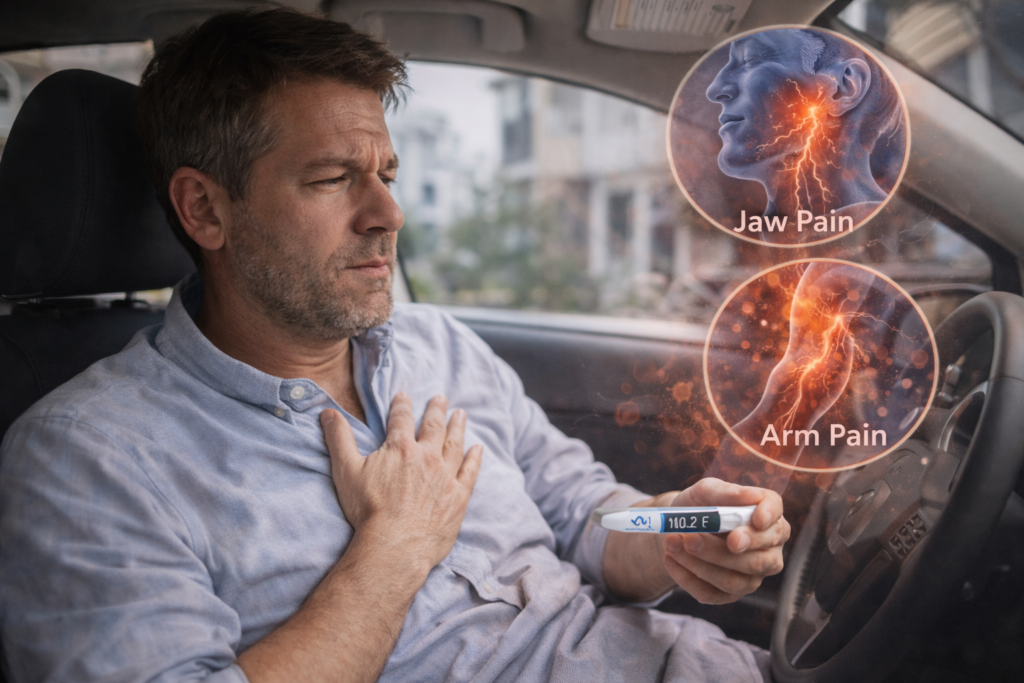
This can feel like pressure, squeezing, tightness, fullness, or an ache in the center of the chest. It may last more than a few minutes, or it may go away and come back. Some men describe it as a weight on the chest rather than pain. Others describe it as discomfort that spreads into the arms, neck, jaw, back, or upper abdomen.
The biggest trap is when it feels mild. Mild does not mean safe.
Shortness of breath that feels like “I am just out of shape.”
Shortness of breath can occur with or without chest discomfort. Some men notice only that they are unusually winded during routine activity. They may blame it on weight gain, stress, smoking, or poor fitness. The key is “unusual.” If the breathlessness is disproportionate to your activity, take it seriously.
Upper body discomfort that does not feel like the chest
Heart attack symptoms can appear in the arms (often the left, but not always), shoulders, back, neck, jaw, or even the teeth. Some men feel it as a dull ache, tightness, or pressure rather than pain. Many shrug it off as posture, a pinched nerve, or gym soreness.
Nausea, indigestion, heartburn, or stomach discomfort
This is one of the most common misreads. Men often assume they ate something wrong or have acidity. If nausea or “indigestion” is paired with sweating, chest pressure, or shortness of breath, it becomes much more suspicious.
Cold sweat, lightheadedness, or a sudden sense of weakness
Breaking into a cold sweat for no apparent reason is a signal worth respecting. Feeling faint, unusually weak, or lightheaded can also occur. Men sometimes label this as dehydration, low sugar, or stress. Again, context matters. If it appears with other symptoms, do not ignore it.
The “something is off” feeling
Some men describe a vague but strong sense that something is wrong. They cannot pinpoint it, but their body feels alarmed. They may feel anxious, restless, or unsettled. It is easy to dismiss this as panic, especially if you have had anxiety before. But anxiety-like sensations can also happen during cardiac events, and you should not gamble when the stakes are that high.
A Story Most Men Recognize
Mark is 44. He works long hours and prides himself on being reliable. He is not “unhealthy” in an obvious way. He is just busy. He carries some extra weight around the waist, drinks coffee like fuel, and sleeps less than he should.
One Tuesday afternoon, he feels a strange pressure in the center of his chest. Not pain. Pressure. It comes with a faint warmth and an uncomfortable tightness. He pauses, takes a breath, and waits. It eases within a few minutes.
He tells himself it is indigestion. He ate quickly. He has been stressed. He had a lot of caffeine. He goes back to work.
That night, he wakes up sweaty. His chest feels tight again, and his left shoulder feels “weird.” Not injured. Not sore. Just wrong. He sits up, drinks water, and tries to calm down. Within a few minutes, it eases again.
Now the bargaining starts. He does not want to wake anyone. He does not want to go to the ER and be told it is nothing. He does not want to be the guy who overreacts.
The next morning, he feels tired in a way that sleep does not fix. He is slightly short of breath walking from the parking lot. He tells himself he is out of shape and behind on sleep. He keeps moving.
By afternoon, the pressure returns, stronger this time, radiating toward his jaw. He feels nauseous. He breaks into a cold sweat. He finally calls for help.
Mark later says one painfully common sentence: “I felt it coming, but I kept explaining it away.”
That is what this article is trying to prevent.
The Difference Between “Normal Discomfort” and “This Could Be My Heart”
You do not need a perfect diagnosis in your head. You need a better decision-making process.
Pay attention to these patterns:
The symptom is new for you, or clearly unusual.
The symptom appears with exertion or stress and improves with rest.
The symptom comes with shortness of breath, sweating, nausea, or lightheadedness.
The symptom spreads into the arm, neck, jaw, back, or upper abdomen.
The symptom feels like pressure, tightness, or heaviness rather than sharp pain.
The symptom recurs after it goes away.
If you are unsure, treat it seriously. “Unsure” is not a safe category when a heart attack is a possibility.
What To Do in the Moment
If you suspect a heart attack, do not “monitor it.” Act.
Call emergency services immediately. Do not drive yourself. Do not try to “walk it off.” Do not wait for a family member to come home. Do not worry about embarrassment. The fastest path to survival is early treatment.
If you are reading this calmly, now is the best time to plan. Many men freeze in the moment because they have never rehearsed the response. Decide today: if chest pressure, sweating, or breathlessness occurs again, you will call.
That decision can save your life.
Key Takeaways
Heart attack symptoms in men are not always dramatic, and they can come and go.
Chest discomfort may feel like pressure, tightness, heaviness, or fullness rather than pain.
Shortness of breath, nausea, cold sweat, and lightheadedness can be part of the warning picture.
Upper body discomfort in the arm, shoulder, neck, jaw, back, or upper abdomen can also be a sign.
Delays happen because men explain symptoms away as stress or indigestion.
If you suspect a heart attack, call emergency services immediately.1
Research Insight
Major medical and public health organizations describe heart attack warning signs that include chest discomfort, shortness of breath, pain spreading to the arm, back, neck, or jaw, nausea or stomach discomfort, cold sweat, and lightheadedness. They emphasize that symptoms can vary and that immediate emergency care is critical when warning signs appear.
https://www.heart.org/en/health-topics/heart-attack/warning-signs-of-a-heart-attack
https://www.cdc.gov/heart-disease/about/heart-attack.html
https://medlineplus.gov/heartattack.html
https://www.mayoclinic.org/diseases-conditions/heart-attack/in-depth/heart-attack-symptoms/art-20047744
https://www.nhlbi.nih.gov/health/heart-attack/symptoms
FAQs
1) Can a heart attack happen without severe chest pain?
Yes. Many people experience chest discomfort rather than sharp pain, and some report symptoms primarily as shortness of breath, nausea, sweating, or upper-body discomfort. The danger is waiting for dramatic pain that may never arrive.
2) How can I tell heartburn from a heart attack?
You cannot reliably tell at home, especially in the moment. “Indigestion” symptoms that appear with sweating, breathlessness, chest pressure, or radiation to the arm, jaw, or back should be treated as a possible heart attack until proven otherwise. If you are unsure, seek emergency care.
3) What does chest discomfort from a heart attack feel like?
Many people describe it as pressure, tightness, squeezing, heaviness, fullness, or an ache in the center of the chest. It can last more than a few minutes or come and go. It may also spread into the arm, shoulder, neck, jaw, or back.
4) What are the most ignored warning signs in men?
Men often ignore mild chest pressure, unusual shortness of breath, cold sweats, nausea that feels like indigestion, and discomfort in the jaw or shoulder, attributing them to posture or the gym. The most ignored factor is the pattern: symptoms that are new, unusual, or recurring.
5) If symptoms go away, should I still seek help?
Yes, especially if they were suspicious or unusual. Symptoms can come and go before a major event. If you had chest pressure, breathlessness, sweating, or radiation symptoms that resolved, it still warrants urgent evaluation because the risk may not be over.
Concluding Thoughts
The most dangerous heart attack symptom is not the one you feel. It is the one you explain away.
If you remember only one thing, remember this: your heart does not send “polite” messages. It sends signals that can be misinterpreted. Do not wait for a perfect sign. Do not wait for collapse. If the symptoms suggest a heart attack, act immediately.




Join the conversation