
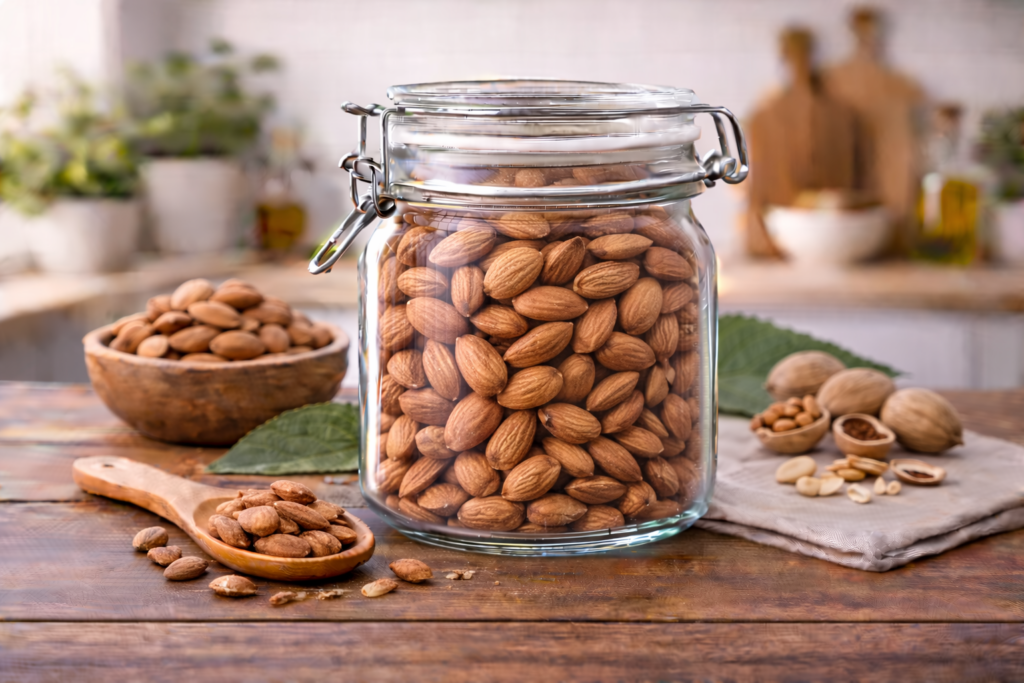
Almonds are the “small but serious” kind of food. A handful feels innocent, but it packs dense energy, crunch, and staying power.
In a nutshell: The values provided are approximate and can vary depending on the brand, processing, and freshness.
1) Almond
Nutritional facts per 100g
| Nutrient | Amount Per 100g | % Daily Value* |
|---|---|---|
| Calories | 579 kcal | 29% |
| Carbohydrates | 21.6 g | 8% |
| Fiber | 12.5 g | 45% |
| Sugars | 4.4 g | – |
| Protein | 21.1 g | 42% |
| Fat | 49.9 g | 64% |
| Vitamin A | 1 IU | 0% |
| Vitamin C | 0 mg | 0% |
| Potassium | 733 mg | 16% |
| Calcium | 269 mg | 21% |
Pros
- High in protein + fiber, so it keeps you full for longer.
- Easy to add to breakfast, snacks, and desserts without much effort.
- Works well for people trying to cut frequent cravings.
Cons
- Very calorie-dense, portions matter.
- Salted/flavoured almonds can push sodium high.
- Not suitable for people with nut allergy.
Right time to eat
- Mid-morning snack or evening snack.
- With breakfast (oats/curd/fruit bowl) for better fullness.
- Before workouts in small quantity if you tolerate nuts well.
Health benefits
- Supports sustained energy because it digests slowly.
- Fiber supports digestion routines.
- Calcium and potassium support everyday nutrition balance.
Best way to eat
- Plain or dry-roasted (unsalted) is best for daily use.
- Soaked overnight if you prefer softer texture.
- Use chopped almonds on meals instead of eating unlimited handfuls.
*Percent Daily Values are based on a 2,000 calorie diet.


Join the conversation