
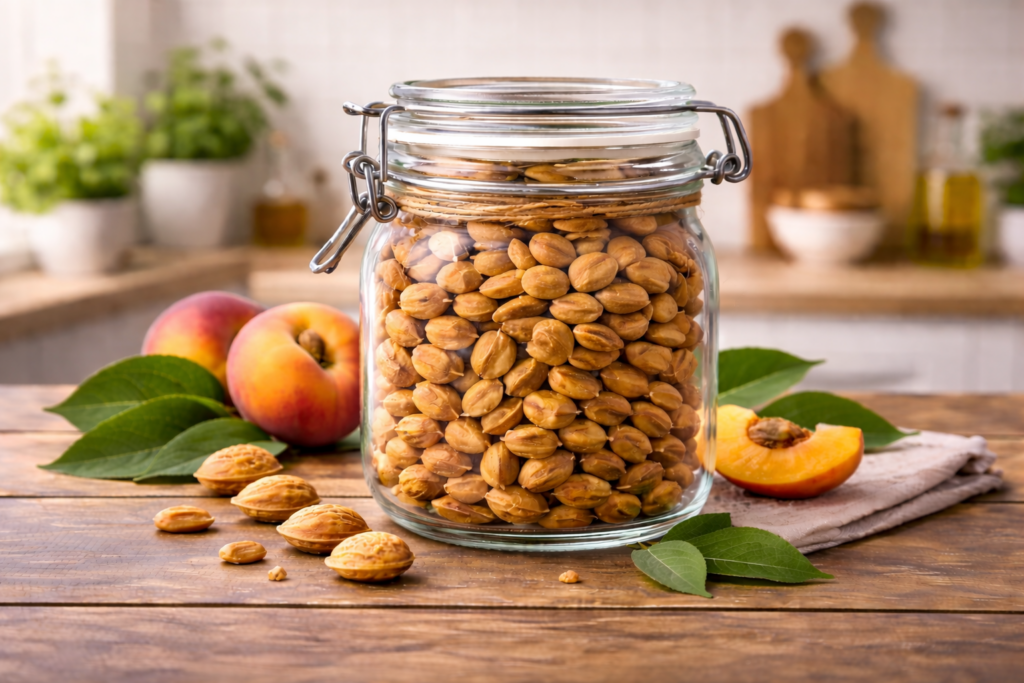
Apricot kernels are widely searched, but they are a high-caution topic. Some kernels can release toxic compounds. This entry is for awareness and safety.
In a nutshell: Apricot kernels can be unsafe to eat, especially bitter kernels. Do not use them as a “health remedy”.
1) Apricot kernels (high caution)
Nutritional facts per 100g (kernel composition can vary widely)
| Nutrient | Amount Per 100g | % Daily Value* |
|---|---|---|
| Calories | 575 kcal | 29% |
| Carbohydrates | 13 g | 5% |
| Fiber | 4 g | 14% |
| Sugars | 3 g | – |
| Protein | 25 g | 50% |
| Fat | 49 g | 63% |
| Vitamin A | 0 IU | 0% |
| Vitamin C | 0 mg | 0% |
| Potassium | 400 mg | 9% |
| Calcium | 70 mg | 5% |
Pros
- Popular topic for “nutrition” searches, so it’s important to include safety facts.
- Kernel is nutrient-dense in fat and protein (composition varies).
- Helps users avoid risky misinformation when presented responsibly.
Cons
- Potential toxicity risk, especially with bitter kernels.
- Not recommended as a routine food.
- High-risk trend item often promoted with unsafe claims.
Right time to eat
- Not recommended as a daily edible item.
- If someone is considering intake, they should get professional guidance first.
Health benefits
- For practical nutrition goals, safer alternatives exist (almonds, walnuts, pumpkin seeds).
- The fruit (apricot) itself is a safer nutrition choice than kernels.
- Best benefit here is awareness: avoiding risky consumption.
Best way to eat
- Avoid eating apricot kernels, especially bitter kernels.
- Choose apricot fruit and safe edible nuts/seeds instead.
- Never use kernels as a “treatment” or detox method.
*Percent Daily Values are based on a 2,000 calorie diet.


Join the conversation