
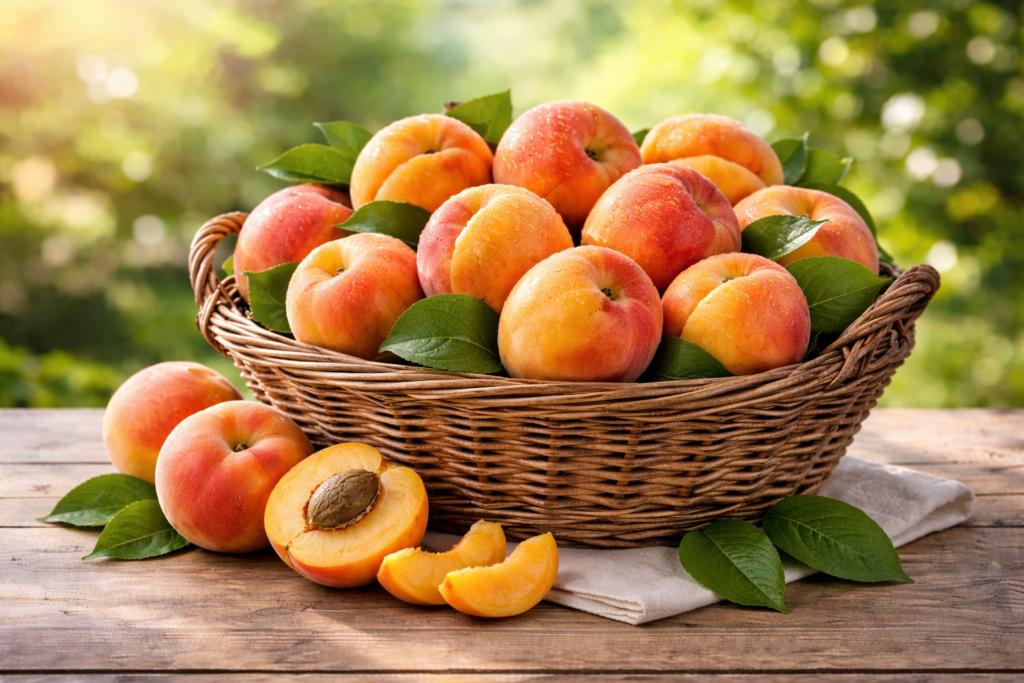
Apricot is a small fruit with a big “snack advantage”. It feels light, tastes naturally sweet-tart, and fits well when you want a clean sweet bite without feeling heavy. The form matters a lot because dried apricot becomes concentrated and much more calorie-dense.
The values provided are approximate can vary depending on the size and ripeness.
1) Fresh Apricot
Nutritional facts per 100g
| Nutrient | Amount Per 100g | % Daily Value* |
|---|---|---|
| Calories | 48 kcal | 2% |
| Carbohydrates | 11.1 g | 4% |
| Fiber | 2.0 g | 7% |
| Sugars | 9.2 g | – |
| Protein | 1.4 g | 3% |
| Fat | 0.4 g | 1% |
| Vitamin A | 1926 IU | 39% |
| Vitamin C | 10.0 mg | 11% |
| Potassium | 259 mg | 6% |
| Calcium | 13 mg | 1% |
Pros
- Light and easy snack that still feels satisfying
- Good fiber for a small fruit, helps appetite control
- Sweet-tart taste helps reduce dessert cravings
Cons
- Very ripe apricots are easy to overeat because they go down fast
- Can cause bloating for sensitive digestion if eaten in large quantity
- Short season in many places, not always available fresh
Right time to eat
- Mid morning or afternoon for a clean sweet snack
- After meals as a light sweet finish
- Before walking as a light energy fruit
Health benefits
- Supports digestion routine due to fiber
- Supports daily nutrition balance with vitamin A and vitamin C
- Supports hydration and freshness because it is a juicy fruit
Best way to eat
- Eat fresh, wash well, and eat slowly
- Pair with nuts or curd for better fullness
- Add to fruit bowls instead of sugary desserts
2) Dried Apricot
Nutritional facts per 100g
| Nutrient | Amount Per 100g | % Daily Value* |
|---|---|---|
| Calories | 241 kcal | 12% |
| Carbohydrates | 62.6 g | 23% |
| Fiber | 7.3 g | 26% |
| Sugars | 53.4 g | – |
| Protein | 3.4 g | 7% |
| Fat | 0.5 g | 1% |
| Vitamin A | 3604 IU | 72% |
| Vitamin C | 1.0 mg | 1% |
| Potassium | 1162 mg | 25% |
| Calcium | 55 mg | 4% |
Pros
- Very convenient and travel-friendly
- High fiber and potassium concentration per 100g
- Good option when you need a quick calorie boost
Cons
- Calorie dense, easy to overeat without noticing
- Some brands add sugar or preservatives, which changes the health value
- Not ideal for mindless snacking if your goal is fat loss
Right time to eat
- During travel when fresh fruit is not available
- On high activity days when you need energy
- As a small controlled portion snack, not a large bowl
Health benefits
- Supports digestion routine because of fiber, if portion is right
- Supports potassium intake due to concentration
- Supports quick energy needs in controlled portions
Best way to eat
- Keep portion small and pair with nuts
- Choose unsweetened versions if possible
- Drink water with it to avoid overeating
3) Canned Apricot
Nutritional facts per 100g
| Nutrient | Amount Per 100g | % Daily Value* |
|---|---|---|
| Calories | 48 kcal | 2% |
| Carbohydrates | 12.0 g | 4% |
| Fiber | 1.7 g | 6% |
| Sugars | 11.0 g | – |
| Protein | 0.7 g | 1% |
| Fat | 0.1 g | 0% |
| Vitamin A | 765 IU | 15% |
| Vitamin C | 4.6 mg | 5% |
| Potassium | 124 mg | 3% |
| Calcium | 9 mg | 1% |
Pros
- Convenient, available off-season
- Soft texture works for people who avoid hard fruits
- Easy to use in quick bowls and desserts
Cons
- Can be packed in syrup, which increases sugar intake
- Less “fresh fruit” satisfaction compared to eating fresh apricots
- Easy to eat more than needed because it is soft and sweet
Right time to eat
- Occasionally as a convenience fruit option
- When fresh apricots are not available
- As part of a balanced bowl, not unlimited snacking
Health benefits
- Supports fruit intake consistency when fresh fruit is not available
- Can support cravings control if portion is managed
- Works as a lighter dessert swap if not syrup-heavy
Best way to eat
- Prefer apricots packed in water or juice, not heavy syrup
- Rinse quickly before eating to reduce extra syrup sweetness
- Pair with curd or nuts to slow down overeating
In a nutshell
Fresh apricot is best for a light, clean snack. Dried apricot is concentrated and calorie-dense, so portion control matters. Canned apricot is fine occasionally, but avoid syrup-heavy versions if you want it as a health food.
*Percent Daily Values are based on a 2,000 calorie diet.


Join the conversation