
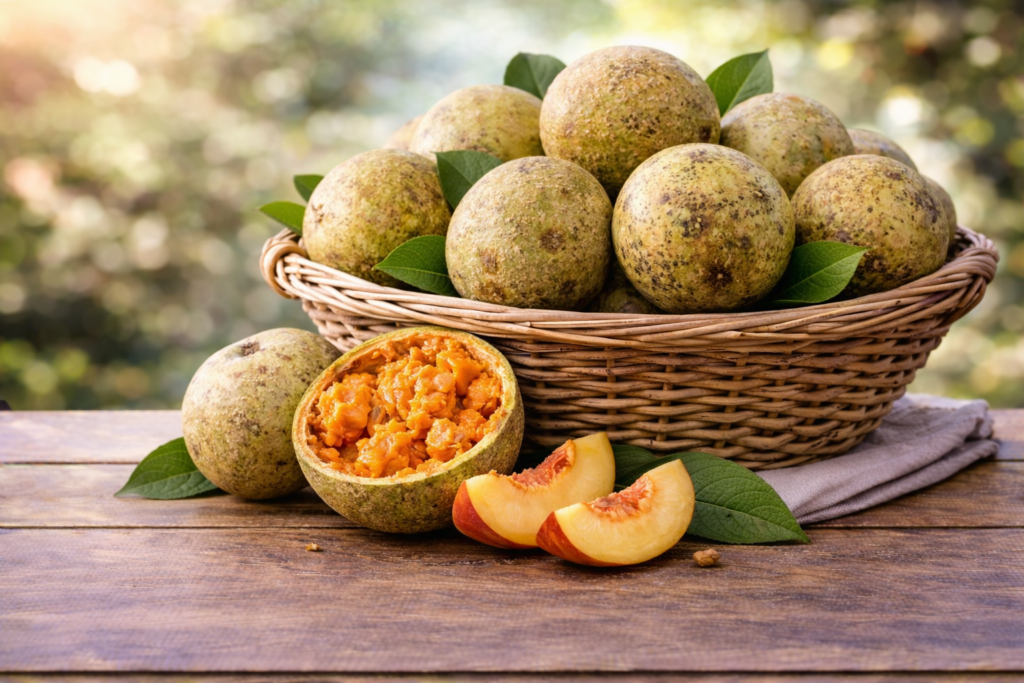
Bael is a traditional summer fruit with a thick shell and a fragrant pulp. Many people love it as a cooling drink, but the “healthy” version depends on how much sugar you add.
In a nutshell: The values provided are approximate and can vary depending on the size and ripeness.
1) Bael
Nutritional facts per 100g
| Nutrient | Amount Per 100g | % Daily Value* |
|---|---|---|
| Calories | 137 kcal | 7% |
| Carbohydrates | 31.8 g | 12% |
| Fiber | 2.9 g | 12% |
| Sugars | 19 g | – |
| Protein | 1.8 g | 4% |
| Fat | 0.3 g | 0% |
| Vitamin A | 55 IU | 1% |
| Vitamin C | 8 mg | 13% |
| Potassium | 600 mg | 13% |
| Calcium | 85 mg | 8% |
Pros
- Thick, filling pulp that feels satisfying.
- Popular summer option for hydration routines.
- Fiber can support digestion for many people.
Cons
- Can feel heavy if you take large servings.
- Many bael drinks become sugar-heavy quickly.
- Too much can constipate some people.
Right time to eat
- Hot afternoons as a light drink.
- Between meals rather than right before bedtime.
Health benefits
- Helps diversify your seasonal fruit intake.
- Fiber supports digestion.
- Potassium supports normal hydration balance routines.
Best way to eat
- Make a diluted drink with water and minimal sweetener.
- Add a pinch of roasted cumin instead of extra sugar.
- Keep portion moderate because the pulp is dense.
*Percent Daily Values are based on a 2,000 calorie diet.


Join the conversation