
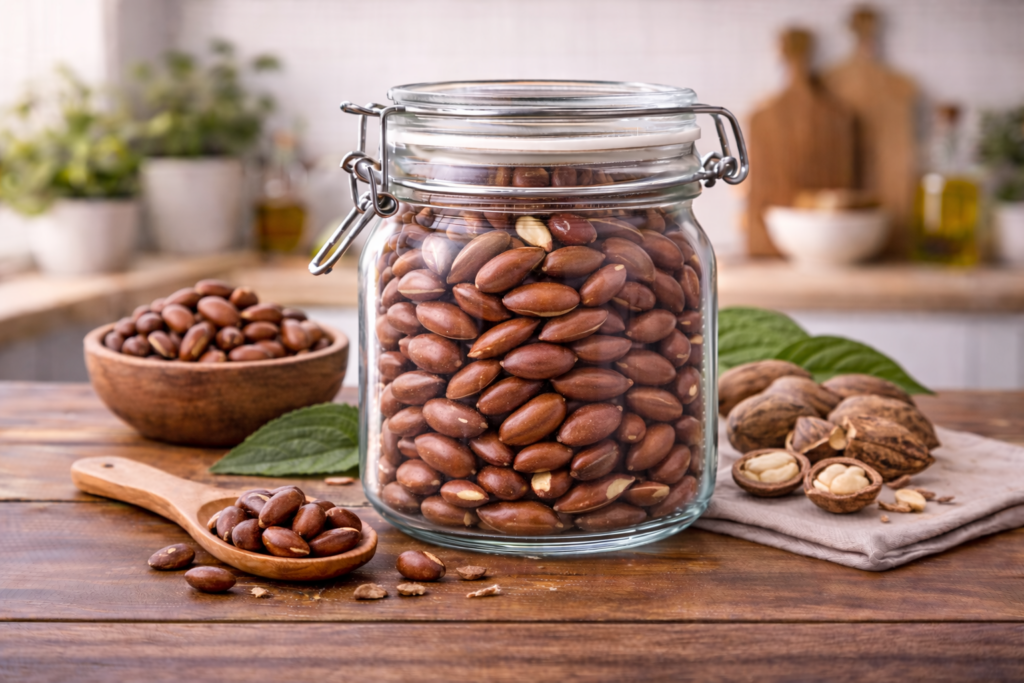
Baru nut has a roasted, peanut-like vibe with a slightly cocoa note in some batches. It’s known for being hearty and fiber-rich for a nut.
In a nutshell: The values provided are approximate and can vary depending on the size and ripeness.
1) Baru nut
Nutritional facts per 100g
| Nutrient | Amount Per 100g | % Daily Value* |
|---|---|---|
| Calories | 500 kcal | 25% |
| Carbohydrates | 46.4 g | 17% |
| Fiber | 25 g | 100% |
| Sugars | 3.6 g | – |
| Protein | 21.4 g | 43% |
| Fat | 28.6 g | 37% |
| Vitamin A | 0 IU | 0% |
| Vitamin C | 0 mg | 0% |
| Potassium | 893 mg | 19% |
| Calcium | 143 mg | 14% |
Pros
- Very fiber-forward, can feel more filling than many nuts.
- Strong protein content for a plant snack.
- Good for replacing biscuits and chips.
Cons
- Packaged versions vary a lot, check added oils and salt.
- Calorie intake can rise if you snack mindlessly.
- Nut allergy risk for sensitive people.
Right time to eat
- Mid-morning or evening snack.
- Good before long work blocks when you want fewer cravings.
Health benefits
- Fiber supports digestion and satiety.
- Protein supports fullness and stable energy.
- Helpful swap for processed snacks.
Best way to eat
- Eat roasted, plain, measured portion.
- Add as topping to oats or curd rather than eating nonstop.
- Pair with fruit for better balance.
*Percent Daily Values are based on a 2,000 calorie diet.


Join the conversation