
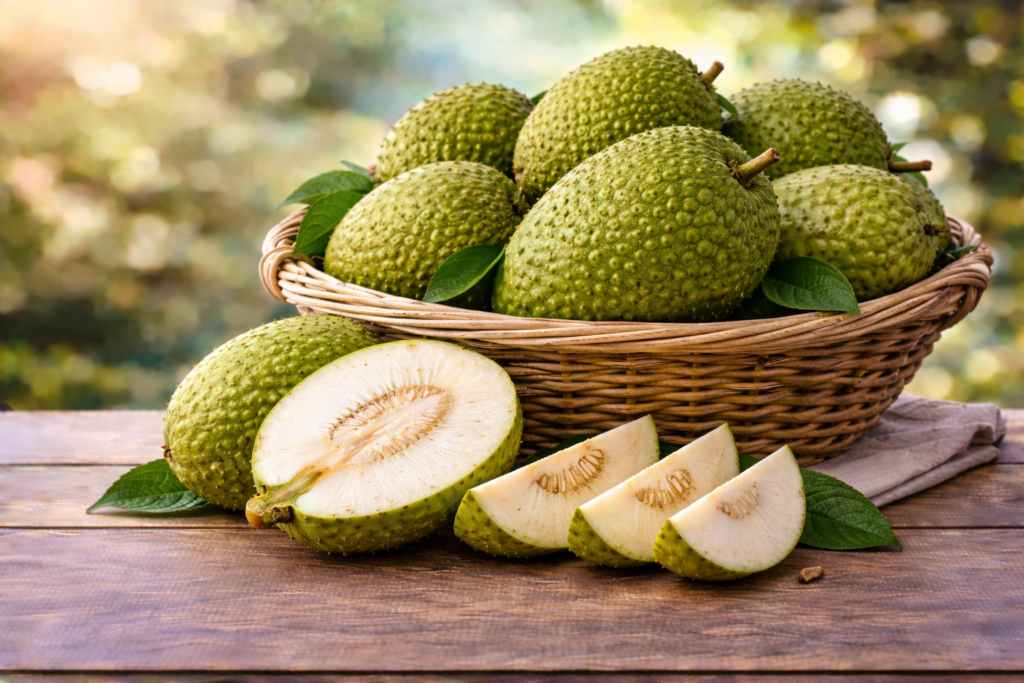
Breadfruit is a starchy fruit that behaves more like a comfort food than a sweet snack. Think of it as a fruit that wants to be a meal, not a dessert.
In a nutshell: The values provided are approximate and can vary depending on the size and ripeness.
1) Breadfruit – Cooked
Nutritional facts per 100g
| Nutrient | Amount Per 100g | % Daily Value* |
|---|---|---|
| Calories | 103 kcal | 5% |
| Carbohydrates | 27.1 g | 10% |
| Fiber | 4.9 g | 20% |
| Sugars | 11 g | – |
| Protein | 1.1 g | 2% |
| Fat | 0.2 g | 0% |
| Vitamin A | 0 IU | 0% |
| Vitamin C | 29 mg | 48% |
| Potassium | 490 mg | 10% |
| Calcium | 17 mg | 2% |
Pros
- Starchy, filling base that can replace some refined carbs.
- Fiber helps keep the meal satisfying.
- Works well in savory cooking.
Cons
- Portions matter because it is starch-heavy.
- Fried breadfruit can become calorie-dense.
- Some people feel bloated with large servings.
Right time to eat
- Lunch or early dinner as a cooked side.
- Best when paired with protein and vegetables.
Health benefits
- Supports a more filling plate due to fiber.
- Vitamin C supports immunity routines.
- Potassium supports normal muscle routines.
Best way to eat
- Boiled, steamed, or roasted instead of deep-fried.
- Cook as curry or stir-fry with spices and vegetables.
- Keep oil minimal to maintain a healthier profile.
*Percent Daily Values are based on a 2,000 calorie diet.


Join the conversation