
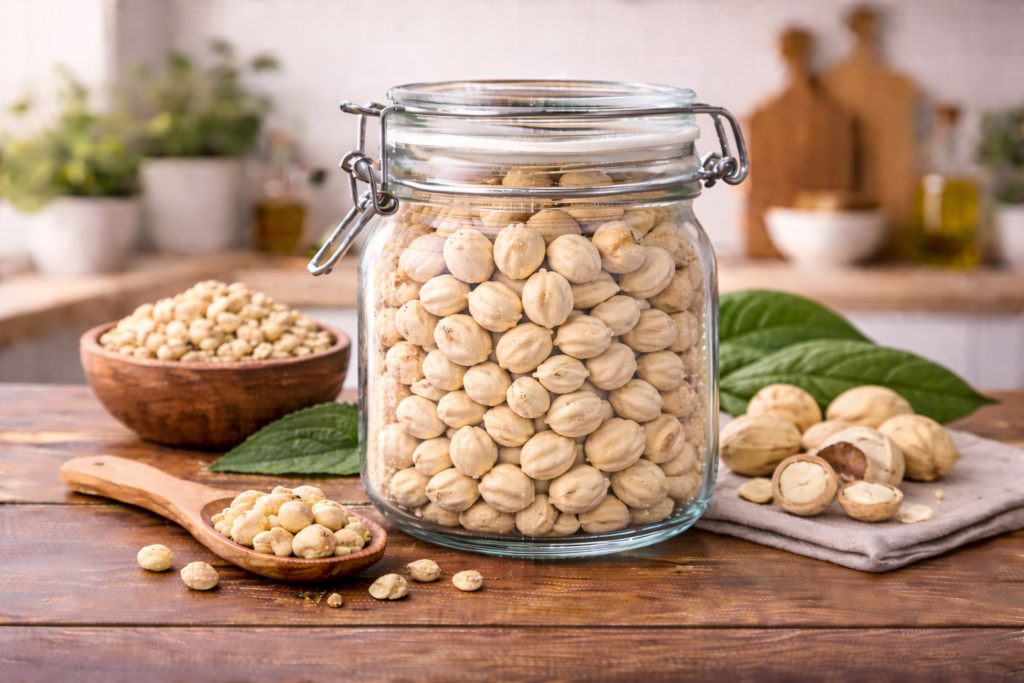
Candlenut is a rich, oily nut used more like a thickener in cooking than a casual snack. It must be properly cooked before eating.
In a nutshell: The values provided are approximate and can vary depending on the size and ripeness.
1) Candlenut
Nutritional facts per 100g
| Nutrient | Amount Per 100g | % Daily Value* |
|---|---|---|
| Calories | 657 kcal | 33% |
| Carbohydrates | 11.7 g | 4% |
| Fiber | 6.1 g | 24% |
| Sugars | 1.2 g | – |
| Protein | 8.6 g | 17% |
| Fat | 65.2 g | 84% |
| Vitamin A | 0 IU | 0% |
| Vitamin C | 0 mg | 0% |
| Potassium | 433 mg | 9% |
| Calcium | 80 mg | 8% |
Pros
- Very rich, a small amount can improve taste and texture in cooking.
- Fiber supports fullness when used in controlled quantity.
- Useful as a “creaminess” add-on without dairy.
Cons
- Must be cooked properly, not meant as a raw snack.
- Very calorie-dense.
- Some people may experience stomach upset if taken in excess.
Right time to eat
- With meals as part of cooked recipes.
- Not ideal as a late-night heavy snack.
Health benefits
- Helps add richness to food in small quantity.
- Can support satiety when used wisely.
- Works well in balanced meals, not as a large standalone snack.
Best way to eat
- Use cooked in gravies, sauces, or as a thickener.
- Keep portion small because it is very fatty.
- Avoid raw consumption.
*Percent Daily Values are based on a 2,000 calorie diet.


Join the conversation