
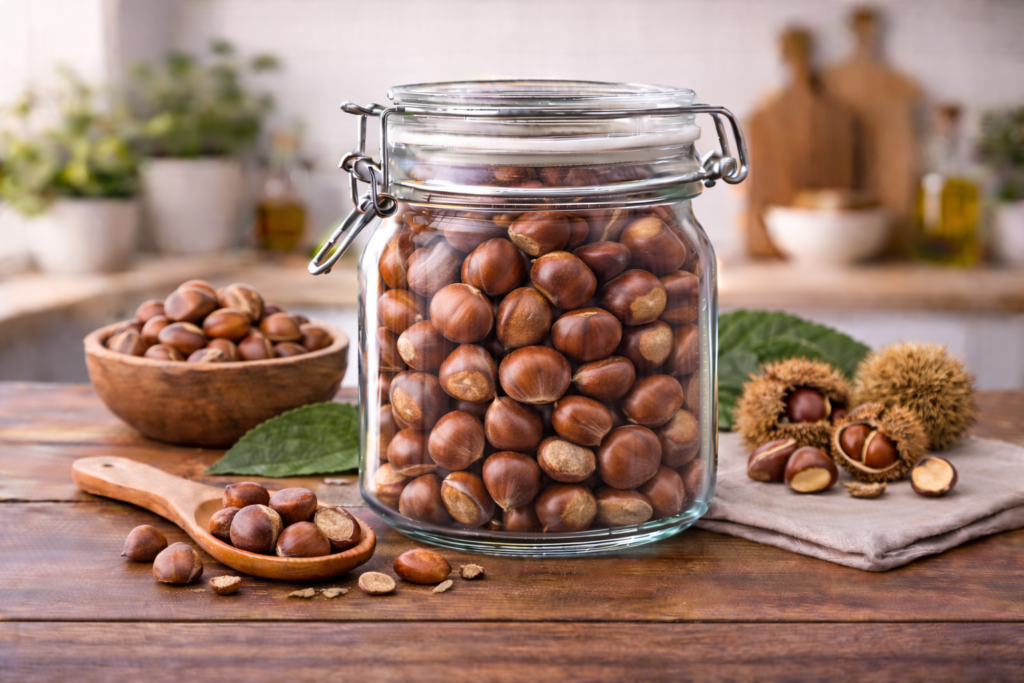
Chestnuts are the rare nut that behaves like a comfort carb. They’re naturally sweeter, softer, and much lower in fat than most nuts.
In a nutshell: The values provided are approximate and can vary depending on the variety, cooking method, and freshness.
1) Chestnut
Nutritional facts per 100g
| Nutrient | Amount Per 100g | % Daily Value* |
|---|---|---|
| Calories | 213 kcal | 11% |
| Carbohydrates | 45 g | 16% |
| Fiber | 8.1 g | 29% |
| Sugars | 10.6 g | – |
| Protein | 2.4 g | 5% |
| Fat | 2.3 g | 3% |
| Vitamin A | 0 IU | 0% |
| Vitamin C | 43 mg | 72% |
| Potassium | 518 mg | 11% |
| Calcium | 27 mg | 2% |
Pros
- Lower fat than most nuts, with more carb-based energy.
- Fiber helps you feel full and supports digestion routines.
- Works well as a warm snack in cooler seasons.
Cons
- Higher carbs than typical nuts, portion matters if you track carbs.
- Roasted chestnuts can still add up quickly if you keep eating.
- Packaged sweetened chestnuts can include added sugar.
Right time to eat
- Mid-morning or evening snack.
- Pre-workout snack if you want lighter, carb-based energy.
- As a small side with meals instead of refined snacks.
Health benefits
- Supports steady energy due to slow, starchy carbs.
- Fiber supports digestion routines.
- Vitamin C supports everyday immunity routines.
Best way to eat
- Roast or boil, and avoid heavy sugar coatings.
- Add to salads or soups for a filling, naturally sweet bite.
- Keep portion moderate because they are easy to over-snack.
*Percent Daily Values are based on a 2,000 calorie diet.


Join the conversation