
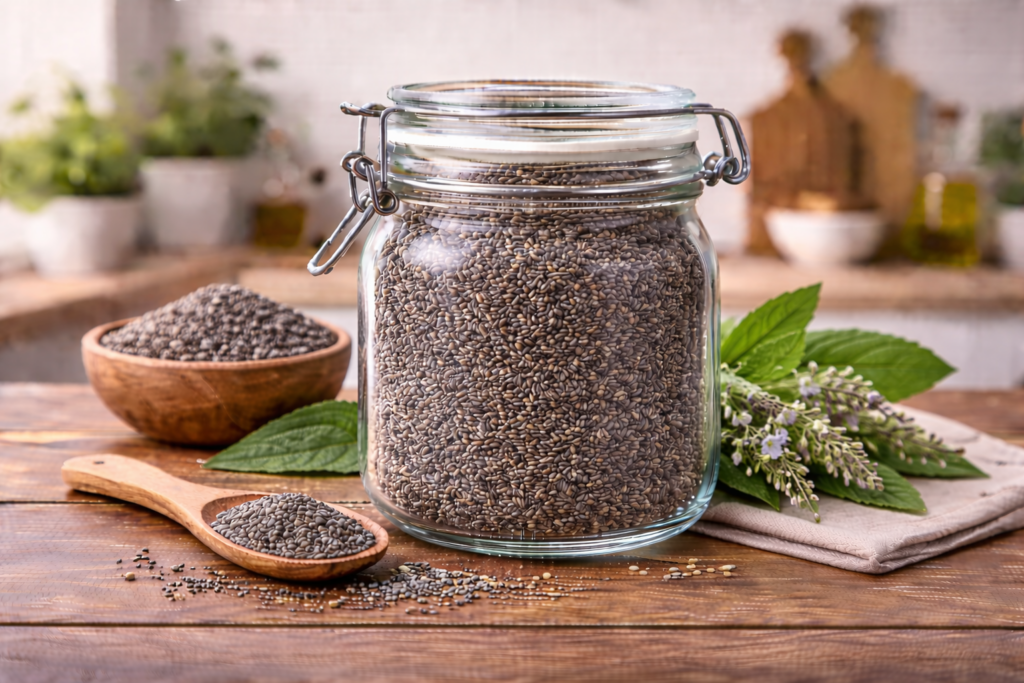
Chia seeds are the “gel makers” of the seed world. They absorb water, expand, and make snacks feel bigger than they are, which is perfect for controlled eating.
In a nutshell: The values provided are approximate and can vary depending on the brand and processing.
1) Chia seeds
Nutritional facts per 100g
| Nutrient | Amount Per 100g | % Daily Value* |
|---|---|---|
| Calories | 486 kcal | 24% |
| Carbohydrates | 42.1 g | 15% |
| Fiber | 34.4 g | 123% |
| Sugars | 0 g | – |
| Protein | 16.5 g | 33% |
| Fat | 30.7 g | 39% |
| Vitamin A | 54 IU | 1% |
| Vitamin C | 1.6 mg | 3% |
| Potassium | 407 mg | 9% |
| Calcium | 631 mg | 49% |
Pros
- Very high fiber, supports fullness and controlled snacking.
- Absorbs water, great for pudding-style snacks.
- Easy to add to curd, smoothies, and oats.
Cons
- Too much can cause bloating if you are not used to high fiber.
- Dry chia without enough water can feel uncomfortable for some.
- Calories add up if you use large spoonfuls daily.
Right time to eat
- Morning as chia water or chia pudding.
- Mid-morning snack to reduce sweet cravings.
Health benefits
- Fiber supports digestion routines when increased slowly.
- Helps with satiety and portion control.
- Useful for creating filling snacks with minimal sugar.
Best way to eat
- Soak in water or milk alternative before eating.
- Start small and increase gradually.
- Drink enough water through the day.
*Percent Daily Values are based on a 2,000 calorie diet.


Join the conversation