
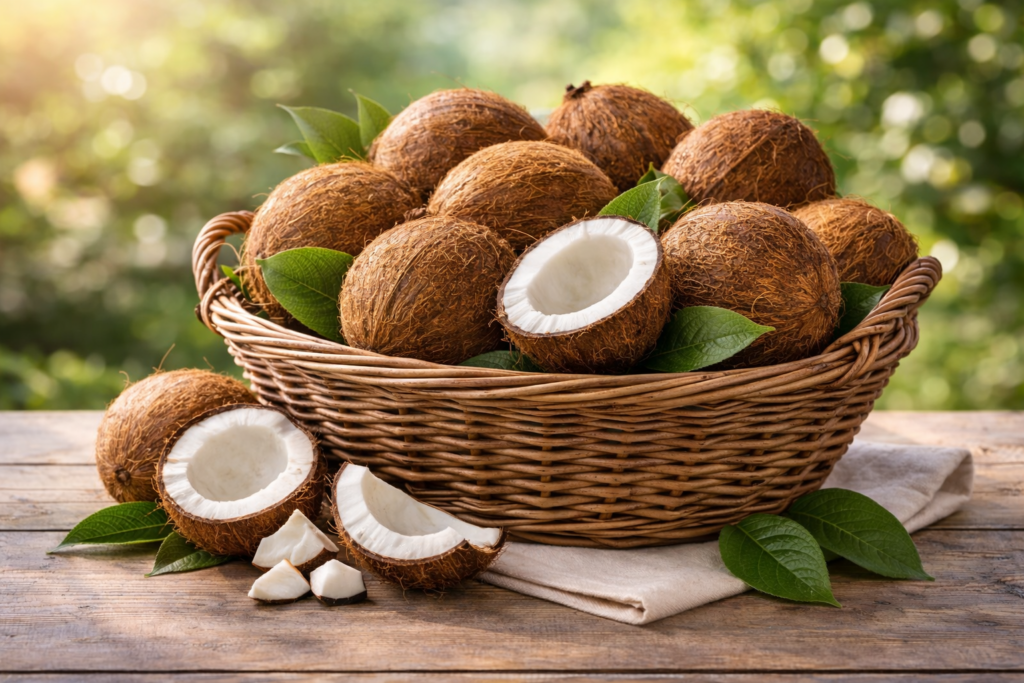
Coconut is basically three different foods hiding in one shell: coconut water, coconut flesh, and dried coconut. Each behaves very differently in calories and fullness.
Below are the nutritional facts of coconut per 100g, along with pros and cons, the right time to eat, health benefits, and the best way to eat.
The values provided are approximate can vary depending on the maturity and portion.
1) Coconut Water
Nutritional facts per 100g
| Nutrient | Amount Per 100g | % Daily Value* |
|---|---|---|
| Calories | 19 kcal | 1% |
| Carbohydrates | 3.7 g | 1% |
| Fiber | 1.1 g | 4% |
| Sugars | 2.6 g | – |
| Protein | 0.7 g | 1% |
| Fat | 0.2 g | 0% |
| Vitamin A | 0 IU | 0% |
| Vitamin C | 2.4 mg | 3% |
| Potassium | 250 mg | 5% |
| Calcium | 24 mg | 2% |
Pros
- Light hydration drink, especially in hot weather
- Low calorie compared to sugary beverages
- Easy to drink when appetite is low
Cons
- Not filling like a meal, it is mainly a drink
- Packaged versions may vary in quality and sweetness
- Too much can cause bloating in some people
Right time to eat
- Midday for hydration
- After sweating or outdoor activity
- As a clean drink instead of soda
Health benefits
- Supports hydration routine
- Supports potassium intake for daily balance
- Supports cleaner beverage choices
Best way to eat
- Prefer fresh tender coconut water when possible
- Drink slowly instead of gulping
- Avoid adding sugar
2) Fresh Coconut Flesh
Nutritional facts per 100g
| Nutrient | Amount Per 100g | % Daily Value* |
|---|---|---|
| Calories | 354 kcal | 18% |
| Carbohydrates | 15.2 g | 6% |
| Fiber | 9.0 g | 32% |
| Sugars | 6.2 g | – |
| Protein | 3.3 g | 7% |
| Fat | 33.5 g | 43% |
| Vitamin A | 0 IU | 0% |
| Vitamin C | 3.3 mg | 4% |
| Potassium | 356 mg | 8% |
| Calcium | 14 mg | 1% |
Pros
- Very satisfying due to fat and fiber
- Useful when you want a calorie-dense food in small quantity
- Great texture addition in meals
Cons
- High calorie, easy to overeat
- Not ideal for large snacking portions in fat loss phase
- Can feel heavy for some digestion
Right time to eat
- With meals in small quantity
- When you need fuller satiety
- Not as late-night mindless snack
Health benefits
- Supports fullness and appetite control when portion is right
- Supports energy needs due to fat content
- Supports fiber intake
Best way to eat
- Use small portions, like a topping, not a huge bowl
- Use in curries, chutneys, or balanced meals
- Avoid adding sugar
3) Dried Coconut
Nutritional facts per 100g
| Nutrient | Amount Per 100g | % Daily Value* |
|---|---|---|
| Calories | 660 kcal | 33% |
| Carbohydrates | 24.0 g | 9% |
| Fiber | 16.0 g | 57% |
| Sugars | 7.0 g | – |
| Protein | 6.9 g | 14% |
| Fat | 65.0 g | 83% |
| Vitamin A | 0 IU | 0% |
| Vitamin C | 0.0 mg | 0% |
| Potassium | 543 mg | 12% |
| Calcium | 26 mg | 2% |
Pros
- Very convenient, long shelf life
- High fiber concentration per 100g
- Useful as a small topping for taste
Cons
- Extremely calorie dense, easy to overdo
- Can be sweetened in some products
- Not ideal for mindless snacking
Right time to eat
- As a small topping on meals
- During travel in controlled portions
- Not as a big snack bowl
Health benefits
- Supports energy needs when portion is controlled
- Supports fiber intake if used wisely
- Supports meal satisfaction as a topping
Best way to eat
- Use 1 to 2 tablespoons as topping, not a large handful
- Choose unsweetened versions
- Pair with balanced meals
In a nutshell
Coconut water is a light drink. Coconut flesh and dried coconut are calorie-dense foods, not “light fruits”, so keep portions small and use them mainly as meal components.
*Percent Daily Values are based on a 2,000 calorie diet.


Join the conversation