
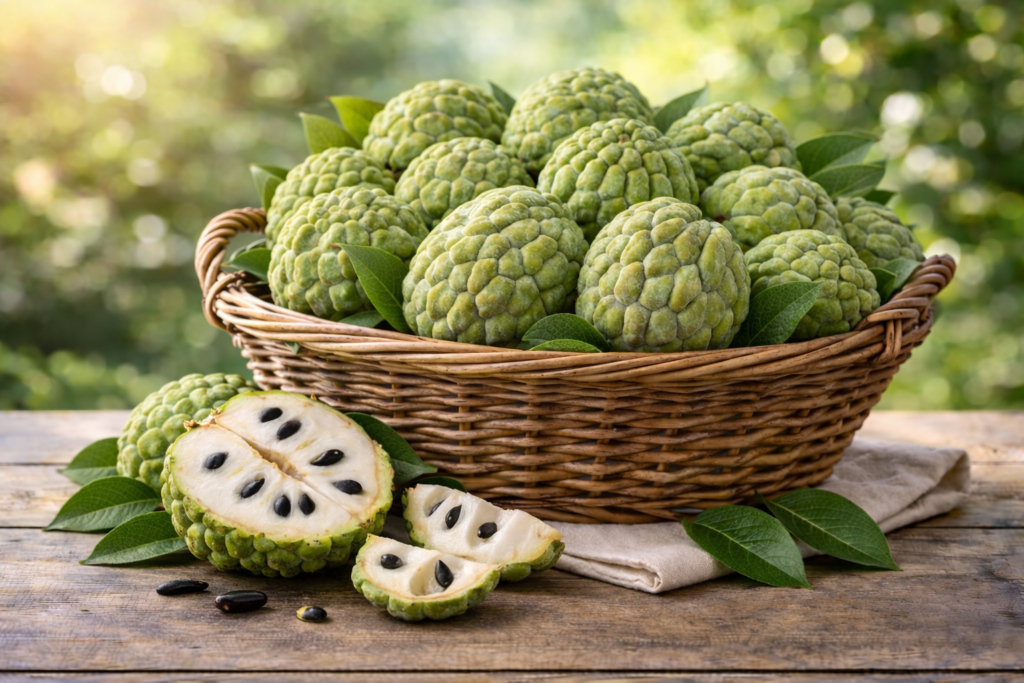
Custard apple (sitaphal/sugar apple) is creamy, sweet, and very filling for a fruit. It feels like dessert, so the main rule is: enjoy it, but don’t eat it mindlessly.
Below are the nutritional facts of custard apple per 100g, along with pros and cons, right time to eat, health benefits, and best way to eat.
The values provided are approximate can vary depending on the size and ripeness.
1) Custard Apple (Fresh Pulp)
Nutritional facts per 100g
| Nutrient | Amount Per 100g | % Daily Value* |
|---|---|---|
| Calories | 94 kcal | 5% |
| Carbohydrates | 23.6 g | 9% |
| Fiber | 4.4 g | 16% |
| Sugars | 18.4 g | – |
| Protein | 2.1 g | 4% |
| Fat | 0.3 g | 0% |
| Vitamin A | 0 IU | 0% |
| Vitamin C | 19.2 mg | 21% |
| Potassium | 247 mg | 5% |
| Calcium | 24 mg | 2% |
Pros
- Very satisfying and filling for a fruit
- Good fiber for digestion routine
- Great dessert replacement when portion is controlled
Cons
- Easy to overeat because it is creamy and sweet
- Can feel heavy or cause gas for some people
- Not ideal late night if your digestion is sensitive
Right time to eat
- Mid afternoon as a filling snack
- After meals as a small sweet finish
- On active days when you want a heavier fruit
Health benefits
- Supports fullness and cravings control
- Supports digestion routine due to fiber
- Supports vitamin C intake
Best way to eat
- Eat fresh pulp, remove seeds carefully
- Avoid adding sugar or condensed milk
- Keep portion controlled because it is calorie-dense for a fruit
In a nutshell
Custard apple is creamy and filling. Great as a dessert replacement, but portion control matters because it is easy to overeat.
*Percent Daily Values are based on a 2,000 calorie diet.


Join the conversation