
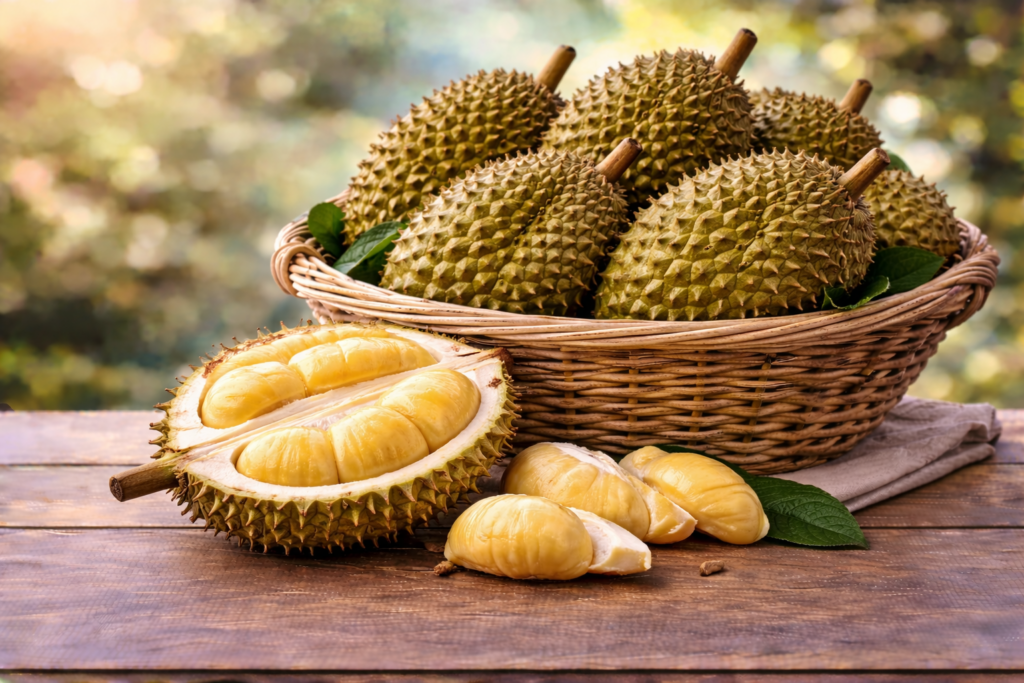
Durian is famous for being intense: smell, flavor, texture, everything. It is also a heavier fruit calorie-wise, so it works best as a small portion treat.
In a nutshell: The values provided are approximate and can vary depending on the size and ripeness.
1) Durian
Nutritional facts per 100g
| Nutrient | Amount Per 100g | % Daily Value* |
|---|---|---|
| Calories | 147 kcal | 7% |
| Carbohydrates | 27.1 g | 10% |
| Fiber | 3.8 g | 15% |
| Sugars | 18.7 g | – |
| Protein | 1.5 g | 3% |
| Fat | 5.3 g | 7% |
| Vitamin A | 44 IU | 1% |
| Vitamin C | 19.7 mg | 33% |
| Potassium | 436 mg | 9% |
| Calcium | 6 mg | 1% |
Pros
- Very filling, dessert-like fruit.
- Good option when you want energy from real food.
- Potassium-friendly fruit choice for many diets.
Cons
- High calories compared to most fruits.
- Can feel heavy on digestion if you eat a lot.
- Strong smell and rich texture are not for everyone.
Right time to eat
- Midday or early evening as a small portion treat.
- Avoid right before bedtime if heavy foods affect your sleep.
Health benefits
- Can replace cakes or desserts in smaller portions.
- Fiber supports digestion when portion is controlled.
- Potassium supports normal muscle routines.
Best way to eat
- Eat fresh pulp in small servings.
- Skip sweetened durian ice creams for regular use.
- Pair with water, keep the rest of the meal light.
*Percent Daily Values are based on a 2,000 calorie diet.


Join the conversation