
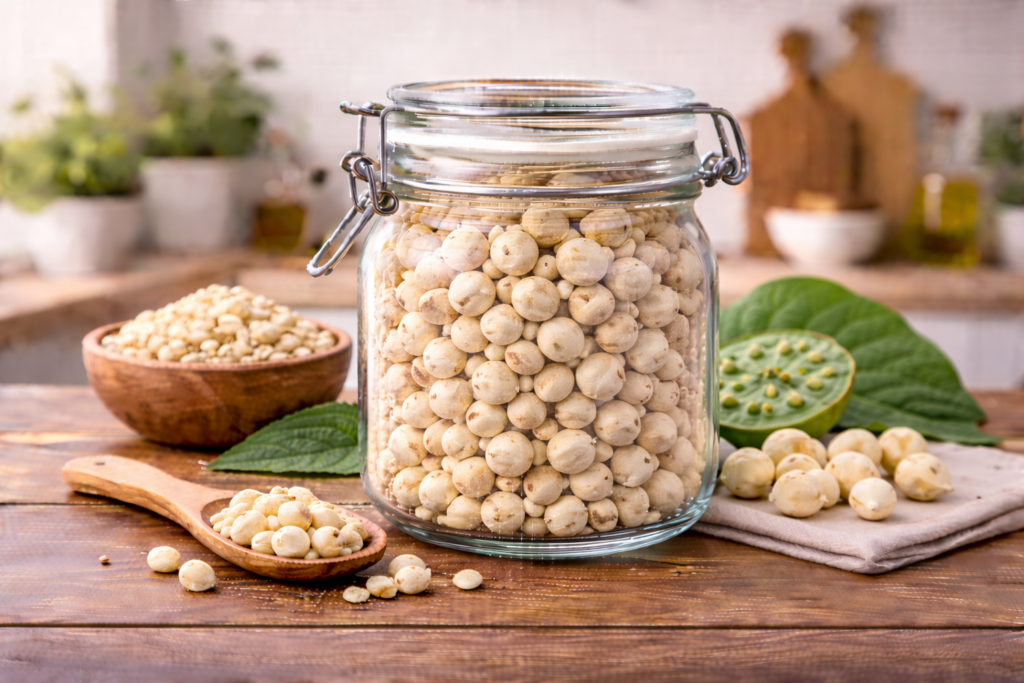
Fox nuts are light, crunchy, and feel like “diet snacking,” but they can still add up when roasted with oil and masala. Plain and portioned is the sweet spot.
In a nutshell: The values provided are approximate and can vary depending on roasting, seasoning, and processing.
1) Fox nuts
Nutritional facts per 100g
| Nutrient | Amount Per 100g | % Daily Value* |
|---|---|---|
| Calories | 347 kcal | 17% |
| Carbohydrates | 77 g | 28% |
| Fiber | 7 g | 25% |
| Sugars | 0.5 g | – |
| Protein | 9.7 g | 19% |
| Fat | 0.1 g | 0% |
| Vitamin A | 0 IU | 0% |
| Vitamin C | 0 mg | 0% |
| Potassium | 500 mg | 11% |
| Calcium | 60 mg | 5% |
Pros
- Crunchy, low-fat base (plain), so it feels lighter than fried snacks.
- Fiber helps make it more satisfying than chips.
- Good tea-time snack when roasted without heavy oil.
Cons
- Roasting with lots of ghee/oil can turn it calorie-heavy.
- Masala/salted versions can raise sodium quickly.
- Carbs add up if you eat bowl after bowl.
Right time to eat
- Evening snack to replace fried snacks.
- Mid-morning snack when you want something light and crunchy.
Health benefits
- Helps manage cravings for crunchy snacks.
- Fiber supports digestion routines.
- Can support portion control when you pre-measure.
Best way to eat
- Dry-roast or use minimal oil.
- Season lightly (avoid heavy salt).
- Measure your portion before eating, not after.
*Percent Daily Values are based on a 2,000 calorie diet.


Join the conversation