
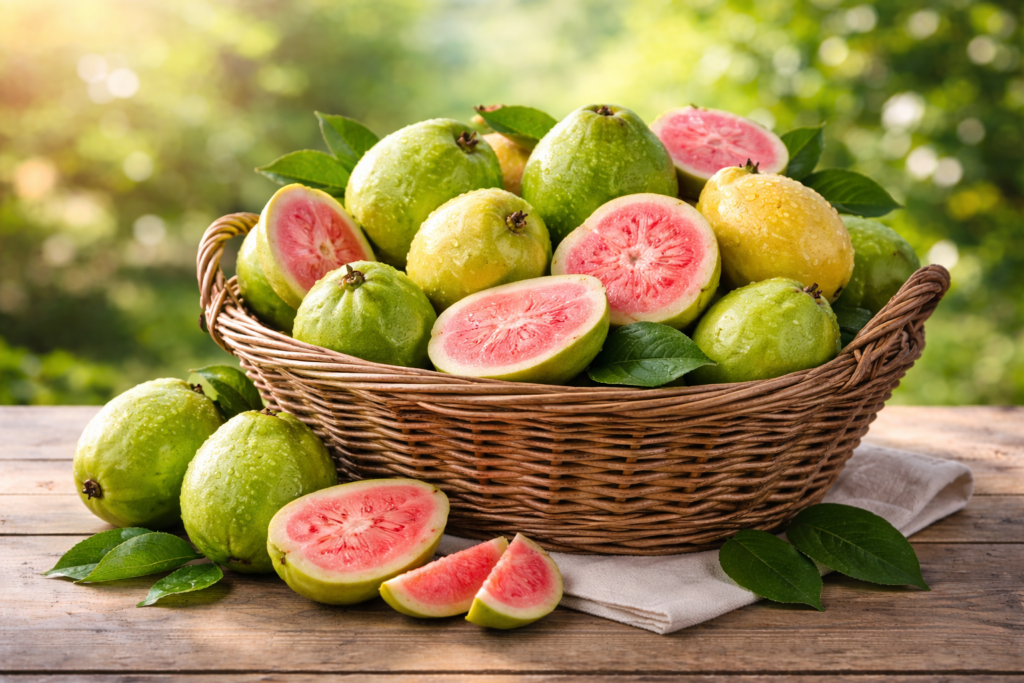
Guava is one of the most nutrient-dense everyday fruits. It feels simple, but it delivers strong fiber and very high vitamin C. The way you eat it matters, especially peel vs no peel and whole fruit vs juice.
The values provided are approximate can vary depending on the size and ripeness.
1) White Guava
Nutritional facts per 100g
| Nutrient | Amount Per 100g | % Daily Value* |
|---|---|---|
| Calories | 68 kcal | 3% |
| Carbohydrates | 14.3 g | 5% |
| Fiber | 5.4 g | 19% |
| Sugars | 8.9 g | – |
| Protein | 2.6 g | 5% |
| Fat | 1.0 g | 1% |
| Vitamin A | 624 IU | 12% |
| Vitamin C | 228.3 mg | 254% |
| Potassium | 417 mg | 9% |
| Calcium | 18 mg | 1% |
Pros
- Very high vitamin C support for daily nutrition
- High fiber, helps fullness and digestion routine
- Works well as a clean snack when you want volume without heaviness
Cons
- Seeds can bother some people if chewing is uncomfortable
- Too much at once can cause bloating for sensitive digestion
- Unripe guava can feel hard and irritating for some stomachs
Right time to eat
- Mid morning or afternoon as a filling snack
- With breakfast when you want fruit that keeps you full longer
- Early evening when you want to cut cravings before dinner
Health benefits
- Supports immunity routine due to vitamin C
- Supports digestion and regularity due to fiber
- Supports appetite control because it feels filling
Best way to eat
- Eat whole with peel if you tolerate it, wash well
- Slice and eat slowly instead of biting fast
- Pair with nuts or curd for a more balanced snack
2) Pink Guava
Nutritional facts per 100g
| Nutrient | Amount Per 100g | % Daily Value* |
|---|---|---|
| Calories | 68 kcal | 3% |
| Carbohydrates | 14.3 g | 5% |
| Fiber | 5.4 g | 19% |
| Sugars | 8.9 g | – |
| Protein | 2.6 g | 5% |
| Fat | 1.0 g | 1% |
| Vitamin A | 624 IU | 12% |
| Vitamin C | 228.3 mg | 254% |
| Potassium | 417 mg | 9% |
| Calcium | 18 mg | 1% |
Pros
- Often tastes slightly sweeter and easier to eat for many people
- High fiber supports fullness and digestion routine
- Strong vitamin C makes it a powerful daily fruit option
Cons
- Still seed-heavy, can be annoying for some people
- Overeating can cause gas or bloating in sensitive digestion
- Very ripe guava can feel too soft and easy to overeat
Right time to eat
- Mid morning or afternoon as a high-satiety fruit
- After lunch when you want a clean sweet finish
- Evening snack to reduce junk cravings
Health benefits
- Supports immunity routine due to vitamin C
- Supports gut routine due to fiber
- Supports weight control habits by keeping you full
Best way to eat
- Eat whole or sliced, chew slowly
- Pair with curd for a filling bowl
- Avoid turning it into sweetened juice for daily routine
3) Guava Juice
Nutritional facts per 100g
| Nutrient | Amount Per 100g | % Daily Value* |
|---|---|---|
| Calories | 60 kcal | 3% |
| Carbohydrates | 14.0 g | 5% |
| Fiber | 0.3 g | 1% |
| Sugars | 13.0 g | – |
| Protein | 0.5 g | 1% |
| Fat | 0.2 g | 0% |
| Vitamin A | 60 IU | 1% |
| Vitamin C | 30.0 mg | 33% |
| Potassium | 200 mg | 4% |
| Calcium | 10 mg | 1% |
Pros
- Fast and convenient when you want fruit in drink form
- Easy to consume when appetite is low
- Good as a refreshing option in hot weather
Cons
- Very low fiber compared to whole guava, so less filling
- Easy to overconsume without noticing
- Packaged juice may include added sugar, which changes the nutrition a lot
Right time to eat
- With breakfast if you want a light fruit drink
- Post workout if you prefer liquids
- Midday as a refresh drink, not as a replacement for meals
Health benefits
- Supports hydration routine when taken in controlled portion
- Supports fruit intake consistency for people who avoid chewing fruits
- Supports quick energy because it is easy to consume
Best way to eat
- Prefer fresh juice without added sugar
- Keep portion controlled instead of large glasses
- Choose whole guava more often than juice for better fullness
In a nutshell
Whole guava is better than juice for fullness because fiber stays. If you are sensitive to seeds or digestion, start with smaller portions and avoid eating very unripe guava. For daily routine, whole guava wins.
*Percent Daily Values are based on a 2,000 calorie diet.


Join the conversation