
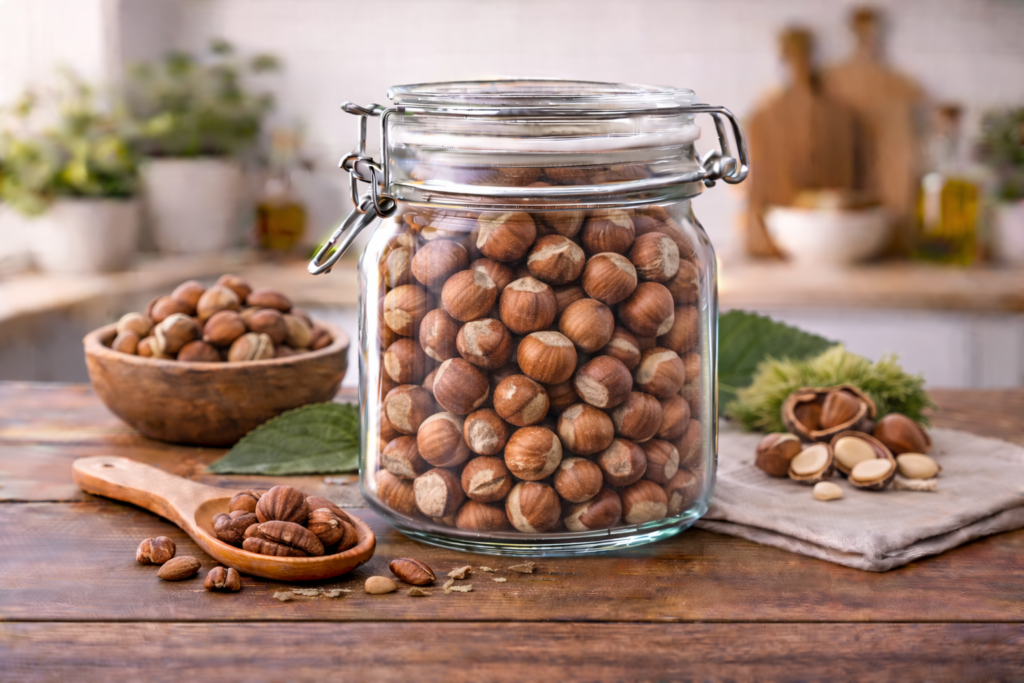
Hazelnuts have a warm, toasty flavor even when raw. They feel like dessert, which makes them great, and risky, for portion control.
In a nutshell: The values provided are approximate and can vary depending on the brand, processing, and freshness.
1) Hazelnut
Nutritional facts per 100g
| Nutrient | Amount Per 100g | % Daily Value* |
|---|---|---|
| Calories | 628 kcal | 31% |
| Carbohydrates | 16.7 g | 6% |
| Fiber | 9.7 g | 35% |
| Sugars | 4.3 g | – |
| Protein | 15.0 g | 30% |
| Fat | 60.8 g | 78% |
| Vitamin A | 20 IU | 0% |
| Vitamin C | 6.3 mg | 7% |
| Potassium | 680 mg | 14% |
| Calcium | 114 mg | 9% |
Pros
- Rich taste makes small servings feel satisfying.
- Good for snack mixes and breakfast toppings.
- Pairs well with fruits like banana or berries.
Cons
- Very calorie-dense, overeating is easy.
- Flavoured hazelnuts often come with sugar or extra oils.
- Not suitable for people with nut allergy.
Right time to eat
- Mid-morning or evening snack.
- With breakfast for better fullness.
- Before long travel as a portable, filling option.
Health benefits
- Supports fuller snacking and reduces frequent hunger.
- Fiber supports digestion routines.
- Potassium supports normal daily electrolyte balance.
Best way to eat
- Eat plain or lightly roasted (unsweetened).
- Use chopped hazelnuts as topping instead of large handfuls.
- Store airtight to maintain freshness.
*Percent Daily Values are based on a 2,000 calorie diet.


Join the conversation