
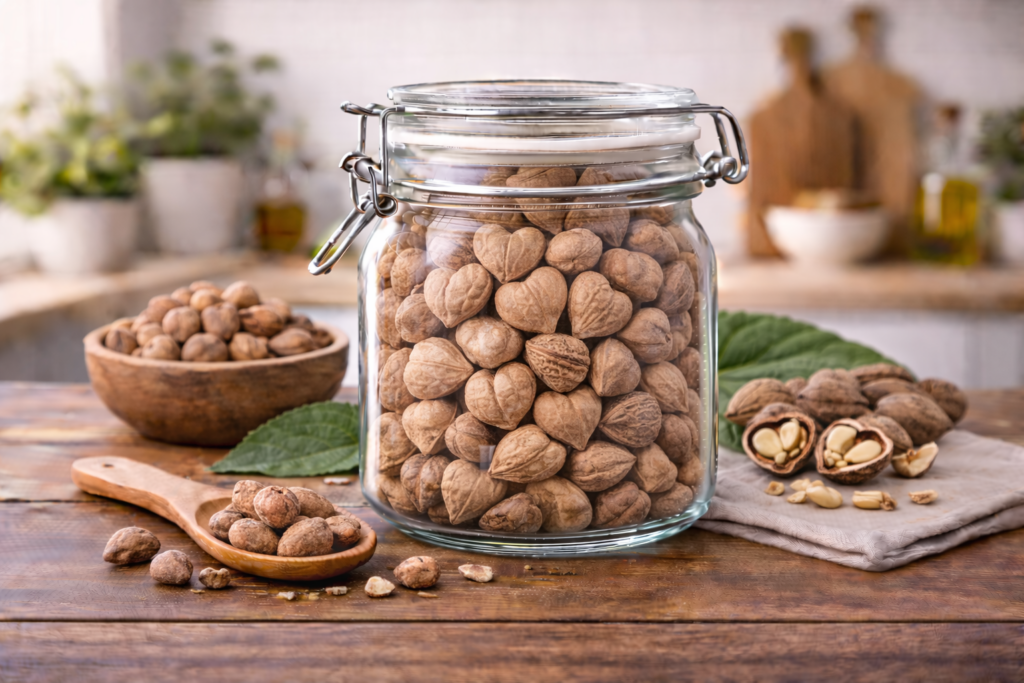
Heartnuts are a walnut type with a smooth, mild richness. Think “walnut energy” with an easier bite, making it great for toppings and snacks.
In a nutshell: The values provided are approximate and can vary depending on the variety and freshness.
1) Heartnut
Nutritional facts per 100g
| Nutrient | Amount Per 100g | % Daily Value* |
|---|---|---|
| Calories | 654 kcal | 33% |
| Carbohydrates | 13.7 g | 5% |
| Fiber | 6.7 g | 24% |
| Sugars | 2.6 g | – |
| Protein | 15.2 g | 30% |
| Fat | 65.2 g | 84% |
| Vitamin A | 20 IU | 0% |
| Vitamin C | 1.3 mg | 1% |
| Potassium | 441 mg | 9% |
| Calcium | 98 mg | 8% |
Pros
- Very satisfying, small portions feel enough.
- Great for breakfast bowls, salads, and homemade snacks.
- Helps reduce sweet cravings when used as a measured snack.
Cons
- High calories and fat, portion control is important.
- Can taste bitter if stale or stored poorly.
- Not suitable for people with nut allergy.
Right time to eat
- With breakfast (oats/curd) or as a mid-morning snack.
- Evening snack when you want something filling.
- Avoid big portions right before sleep if heavy foods disturb you.
Health benefits
- Supports steady energy due to slow digestion.
- Fiber supports digestion routines.
- Helps with fullness and controlled eating when portioned.
Best way to eat
- Eat plain, lightly roasted, or chopped into meals.
- Store airtight in a cool place to prevent stale taste.
- Pair with fruit for a more balanced snack.
*Percent Daily Values are based on a 2,000 calorie diet.


Join the conversation