
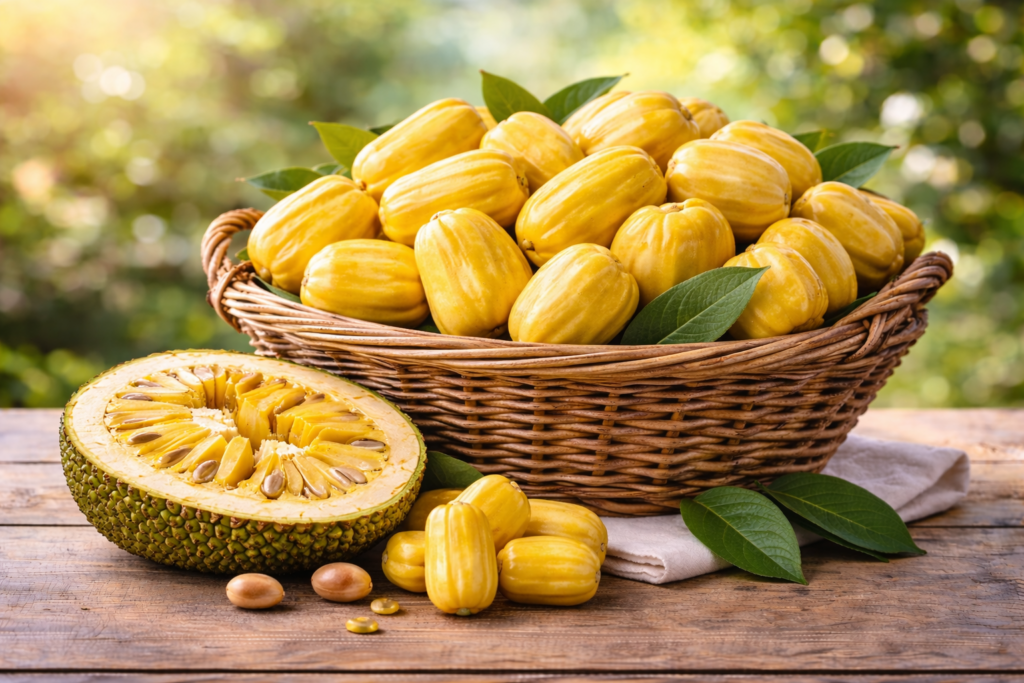
Jackfruit is a “big fruit” in both taste and satisfaction. Ripe jackfruit is sweet and easy to overeat because the bulbs feel like candy. Young jackfruit is used like a vegetable in curries and meals, and it behaves very differently in fullness.
Below are the nutritional facts of jackfruit per 100g, along with pros and cons, right time to eat, health benefits, and best way to eat.
The values provided are approximate can vary depending on the variety and ripeness.
1) Ripe Jackfruit (Bulbs)
Nutritional facts per 100g
| Nutrient | Amount Per 100g | % Daily Value* |
|---|---|---|
| Calories | 95 kcal | 5% |
| Carbohydrates | 23.2 g | 8% |
| Fiber | 1.5 g | 5% |
| Sugars | 19.1 g | – |
| Protein | 1.7 g | 3% |
| Fat | 0.6 g | 1% |
| Vitamin A | 110 IU | 2% |
| Vitamin C | 13.7 mg | 15% |
| Potassium | 448 mg | 10% |
| Calcium | 24 mg | 2% |
Pros
- Satisfying sweet fruit, strong taste helps dessert cravings
- Good potassium compared to many fruits
- Works well as a pre-walk fruit in controlled portion
Cons
- Easy to overeat because the bulbs feel like candy
- Can feel heavy or cause gas for some people
- Not ideal late night if digestion feels sensitive
Right time to eat
- Mid afternoon as a measured sweet snack
- Before activity for quick fruit energy
- After meals as a small sweet finish
Health benefits
- Supports cleaner sweet choices versus packaged desserts
- Supports potassium intake for daily balance
Best way to eat
- Serve a measured portion first, then stop
- Eat slowly, avoid overeating
- Pair with nuts if you want more fullness
2) Young Jackfruit (Cooked Plain)
Nutritional facts per 100g
| Nutrient | Amount Per 100g | % Daily Value* |
|---|---|---|
| Calories | 66 kcal | 3% |
| Carbohydrates | 16.0 g | 6% |
| Fiber | 2.2 g | 8% |
| Sugars | 1.0 g | – |
| Protein | 2.0 g | 4% |
| Fat | 0.2 g | 0% |
| Vitamin A | 30 IU | 1% |
| Vitamin C | 11.0 mg | 12% |
| Potassium | 300 mg | 6% |
| Calcium | 30 mg | 2% |
Pros
- Works like a “vegetable-style” food in meals
- More filling in curries compared to ripe bulbs for many people
- Good option when you want volume without too much sweetness
Cons
- Can cause gas for some people if eaten in large amounts
- Deep-fried preparations change the nutrition completely
Right time to eat
- Lunch or dinner as part of a cooked meal
- Best when you want a hearty, non-sweet option
Health benefits
- Supports better meal volume and satisfaction
- Supports fiber intake compared to many starchy sides
Best way to eat
- Cooked curry, stir-fry, or grilled chunks
- Avoid deep frying for regular use
- Balance with protein in the same meal
In a nutshell
Ripe jackfruit is sweet and easy to overeat. Young jackfruit works better as a meal food. Choose based on your goal and keep portions controlled.
*Percent Daily Values are based on a 2,000 calorie diet.


Join the conversation