
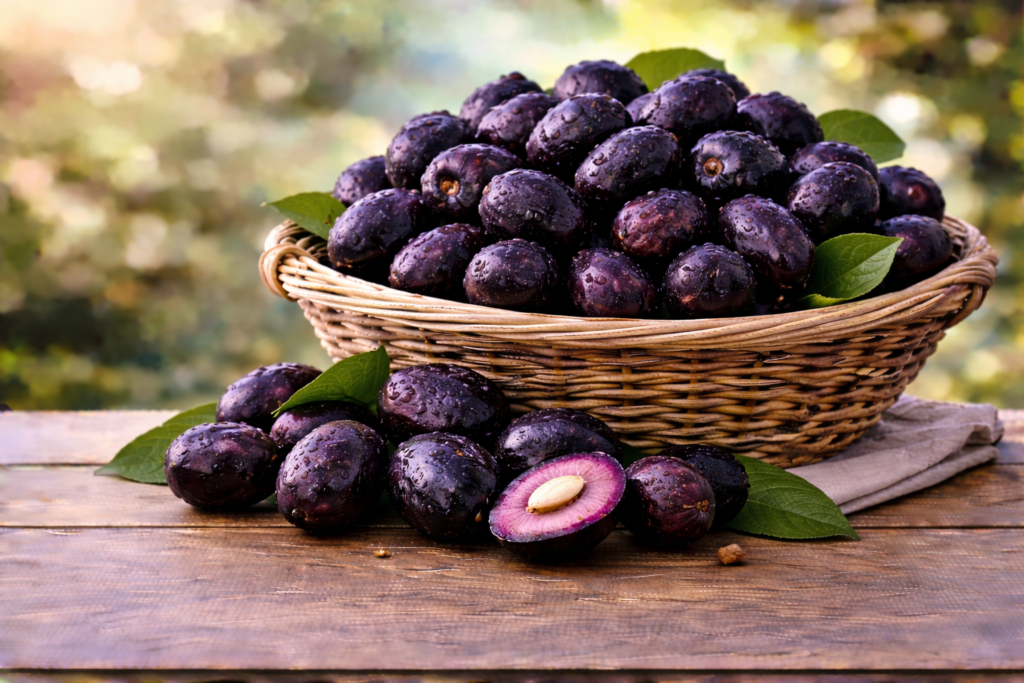
Jamun is a summer classic: deep purple, tangy-sweet, and the kind of fruit that stains your fingers and your memories. It is small, intense, and easy to overdo.
In a nutshell: The values provided are approximate and can vary depending on the size and ripeness.
1) Jamun – Black/Purple
Nutritional facts per 100g
| Nutrient | Amount Per 100g | % Daily Value* |
|---|---|---|
| Calories | 60 kcal | 3% |
| Carbohydrates | 15.6 g | 6% |
| Fiber | 0.9 g | 4% |
| Sugars | 14 g | – |
| Protein | 0.7 g | 1% |
| Fat | 0.2 g | 0% |
| Vitamin A | 55 IU | 1% |
| Vitamin C | 14 mg | 23% |
| Potassium | 79 mg | 2% |
| Calcium | 19 mg | 2% |
Pros
- Tangy taste helps many people snack without craving sweets.
- Colorful fruit that pairs well with salt and chaat masala.
- Seasonal variety that adds interest to a fruit routine.
Cons
- Overeating can upset digestion for some people.
- Seeds should not be chewed by kids or anyone with tooth issues.
- Juice versions often come with added sugar.
Right time to eat
- After lunch or as an evening snack.
- In hot weather as a cooling fruit bowl.
Health benefits
- Helps add variety and color to your fruit intake.
- Fiber supports digestion when eaten whole.
- Vitamin C supports everyday immunity routines.
Best way to eat
- Eat fresh with a pinch of salt.
- Make a simple bowl with cucumber and mint.
- If making juice, keep it unsweetened.
2) Jamun – White
Nutritional facts per 100g
| Nutrient | Amount Per 100g | % Daily Value* |
|---|---|---|
| Calories | 54 kcal | 3% |
| Carbohydrates | 13.7 g | 5% |
| Fiber | 1.1 g | 4% |
| Sugars | 11.5 g | – |
| Protein | 0.6 g | 1% |
| Fat | 0.2 g | 0% |
| Vitamin A | 30 IU | 1% |
| Vitamin C | 12 mg | 20% |
| Potassium | 70 mg | 1% |
| Calcium | 16 mg | 2% |
*Percent Daily Values are based on a 2,000 calorie diet.


Join the conversation