
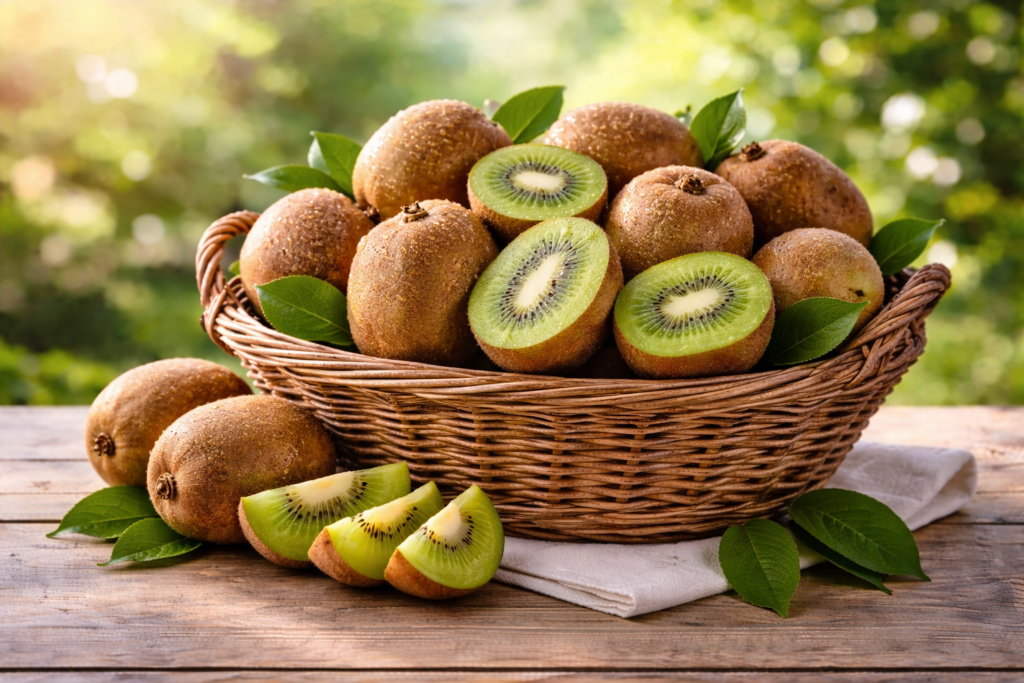
Kiwi is a small fruit with a big refresh factor. It is juicy, tangy-sweet, and often feels lighter than bananas or mangoes, which makes it a great “clean snack” fruit.
Below are the nutritional facts of kiwi per 100g, along with pros and cons, the right time to eat, health benefits, and the best way to eat.
The values provided are approximate can vary depending on the size and ripeness.
1) Green Kiwi
Nutritional facts per 100g
| Nutrient | Amount Per 100g | % Daily Value* |
|---|---|---|
| Calories | 61 kcal | 3% |
| Carbohydrates | 14.7 g | 5% |
| Fiber | 3.0 g | 11% |
| Sugars | 9.0 g | – |
| Protein | 1.1 g | 2% |
| Fat | 0.5 g | 1% |
| Vitamin A | 87 IU | 2% |
| Vitamin C | 92.7 mg | 103% |
| Potassium | 312 mg | 7% |
| Calcium | 34 mg | 3% |
Pros
- High vitamin C support for daily nutrition
- Good fiber for fullness compared to many juicy fruits
- Great “fresh snack” when you want something light
Cons
- Tangy acidity can bother sensitive stomach or teeth in some people
- Eating too much at once can cause bloating in sensitive digestion
- Some people react to kiwi (itchy mouth), avoid if it happens
Right time to eat
- Mid morning or afternoon when you want freshness
- After meals as a clean sweet finish
- Before a walk as a light fruit energy option
Health benefits
- Supports immunity routine due to vitamin C
- Supports digestion routine with fiber
- Supports hydration and freshness due to water content
Best way to eat
- Eat as a bowl, not mindless spooning from a big pack
- Pair with nuts or curd for better fullness
- Avoid empty stomach if acidity bothers you
2) Golden Kiwi
Nutritional facts per 100g
| Nutrient | Amount Per 100g | % Daily Value* |
|---|---|---|
| Calories | 60 kcal | 3% |
| Carbohydrates | 14.2 g | 5% |
| Fiber | 2.0 g | 7% |
| Sugars | 11.2 g | – |
| Protein | 1.2 g | 2% |
| Fat | 0.4 g | 1% |
| Vitamin A | 80 IU | 2% |
| Vitamin C | 105 mg | 117% |
| Potassium | 315 mg | 7% |
| Calcium | 34 mg | 3% |
Pros
- Sweeter taste, easier to eat for many people
- Still rich in vitamin C for daily routine
- Good option when you want fruit that feels like a treat
Cons
- Can be easy to overeat because it tastes sweeter
- Still acidic for some people
- Often costlier than green kiwi
Right time to eat
- Mid morning snack
- Evening snack to reduce dessert cravings
- After lunch as a light sweet finish
Health benefits
- Supports daily vitamin C intake
- Supports hydration and freshness
- Supports better snacking habits compared to packaged sweets
Best way to eat
- Eat whole or sliced, portion controlled
- Pair with nuts for longer fullness
- Avoid eating too fast if it triggers acidity
In a nutshell
Kiwi is best as a light, refreshing snack. Green kiwi is more tangy, golden kiwi is sweeter. If acidity bothers you, eat it with meals and keep portions moderate.
*Percent Daily Values are based on a 2,000 calorie diet.


Join the conversation