
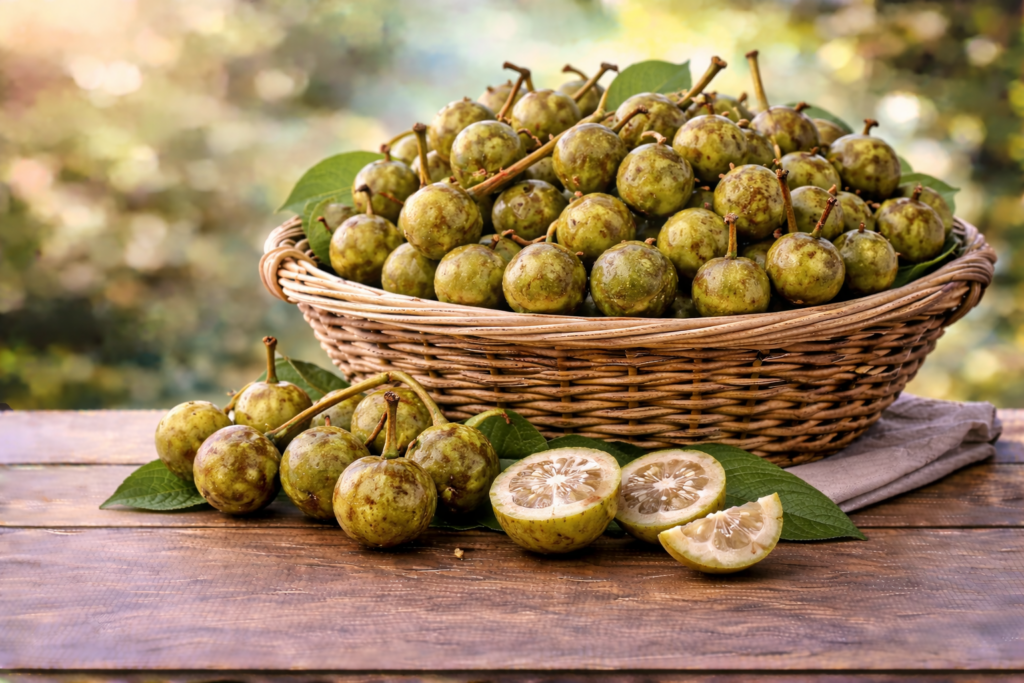
Lasoda is often eaten cooked or pickled rather than as a sweet fruit. Its texture is the main character: soft, slightly sticky, and very meal-friendly.
In a nutshell: The values provided are approximate and can vary depending on the size and ripeness.
1) Lasoda
Nutritional facts per 100g
| Nutrient | Amount Per 100g | % Daily Value* |
|---|---|---|
| Calories | 86 kcal | 4% |
| Carbohydrates | 20 g | 7% |
| Fiber | 3 g | 12% |
| Sugars | 12 g | – |
| Protein | 1.5 g | 3% |
| Fat | 0.5 g | 1% |
| Vitamin A | 60 IU | 1% |
| Vitamin C | 10 mg | 17% |
| Potassium | 300 mg | 6% |
| Calcium | 30 mg | 3% |
Pros
- Interesting seasonal ingredient that fits sabzi style cooking.
- Fiber supports digestion routines.
- Works well with spices and light gravies.
Cons
- Pickle versions can be high in salt and oil.
- Texture may not suit everyone.
- Overeating can feel heavy for some people.
Right time to eat
- With lunch or dinner as cooked vegetable.
- Pickle only in small portions with meals.
Health benefits
- Helps diversify local seasonal foods.
- Fiber supports digestion.
- Potassium supports normal hydration balance routines.
Best way to eat
- Cook as sabzi with minimal oil.
- Pair with dal and roti for a balanced plate.
- If pickled, keep portion small due to salt.
*Percent Daily Values are based on a 2,000 calorie diet.


Join the conversation