
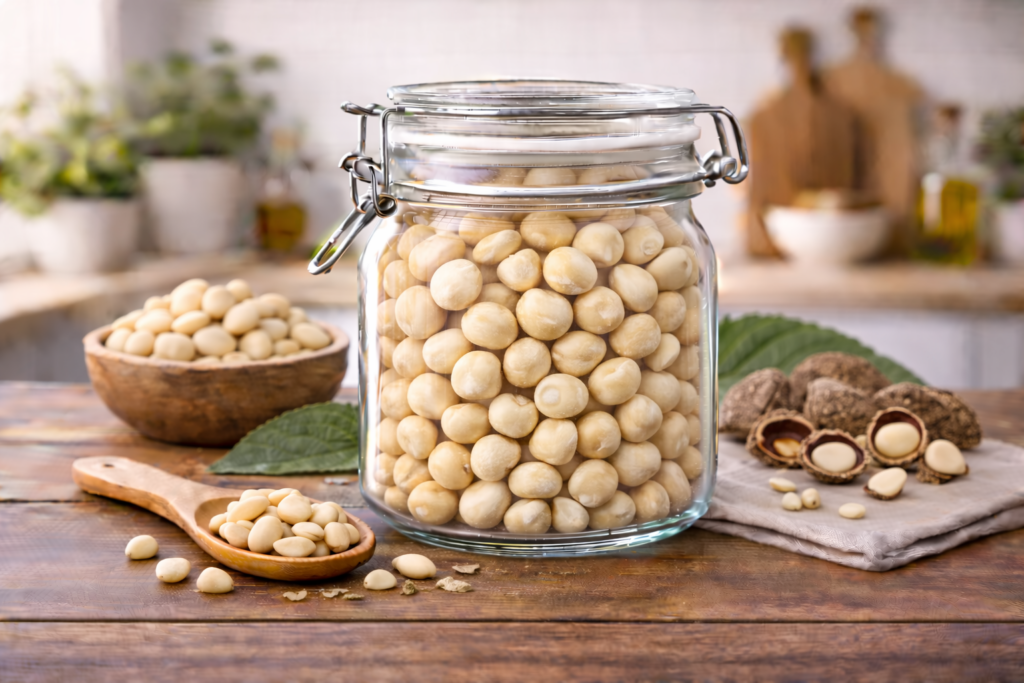
Macadamia nuts are ultra-creamy and rich. They feel like a luxury snack, and they should be treated like one: small portions, slow eating.
In a nutshell: The values provided are approximate and can vary depending on the brand, processing, and freshness.
1) Macadamia nut
Nutritional facts per 100g
| Nutrient | Amount Per 100g | % Daily Value* |
|---|---|---|
| Calories | 718 kcal | 36% |
| Carbohydrates | 13.8 g | 5% |
| Fiber | 8.6 g | 31% |
| Sugars | 4.6 g | – |
| Protein | 7.9 g | 16% |
| Fat | 75.8 g | 97% |
| Vitamin A | 0 IU | 0% |
| Vitamin C | 1.2 mg | 1% |
| Potassium | 368 mg | 8% |
| Calcium | 85 mg | 7% |
Pros
- Very filling, so a small serving can satisfy hunger.
- Great for replacing processed snacks when portioned.
- Easy to add to salads or breakfast bowls.
Cons
- Extremely calorie-dense, overeating happens fast.
- Flavoured versions may add extra oils and salt.
- Not suitable for people with nut allergy.
Right time to eat
- Mid-morning snack in a small portion.
- Evening snack when you want something rich and satisfying.
- With meals as a topping rather than a bowl of nuts.
Health benefits
- Supports steady energy because it digests slowly.
- Fiber supports digestion routines.
- Helps reduce cravings when used as a measured snack.
Best way to eat
- Plain/roasted (unsalted) is best for daily use.
- Pre-portion to keep intake controlled.
- Pair with fruit for a balanced snack.
*Percent Daily Values are based on a 2,000 calorie diet.


Join the conversation