
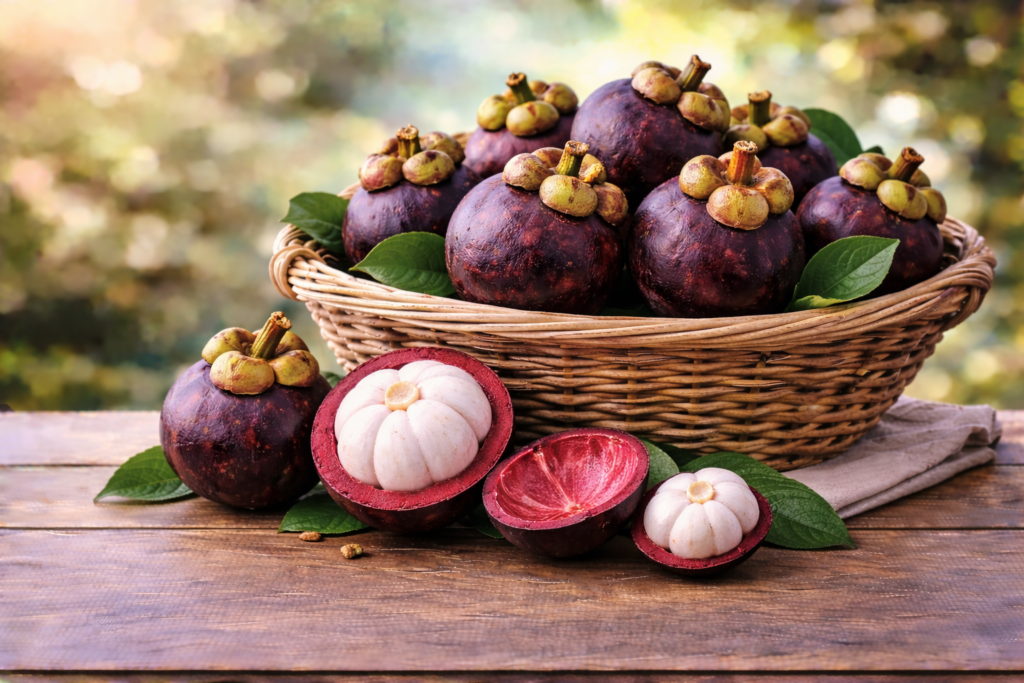
Mangosteen is soft, sweet, and creamy inside, with a gentle tropical perfume. It feels luxurious, but it is still a fruit, so portions matter.
In a nutshell: The values provided are approximate and can vary depending on the size and ripeness.
1) Mangosteen
Nutritional facts per 100g
| Nutrient | Amount Per 100g | % Daily Value* |
|---|---|---|
| Calories | 73 kcal | 4% |
| Carbohydrates | 17.9 g | 7% |
| Fiber | 1.8 g | 7% |
| Sugars | 16.1 g | – |
| Protein | 0.4 g | 1% |
| Fat | 0.6 g | 1% |
| Vitamin A | 0 IU | 0% |
| Vitamin C | 2.9 mg | 5% |
| Potassium | 48 mg | 1% |
| Calcium | 12 mg | 1% |
Pros
- Comforting sweet taste that can replace desserts.
- Easy to eat and portion if you keep it moderate.
- Great fruit for variety and enjoyment.
Cons
- Sugars can add up if you eat many at once.
- Often expensive or inconsistent in quality.
- Can feel heavy if eaten after a heavy meal.
Right time to eat
- Mid-morning or early evening snack.
- As a dessert swap after lunch in small portions.
Health benefits
- Helps satisfy sweet cravings with a whole fruit.
- Fiber supports digestion.
- Adds tropical variety to your fruit rotation.
Best way to eat
- Eat fresh segments plain.
- Pair with nuts if you want a more filling snack.
- Avoid sweetened mangosteen desserts for daily use.
*Percent Daily Values are based on a 2,000 calorie diet.


Join the conversation