
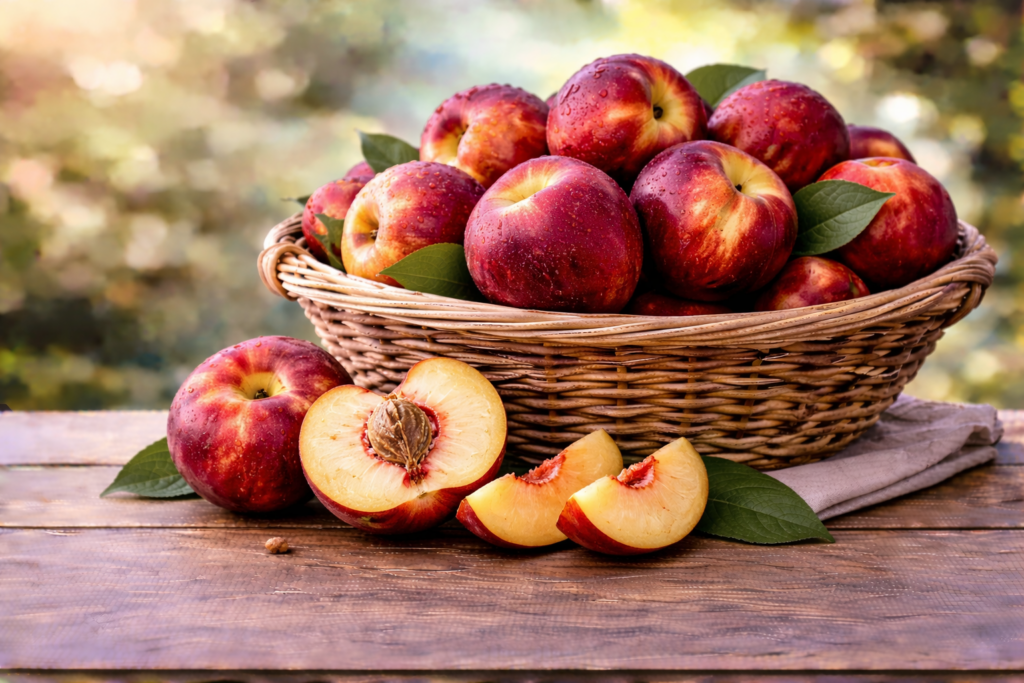
Nectarine feels like a smooth-skinned peach with a brighter bite. When ripe, it is juicy, lightly floral, and perfect for a quick fruit break.
In a nutshell: The values provided are approximate and can vary depending on the size and ripeness.
1) Nectarine
Nutritional facts per 100g
| Nutrient | Amount Per 100g | % Daily Value* |
|---|---|---|
| Calories | 44 kcal | 2% |
| Carbohydrates | 10.6 g | 4% |
| Fiber | 1.7 g | 7% |
| Sugars | 7.9 g | – |
| Protein | 1.1 g | 2% |
| Fat | 0.3 g | 0% |
| Vitamin A | 332 IU | 7% |
| Vitamin C | 5.4 mg | 9% |
| Potassium | 201 mg | 4% |
| Calcium | 6 mg | 1% |
Pros
- Juicy snack that feels light.
- Fiber helps you feel satisfied.
- Works well in fruit bowls and smoothies.
Cons
- Bruises easily, so it can spoil fast.
- Skin can carry residues, wash well.
- Overripe fruit can be too sweet for some people.
Right time to eat
- Mid-morning snack.
- Post-workout fruit with water.
Health benefits
- Hydrating fruit that supports steady snacking.
- Potassium supports normal muscle function routines.
- Fiber supports digestion.
Best way to eat
- Eat fresh with the skin after washing well.
- Slice into oats or curd bowls.
- Blend into smoothies without extra sugar.
*Percent Daily Values are based on a 2,000 calorie diet.


Join the conversation