
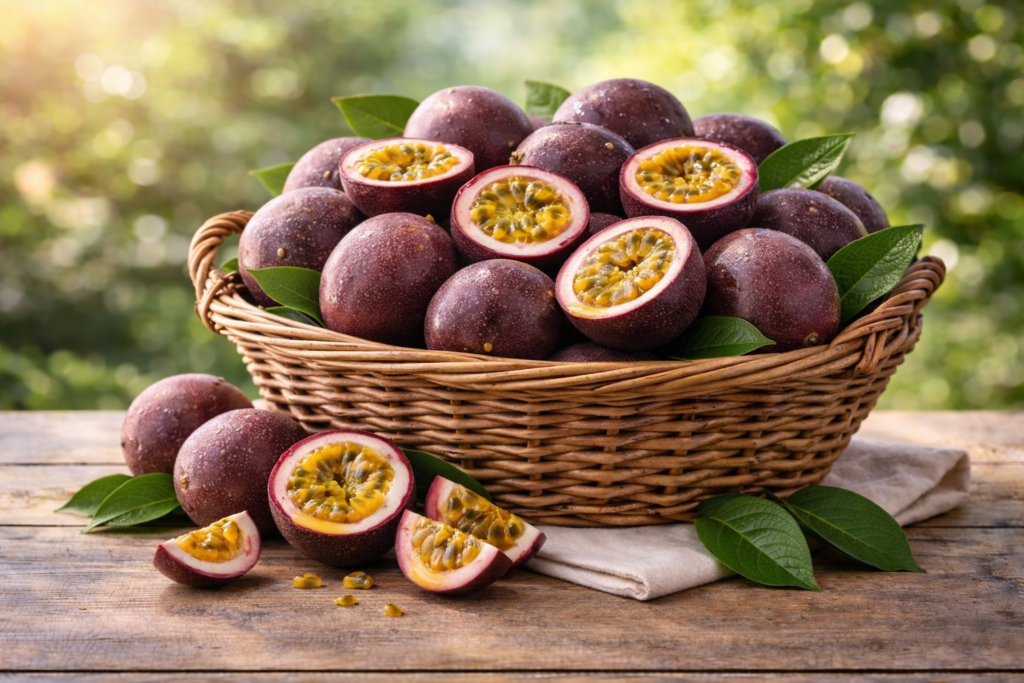
Passion fruit is small but intense. It is tangy, aromatic, and often used to upgrade bowls, curd, and smoothies. Because the taste is strong, most people naturally eat it in smaller amounts.
Below are the nutritional facts of passion fruit per 100g, along with pros and cons, right time to eat, health benefits, and best way to eat.
The values provided are approximate can vary depending on the ripeness.
1) Passion Fruit (Fresh Pulp + Seeds)
Nutritional facts per 100g
| Nutrient | Amount Per 100g | % Daily Value* |
|---|---|---|
| Calories | 97 kcal | 5% |
| Carbohydrates | 23.4 g | 9% |
| Fiber | 10.4 g | 37% |
| Sugars | 11.2 g | – |
| Protein | 2.2 g | 4% |
| Fat | 0.7 g | 1% |
| Vitamin A | 1272 IU | 25% |
| Vitamin C | 30.0 mg | 33% |
| Potassium | 348 mg | 7% |
| Calcium | 12 mg | 1% |
Pros
- Very high fiber per 100g compared to most fruits
- Strong flavor, helps portion control naturally
- Great for upgrading curd/oats without adding sugar
Cons
- Tangy acidity can bother sensitive stomach or teeth
- Seeds may irritate some people if eaten in large quantity
- Not everyone enjoys it plain, so they add sugar (avoid daily)
Right time to eat
- With breakfast bowls (curd/oats) for a fresh kick
- Mid afternoon to control cravings
- After meals as a small tangy finish
Health benefits
- Supports digestion routine due to high fiber
- Supports cleaner dessert habits when used in bowls
- Supports daily nutrition with vitamin A and vitamin C
Best way to eat
- Mix into curd, oats, or fruit bowl
- Avoid adding sugar daily
- If acidity bothers you, eat with meals not on empty stomach
In a nutshell
Passion fruit is intense, fiber-rich, and best used as a bowl booster. Great benefits, but keep sugar additions out.
*Percent Daily Values are based on a 2,000 calorie diet.


Join the conversation