
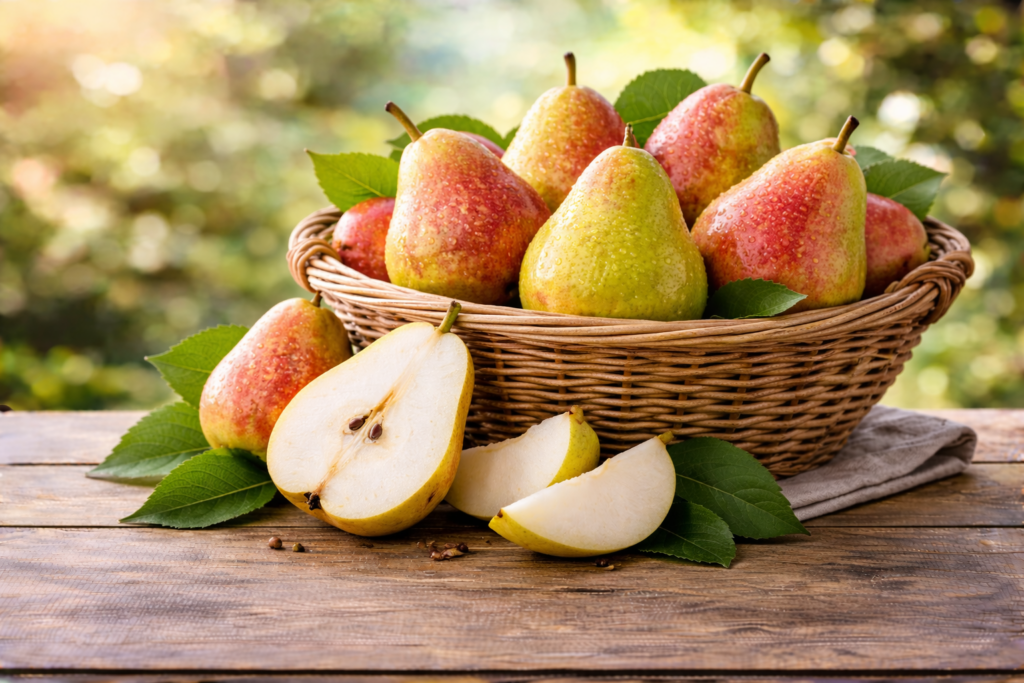
Pear is a gentle, juicy fruit that feels light but still gives decent fullness because of fiber. It works well for daily fruit eating, especially when you want something sweet without going overboard.
The values provided are approximate can vary depending on the size and ripeness.
1) Pear Fresh
Nutritional facts per 100g
| Nutrient | Amount Per 100g | % Daily Value* |
|---|---|---|
| Calories | 57 kcal | 3% |
| Carbohydrates | 15.2 g | 6% |
| Fiber | 3.1 g | 11% |
| Sugars | 9.8 g | – |
| Protein | 0.4 g | 1% |
| Fat | 0.1 g | 0% |
| Vitamin A | 25 IU | 1% |
| Vitamin C | 4.3 mg | 7% |
| Potassium | 116 mg | 2% |
| Calcium | 9 mg | 1% |
Pros
- Good fiber for a sweet fruit
- Feels light, usually easy on digestion
- Helps sweet cravings in a clean way
Cons
- Overripe pear can spike sweetness and go mushy
- Too much at once can cause bloating for some people
Right time to eat
- Mid morning or afternoon snack
- After meals as a light sweet finish
Health benefits
- Supports fullness because of fiber
- Supports cleaner snacking habits
Best way to eat
- Eat whole with skin if possible (washed well)
- Pair with nuts if you want more fullness
In a nutshell
Pear is a fiber-friendly, gentle fruit. Best eaten whole and portion controlled for steady daily use.
*Percent Daily Values are based on a 2,000 calorie diet.


Join the conversation