
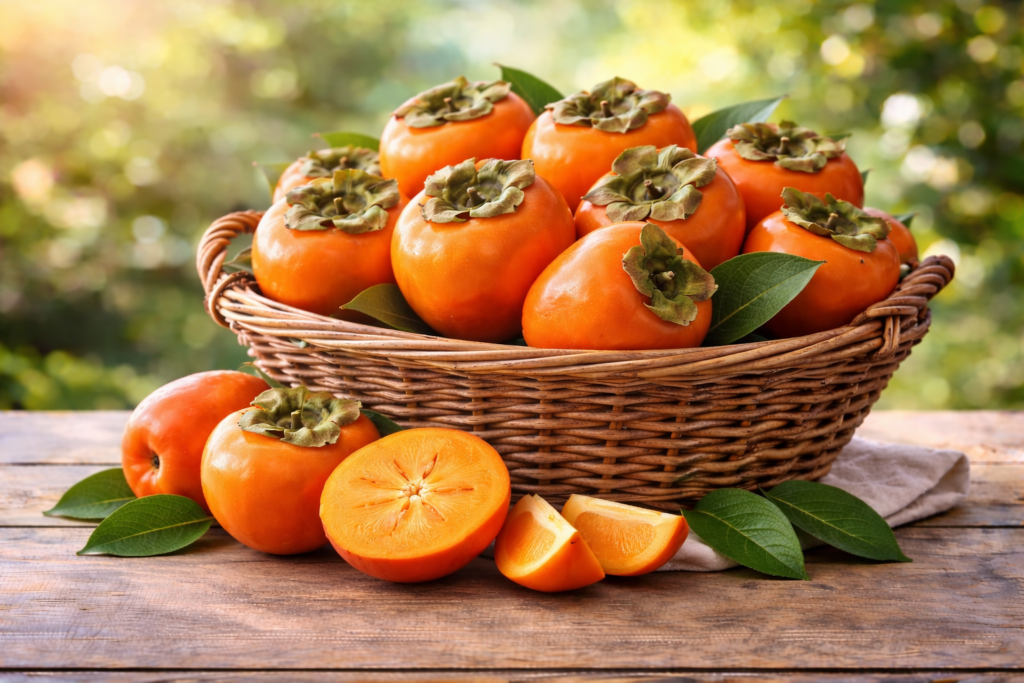
Persimmon tastes like a honey-sweet fruit when fully ripe. The key is ripeness: some types are non-astringent (you can eat while firm), while others must be very soft before eating, otherwise the mouth-drying feeling can be intense.
Below are the nutritional facts of persimmon per 100g, along with pros and cons, right time to eat, health benefits, and best way to eat.
The values provided are approximate can vary depending on the variety and ripeness.
1) Persimmon (Fresh)
Nutritional facts per 100g
| Nutrient | Amount Per 100g | % Daily Value* |
|---|---|---|
| Calories | 70 kcal | 4% |
| Carbohydrates | 18.6 g | 7% |
| Fiber | 3.6 g | 13% |
| Sugars | 12.5 g | – |
| Protein | 0.6 g | 1% |
| Fat | 0.2 g | 0% |
| Vitamin A | 1627 IU | 33% |
| Vitamin C | 7.5 mg | 8% |
| Potassium | 161 mg | 3% |
| Calcium | 8 mg | 1% |
Pros
- Sweet, satisfying fruit that can replace desserts
- Good fiber for a sweet fruit
- Vitamin A support for daily nutrition
Cons
- Some types taste unpleasant if not fully ripe (mouth-drying feel)
- Easy to overeat because it tastes like honey-sweet fruit
- Can feel heavy if you eat large portions quickly
Right time to eat
- Mid afternoon as a sweet snack
- After meals as a dessert replacement
- Not too late at night if your digestion feels sensitive
Health benefits
- Supports digestion routine due to fiber
- Supports cleaner sweet cravings control
- Supports vitamin A intake
Best way to eat
- Choose the right ripeness for your variety (firm-eating vs soft-eating types)
- Eat slowly, portion controlled
- Pair with nuts or curd for better fullness
2) Dried Persimmon
Nutritional facts per 100g
| Nutrient | Amount Per 100g | % Daily Value* |
|---|---|---|
| Calories | 274 kcal | 14% |
| Carbohydrates | 73.0 g | 27% |
| Fiber | 8.0 g | 29% |
| Sugars | 57.0 g | – |
| Protein | 2.0 g | 4% |
| Fat | 0.6 g | 1% |
| Vitamin A | 2000 IU | 40% |
| Vitamin C | 0.0 mg | 0% |
| Potassium | 600 mg | 13% |
| Calcium | 20 mg | 2% |
Pros
- Convenient, travel-friendly sweet option
- More fiber per 100g than fresh fruit
- Works as a measured sweet snack
Cons
- Very calorie dense, easy to overeat
- Sugars are concentrated, not ideal for mindless snacking
Right time to eat
- During travel or high activity days in small portions
- As a measured dessert replacement after meals
Health benefits
- Supports cravings control when used in small quantity
- Supports fiber intake if portion is controlled
Best way to eat
- Keep portion small
- Pair with nuts
- Drink water with it
In a nutshell
Fresh persimmon is a sweet, fiber-friendly fruit when ripe. Dried persimmon is concentrated and calorie dense, so keep portions small.
*Percent Daily Values are based on a 2,000 calorie diet.


Join the conversation